The 1970s File Feature
Lady (put The Light On Me)
The Story Behind Brownsville Station's Lady (Put the Light On Me) Two years removed from the raunchy garage-rock singalong that made them famous, a Michigan …
01 The Story
The Story Behind Brownsville Station's "Lady (Put the Light On Me)"
Two years removed from the raunchy garage-rock singalong that made them famous, a Michigan bar band tried something gentler and more vulnerable, and found out how hard it is to follow a novelty hit with a song that asks to be taken seriously instead of shouted along to.
Life After "Smokin' in the Boys Room"
Brownsville Station had scored a top-five smash in 1973 with the raucous, riff-driven Smokin' in the Boys Room, a song so identified with rowdy teenage rebellion that it threatened to define the band permanently in the eyes of radio programmers. Formed in Ann Arbor and fronted by guitarist and vocalist Cub Koda, the trio had built its reputation on unpretentious, high-energy bar-band rock rather than studio polish. By 1977, with the album Motor City Connection, the group was working to prove there was more range in their songwriting than that earlier hit suggested, and Lady (Put the Light On Me) represented a deliberate turn toward a softer, more melodic register.
A Ballad-Leaning Departure
Where the band's signature sound leaned on chugging guitar riffs and shouted choruses, this single slowed the tempo and opened space for a more emotionally direct vocal performance, built around a plea for reassurance and warmth rather than mischief. The arrangement retained enough of the band's rock instincts, particularly in the guitar tone, to keep it from drifting into pure soft-rock territory, but the shift in tone next to their earlier catalog was unmistakable to anyone who had followed the group since the boys'-room days. It was a calculated risk for a band whose entire identity had been built on rowdiness rather than restraint.
A Slow, Steady Climb
On the Billboard Hot 100, the single debuted at number 98 on June 4, 1977, and held there for a second week before beginning a gradual ascent, eventually reaching its peak of number 46 on July 23, 1977. Its total run of ten weeks on the chart reflected steady, if unspectacular, radio adoption rather than an explosive debut, the pattern of a song that grew on listeners rather than announcing itself immediately upon release, gaining ground week over week rather than front-loading its impact.
A Minor Hit in a Genre-Hopping Catalog
While it never approached the cultural saturation of the band's signature hit, Lady (Put the Light On Me) stands as evidence of Brownsville Station's range beyond the anthem that made them famous. It gave the band a rare mid-decade foothold on the singles chart during a period when their commercial fortunes were otherwise fading, a stretch when many of their garage-rock peers had already vanished from the charts entirely, and it remains a worthwhile detour for listeners who only know the group through its most famous three minutes. Give it a spin and hear a band trying on vulnerability for a change, guitars still present but the volume, and the attitude, dialed way down.
"Lady (Put the Light On Me)" — Brownsville Station's singular moment on the 1970s charts.
02 Song Meaning
The Meaning Behind "Lady (Put the Light On Me)"
"Lady (Put the Light On Me)" is a direct plea for emotional guidance, the narrator asking a partner to serve as a source of clarity and warmth during a period of personal uncertainty. It is a simpler, more vulnerable song than most of Brownsville Station's catalog, and that simplicity is the point of the whole exercise.
Asking to Be Seen
The central image, a figure asking to have light put on them, functions as a metaphor for being truly noticed and understood by another person. Rather than boasting or posturing, which defined much of the band's earlier material like Smokin' in the Boys Room, the narrator openly admits a need for reassurance, a rare moment of directness within the hard-rock and garage-rock tradition the group, led by frontman Cub Koda, came from and had built its whole reputation upon.
Vulnerability in a Macho Genre
Mid-1970s rock radio was dominated by bravado, riff-driven confidence, and detachment, making a song built around open emotional need something of an outlier on the dial, a departure that few of the band's contemporaries were willing to risk. By asking a partner for guidance rather than claiming to already have the answers, the song pushes gently against genre convention, suggesting that even bands known for rowdier material could locate genuine tenderness when the tempo dropped.
A Universal Request
Stripped of its specific romantic context, the song's core request, for someone to help make sense of confusion or darkness, taps into something broadly relatable. It does not require a listener to share the band's garage-rock background to connect with the basic human desire to be guided and understood by someone who cares, which helped it climb to a number 46 peak on the Hot 100.
A Quiet Counterpoint to a Loud Legacy
For a band forever associated with a rowdy teenage anthem, this song offered listeners a different side of the same group: sincere rather than mischievous, seeking connection rather than causing trouble. That contrast is part of why it still rewards rediscovery, a gentler entry point into a catalog mostly remembered for noise and detention-hall bravado.
→ More from Brownsville Station
View all Brownsville Station hits →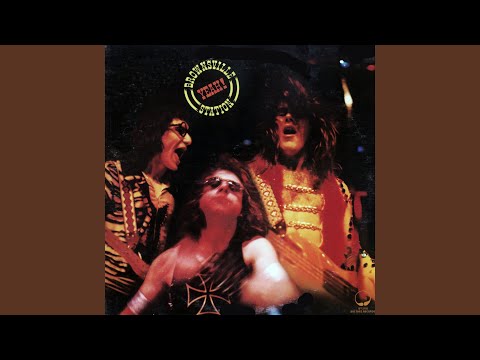

→ More from the 1970s File
View all 1970s hits →




Keep digging