The 1970s File Feature
Mother Freedom
Mother Freedom: Bread's Uptempo Departure and David Gates's Range as a Songwriter Bread is remembered primarily as a soft-rock group of the early 1970s, a ba…
01 The Story
Mother Freedom: Bread's Uptempo Departure and David Gates's Range as a Songwriter
Bread is remembered primarily as a soft-rock group of the early 1970s, a band whose commercial identity was built on melodic ballads and David Gates's gift for expressing romantic longing with a transparency and directness that connected deeply with a mainstream pop audience. Songs like "Make It with You," "Everything I Own," and "If" defined the group's public image so completely that their more energetic recordings have tended to be overlooked in retrospective assessments. "Mother Freedom," released as a single in 1971 on Elektra Records, was one of those recordings: an uptempo track that demonstrated Gates's capacity to work in a different mode without abandoning the melodic gifts that were his primary asset.
Bread had formed in Los Angeles in the late 1960s, built around the songwriting and production talents of David Gates, a musician whose career stretched back to his early work as a session player and arranger in the Los Angeles studio scene. Gates was joined by Jimmy Griffin, Robb Royer, and later Mike Botts and Larry Knechtel, creating a group that was more musically sophisticated than its soft-rock commercial profile might suggest. The combination of Gates's melodic instincts with Griffin's contributions and the general musicianship of the ensemble gave the group a creative range that their hit singles represented only partially.
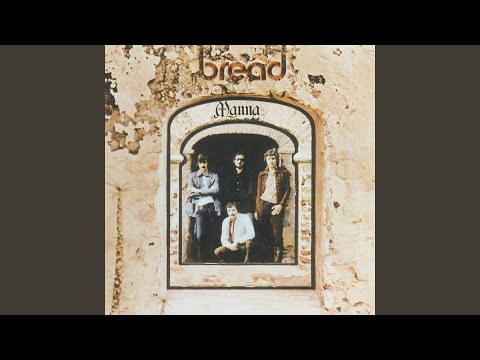
Bread's debut album had been released in 1969 on Elektra Records, and the group had achieved its commercial breakthrough in 1970 with "Make It with You," which reached number one on the Billboard Hot 100 and established them as one of the leading soft-rock acts of the early 1970s. The success of that single and the subsequent albums "Manna" and "Baby I'm-A Want You" locked the group into an audience expectation that favored romantic ballads over more energetic material. "Mother Freedom" was an attempt to demonstrate that the band could operate outside that expectation.
"Mother Freedom" was released as a single from the album "Manna" in 1971 and reached the upper regions of the Billboard Hot 100, performing well enough to confirm that Bread's audience was willing to follow the group into somewhat more energetic territory, at least when the melodic quality remained consistent with their established work. The production was cleaner and more driving than the group's ballads, with a rhythm track that pushed the tempo and an arrangement that emphasized the rock elements of the ensemble's sound rather than the more orchestrated textures associated with their softer material.
David Gates wrote "Mother Freedom" as a reflection on the political and social turbulence of the early 1970s, a period in which the Vietnam War, the women's liberation movement, and various countercultural currents were reshaping American society in ways that were impossible for thoughtful observers to ignore. Gates was not a political songwriter in the confrontational mode of some of his contemporaries, but he was capable of engaging with social themes when the subject matter presented itself in terms that allowed him to approach it from an emotional rather than a polemical angle. "Mother Freedom" found that angle by connecting the abstract concept of freedom to the personal and emotional.
Elektra Records in the early 1970s was one of the most creatively interesting labels in the American music industry, home to artists including The Doors, Love, and a variety of folk and rock performers who valued artistic ambition as highly as commercial performance. Bread occupied an unusual position within this roster, being among the label's most commercially reliable acts while being considerably less experimental than many of their label-mates. The label's promotional support was effective, and "Mother Freedom" received the radio promotion necessary to achieve meaningful chart performance.
The reception of "Mother Freedom" within the context of Bread's catalog was generally positive among fans who appreciated the group's versatility, though critics who had already categorized Bread as a soft-rock act with limited ambition tended to treat the song as a minor aberration rather than a significant creative statement. This critical tendency to use an artist's most commercially successful work as the definitive statement of their range is a recurring problem in pop music criticism, and it has affected the reception of several of Bread's more energetic recordings over the years.
David Gates's career as a songwriter was considerably broader than Bread's commercial profile suggested. His work as a session player and arranger in the 1960s had given him deep familiarity with multiple styles and production approaches, and this background is audible in the more varied moments of Bread's catalog. "Mother Freedom" draws on that background in its production approach, which reflects an awareness of the harder-edged rock that was commercially prominent in the early 1970s without abandoning the melodic clarity that was Gates's defining characteristic as a songwriter.
The song's place in Bread's discography is that of a useful corrective to the group's soft-rock reputation, evidence that their creative range extended meaningfully beyond the ballads that defined their commercial identity. It is regularly included in comprehensive retrospectives of the group's work and has found appreciative audiences among listeners who come to Bread through the ballads and discover with some surprise that the same ensemble was capable of producing something with considerably more rhythmic energy and political engagement. This element of discovery has been part of the song's reception history across the decades since its initial release.
02 Song Meaning
Freedom as an Emotional Argument: The Meaning of Bread's "Mother Freedom"
"Mother Freedom" represents a departure from Bread's characteristic emotional territory, and understanding what that departure means requires some attention to what the song is attempting and why the attempt was worth making. David Gates spent most of his career as a songwriter working in the vocabulary of romantic feeling, constructing songs that mapped the inner experience of love, longing, loss, and connection with considerable precision. "Mother Freedom" turned that emotional precision toward a more public and political subject, and the result is a song that belongs to neither genre entirely, occupying instead an interesting middle space where personal feeling and social concern intersect.
The concept of freedom in the early 1970s carried enormous cultural weight in the United States. The country was in the midst of simultaneous upheavals, the ongoing trauma of Vietnam, the women's liberation movement, the counterculture's challenge to established social hierarchies, and the civil rights movement's ongoing effort to convert legal equality into lived reality. For a mainstream pop songwriter to invoke "freedom" as a central concept was to engage, however obliquely, with all of this context. Gates did so without the polemical directness of explicitly political songwriters, locating freedom instead in an emotional and even maternal register suggested by the song's title.
The personification of freedom as a maternal figure was a culturally resonant choice. The idea of Mother Freedom evokes liberty as something nurturing and generative rather than merely adversarial or abstractly political. This framing was consistent with Gates's instinct to approach even large abstract subjects through personal and emotional lenses, and it gave the song a warmth that made it accessible to listeners who might have been resistant to more overtly political material.
The song's uptempo energy was itself meaningful in the context of its subject matter. Freedom, as the song presents it, is not a melancholy condition but an energizing one. The rhythm track and driving arrangement communicated through purely musical means an emotion of release and forward movement, reinforcing the lyrical content through the physical energy of the recording. This alignment between musical energy and thematic content gave the song a coherence that distinguished it from the many early 1970s pop songs that engaged with political themes in ways that felt grafted onto musical forms better suited to other purposes.
For Bread as an artistic entity, "Mother Freedom" is significant as evidence of the band's broader creative range. The group's commercial identity rested so heavily on the ballad form that recordings like this one served an important corrective function, demonstrating that Gates and his collaborators were not confined to a single emotional and musical register. The song's existence complicated the easy critical narrative that reduced Bread to a soft-rock formula, and that complication enriched the group's catalog by adding a dimension that the ballads alone could not provide.
Gates's production approach on "Mother Freedom" made deliberate use of the harder-edged rock textures that were commercially dominant in the early 1970s, nodding toward the energy of contemporary rock acts without adopting a sonic identity that would have been inauthentic to the group. The result was a record that inhabited its own specific zone, not as hard as the rock that dominated FM radio, not as soft as the ballads that defined Bread's commercial profile, but occupying a middle ground that was entirely its own. That specificity of identity, the sense that the song knew exactly what it was and was not trying to be anything else, is part of what makes it a satisfying listen across the distance of five decades.
→ More from Bread
View all Bread hits →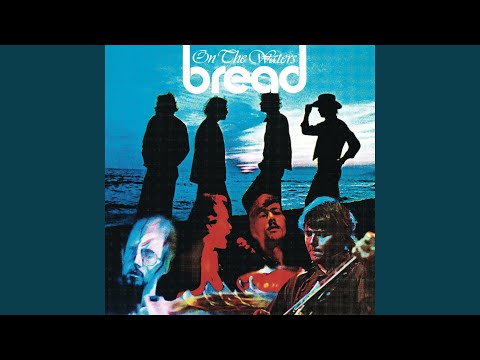

→ More from the 1970s File
View all 1970s hits →




Keep digging