The 1970s File Feature
Lowdown
Lowdown: How Boz Scaggs Turned Silk Degrees Into a Cultural Landmark By the mid-1970s, Boz Scaggs had spent nearly a decade searching for his commercial foot…
01 The Story
Lowdown: How Boz Scaggs Turned Silk Degrees Into a Cultural Landmark
By the mid-1970s, Boz Scaggs had spent nearly a decade searching for his commercial footing. He had recorded with Steve Miller in the mid-1960s, launched a respected but modestly selling solo career on Atlantic, and gradually earned the admiration of musicians and critics who recognized his guitar work and instinct for rhythm and blues. What he had not yet found was a mass audience. That changed in 1976 with the release of Silk Degrees on Columbia Records, and more specifically with the breakthrough single "Lowdown," which climbed to number three on the Billboard Hot 100 and made Scaggs a household name.
The recording of Silk Degrees took place at the Davlen Sound Studios in North Hollywood during 1975 and early 1976. Scaggs assembled a group of Los Angeles session musicians whose collective skill would prove to be one of the album's greatest assets. Among those players were guitarist Fred Tackett, bassist David Hungate, drummer Jeff Porcaro, and keyboardist David Paich, along with keyboardist Craig Doerge. The rhythm section's tight, polished grooves gave the album its distinctive sound, a fusion of blue-eyed soul, soft rock, and yacht rock that would become the defining sonic signature of the period. Scaggs produced the album alongside Joe Wissert, who had previously worked with Earth, Wind and Fire and brought a similarly sophisticated sensibility to the sessions.
"Lowdown" was co-written by Scaggs and David Paich, the keyboardist who would go on to co-found Toto shortly after these sessions. The song's arrangement leans heavily on a sinuous bass line, layered keyboard textures, and a percussion approach that keeps the tempo unhurried without ever feeling slack. The production was meticulous, favoring a smooth, polished sonority that stood apart from both the hard funk dominating soul radio and the louder rock sounds of the era. Columbia released "Lowdown" as a single in the summer of 1976, and it entered the Billboard Hot 100 in late June, spending a total of twenty-two weeks on the chart before its run concluded.
The commercial performance of the song exceeded almost any expectation Columbia or Scaggs himself might have held. Reaching number three on the Hot 100 was extraordinary for an artist who had never previously cracked the top forty with a solo record. The single also performed strongly on the Adult Contemporary chart, where its polished production was well-suited to the format. Radio programmers embraced it enthusiastically, and the song received heavy rotation on both pop and soft-rock stations throughout the summer and autumn months of 1976. The parent album, Silk Degrees, would ultimately sell more than five million copies in the United States alone, a remarkable figure for an album by an artist previously considered a critics' favorite rather than a mainstream star.
The Recording Academy acknowledged the song's achievement at the 1977 Grammy Awards, where "Lowdown" won the Grammy for Best Rhythm and Blues Song, recognizing Scaggs and Paich as its composers. The album Silk Degrees received additional Grammy nominations, confirming the record industry's formal recognition of what listeners had already demonstrated at radio and retail. The Grammy win also served as a statement about the song's genre identity, placing it squarely in the R&B tradition despite the pop smoothness of its production.
The musicians who performed on Silk Degrees would not remain scattered for long. Porcaro, Paich, Hungate, and Tackett, along with guitarist Steve Lukather and other collaborators, formed Toto in 1977, carrying the same studio craft they had brought to Scaggs's record into their own commercial recordings. This genealogical connection between "Lowdown" and the subsequent success of Toto has made the Silk Degrees sessions a frequently cited chapter in discussions of how session culture in Los Angeles shaped mainstream pop in the late 1970s and into the 1980s.
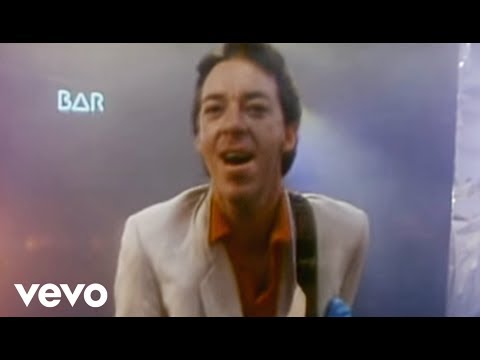
Scaggs performed "Lowdown" extensively throughout his 1976 touring schedule in support of the album, and the song became the centerpiece of his live sets, giving audiences a visceral demonstration of how well the studio arrangement translated to a stage setting. Critics who reviewed those performances consistently highlighted the rhythm section's precision and Scaggs's controlled, assured vocal delivery as the twin engines of the song's live power.
Decades after its release, "Lowdown" has retained its cultural relevance through its presence in film and television soundtracks, through its regular appearance on radio formats dedicated to classic pop, and through the ongoing fascination with the yacht rock genre that it helped to define. Music historians pointing to the origins of that sound almost invariably begin with Silk Degrees, and "Lowdown" in particular, as the moment when polished, groove-oriented pop became a dominant commercial force on American radio. The song stands as evidence that commercial ambition and genuine craft do not necessarily work against each other.
For Scaggs personally, "Lowdown" represented a turning point that reshaped the remainder of his career. He followed Silk Degrees with additional successful albums and continued recording into the 2000s and 2010s with a consistency that reflected the confidence the 1976 breakthrough had given him. The song's Grammy recognition, its sustained radio presence, and its commercial performance have secured its place as one of the defining pop recordings of the mid-1970s, an era that produced a remarkable concentration of sophisticated, groove-driven music across multiple genres.
02 Song Meaning
The Art of Knowing Better: Reading Lowdown by Boz Scaggs
"Lowdown" operates as a piece of gentle romantic wisdom, a song in which an older, more experienced voice addresses someone younger who is being deceived by a charming but unreliable partner. The narrator does not moralize aggressively or attempt to rescue the object of concern by force of argument. Instead, the tone is patient and slightly world-weary, as if the speaker has seen this particular situation unfold enough times to recognize its shape from a distance. The song's emotional register is warm rather than scolding, and that warmth is inseparable from its commercial appeal.
The thematic core of the song rests on the idea that experience confers a kind of perception that youth cannot yet access. The narrator can see what the younger person cannot, namely that the attractive figure who has captured their attention is performing a role rather than expressing genuine feeling. Boz Scaggs and co-writer David Paich frame this perception not as condescension but as genuine concern, and the distinction matters enormously to how the song lands emotionally. The listener is invited to trust the narrator's view because the narrator's delivery, both vocally and in terms of the music surrounding it, feels authoritative without being harsh.
The musical setting reinforces the lyrical content in a particularly effective way. The groove is sophisticated and unhurried, suggesting that the narrator is someone who has genuinely arrived at a settled perspective. There is no urgency in the arrangement, no panic, and no righteous anger. The rhythm section moves with a confidence that mirrors the narrator's emotional stance, and the keyboard textures add a layer of elegance that keeps the song from ever feeling preachy. The Grammy for Best Rhythm and Blues Song recognized not just the composition but this particular integration of form and content, the way the music embodies the message.
Within Scaggs's catalog, "Lowdown" occupies a specific and important position. His earlier recordings had demonstrated his skill with blues-influenced material, but this song showed that he could inhabit a more conversational, intimate mode with equal conviction. The persona on display in "Lowdown" is someone whose emotional intelligence is as developed as his musical taste, and this combination gave Scaggs a distinctive identity on pop radio in 1976, distinguishing him from both the rawer soul singers and the blander soft-rock artists sharing the same airspace.
The song also reflects something broader about the cultural moment of 1976, a period in American pop when sophisticated production and mature lyrical themes were finding large commercial audiences. The mid-decade shift toward polished, studio-refined sounds across soul, R&B, and pop created an opening for songs that treated adult emotional experience with nuance rather than melodrama. "Lowdown" arrived precisely at that opening and helped to define what sophisticated pop radio could sound like. Its success demonstrated that listeners were receptive to material that asked them to sit with a complex emotional situation rather than simply react to a hook.
Scaggs's vocal performance is central to the song's meaning. His delivery is controlled and slightly detached, which might in another context read as coldness but here reads as wisdom. He does not over-emote the narrator's concern, and that restraint makes the concern feel more credible. The message of the song is that real understanding of other people requires a certain calm, and Scaggs performs that calm convincingly. In this sense the song is not only about romantic manipulation but also about the emotional discipline required to recognize and articulate what one sees clearly. That layered quality has kept "Lowdown" resonant across decades.
→ More from Boz Scaggs
View all Boz Scaggs hits →



→ More from the 1970s File
View all 1970s hits →




Keep digging