The 1970s File Feature
Across 110th Street
"Across 110th Street" — Bobby Womack and the Sound of Harlem The Street as Dividing Line There was a geography of inequality visible in 1970s New York, and 1…
01 The Story
"Across 110th Street" — Bobby Womack and the Sound of Harlem
The Street as Dividing Line
There was a geography of inequality visible in 1970s New York, and 110th Street marked one of its most legible boundaries. North of it lay Harlem, a neighborhood that had been systematically divested of resources and opportunity while remaining culturally extraordinary; south of it lay the more prosperous precincts of Central Park and the Upper West Side. Bobby Womack's "Across 110th Street" planted itself squarely in that geography, giving voice to a world that mainstream American culture had learned not to look at directly, and doing so with a raw, cinematic power that made the avoidance impossible.
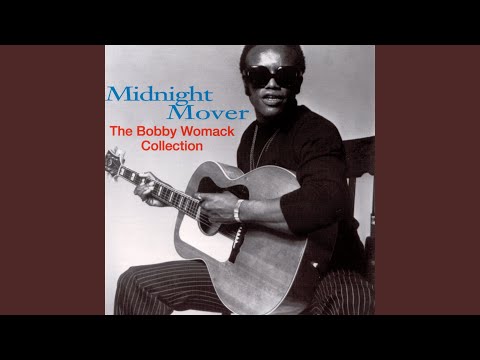
Bobby Womack was one of soul music's most gifted and underappreciated figures by the early 1970s. A guitarist of immense skill who had worked with Sam Cooke and established himself as both a performer and songwriter, he brought a depth of musical experience and emotional intelligence to his work that few of his contemporaries could match. "Across 110th Street" was his contribution to the soundtrack of the film of the same name, released in 1972 and directed by Barry Shear.
The Film, the Soundtrack
The film Across 110th Street was a hard, uncompromising crime picture set in Harlem, depicting the aftermath of a heist that goes catastrophically wrong and the intersecting worlds of police corruption, organized crime, and street-level desperation that converge in its wake. It was part of a broader wave of urban crime films that emerged in the early 1970s, many of them featuring Black casts and addressing conditions in Black urban communities with a directness that mainstream Hollywood had previously avoided.
Womack co-wrote the title song with J.J. Johnson, who also composed the rest of the film's score. The track opens with one of the most immediately recognizable instrumental introductions in 1970s soul: a horn-driven, strings-accented, propulsively rhythmic arrangement that establishes the film's world before a word is sung. It is the sound of a city that does not sleep, of hard realities and limited choices, and it functions simultaneously as opening credits music and as a philosophical statement about the story to follow.
The Billboard Run
"Across 110th Street" debuted on the Billboard Hot 100 on March 24, 1973, entering at number 88. Over the following weeks it climbed steadily, reaching its peak position of number 56 on April 28, 1973, and spending six weeks on the chart. Those numbers, modest by some standards, understate the track's actual cultural impact, which extended far beyond the pop chart metric and into the specific landscape of urban soul and soundtrack music.
On the soul charts, where the track's primary audience lived and where Womack's name carried enormous weight, the song performed considerably more strongly. Its crossover Hot 100 presence was a secondary measure of a track that was already deeply embedded in its core audience's experience.
The Sound of the Track
The production is rich and cinematic, befitting its origins as film music. The string arrangements swell and recede in ways that create genuine dramatic momentum, while the rhythm section provides a propulsive groove that keeps the track from feeling ponderous despite its serious subject matter. Womack's vocal performance is among the finest of his career, bringing a rawness and authenticity to the material that no amount of studio polish could have manufactured. He sounds like someone who knows the streets he is singing about, not as an observer but as someone for whom they are lived reality.
The contrast between the lushness of the orchestral arrangement and the harshness of the subject matter is not a contradiction; it is the track's central artistic achievement. The beauty of the music refuses to let the listener distance themselves from the pain of what is being described.
The Rediscovery and the Legacy
Decades after its original release, "Across 110th Street" found an entirely new generation of listeners through its use in Quentin Tarantino's 1997 film Jackie Brown, which opened with the track playing over the film's title sequence. That placement introduced Womack's recording to millions of younger viewers who had no frame of reference for the original 1972 film, and it cemented the track's status as one of the essential artifacts of 1970s soul and funk culture.
The continued life of the track across more than fifty years is testimony to how much genuine artistic substance is packed into its three minutes, a song that was made for a specific film but ended up saying something universal about survival, struggle, and the human cost of economic inequality.
Put on "Across 110th Street" and let those opening horns drop you straight into the world Bobby Womack was singing from, a world as vivid and as urgent now as it was in 1973.
"Across 110th Street" — Bobby Womack and Peace's singular moment on the 1970s charts.
02 Song Meaning
"Across 110th Street" — Survival, Inequality, and the Fury of the Street
A Song About the Costs of a Rigged System
What Bobby Womack's "Across 110th Street" does that much socially conscious music does not is refuse to sentimentalize its subject. The track describes life at the bottom of an economic hierarchy with a clear-eyed recognition that the people living there did not place themselves there freely, and that the choices available to them have been shaped and constrained by forces well beyond their individual control. The song addresses economic desperation as a structural condition, not a personal failing, and that distinction is the foundation of its moral seriousness.
The track connects to a long tradition in African American music of bearing witness to conditions that the broader culture preferred not to acknowledge. Blues, gospel, soul, and funk had all carried this function at various moments, and "Across 110th Street" sits in that lineage, using the energy and emotional directness of soul music to make the invisible visible.
The Genre of the Blaxploitation Soundtrack
The early 1970s produced a remarkable series of film soundtracks that became culturally significant independent of the films they accompanied. Isaac Hayes's Shaft, Curtis Mayfield's Superfly, and Marvin Gaye's Trouble Man all emerged from the cycle of urban Black cinema that critics labeled blaxploitation, a term that captured both the commercial exploitation of Black audiences and the genuine cultural representation those films provided. "Across 110th Street" belongs to this tradition while standing slightly apart from it, as the film it scored was somewhat more morally ambiguous than the heroic narratives that defined the genre's mainstream.
The music from these films was frequently of higher artistic quality than the films themselves, and it outlasted them in cultural memory. Artists like Womack brought genuine craft and emotional depth to soundtrack work that could easily have been treated as a commercial exercise, and the result was a body of music that has continued to reward listeners for more than half a century.
The Political Landscape of 1972-1973
The track arrived in a specific historical moment: the Nixon administration, the ongoing aftermath of the civil rights movement, the economic pressures that had begun gutting urban communities, and a growing sense that the promises of the 1960s had not been kept. Urban Black America in the early 1970s was navigating a particular kind of disillusionment, and art that addressed that reality honestly found ready audiences among listeners who recognized their own experience in it.
Womack's lyrics describe choices made under pressure, lives shaped by scarcity, and a social geography that punishes those born on the wrong side of an invisible line. That context was immediate and live for his original audience in a way that has since become historical, but the emotional truth of the material remains accessible to listeners encountering it across the distance of fifty years.
The Rediscovery and the New Meaning
When Quentin Tarantino used the track to open Jackie Brown in 1997, he was not simply selecting a period-appropriate piece of music; he was making an argument about quality and durability, about which artifacts from the 1970s contained enough genuine substance to speak to audiences twenty-five years later. The choice was a form of critical endorsement, and it succeeded in doing exactly what Tarantino intended: introducing Womack's recording to an audience that received it as a revelation.
The track's continued circulation in film and television, and its steady accumulation of new listeners through streaming, speaks to the timelessness of what Womack achieved. Music that tells the truth with that much skill has a way of finding each new generation that needs to hear it.
"Across 110th Street" — Bobby Womack and Peace's singular moment on the 1970s charts.
→ More from Bobby Womack & Peace
View all Bobby Womack & Peace hits →
→ More from the 1970s File
View all 1970s hits →




Keep digging