The 1970s File Feature
Old Time Rock & Roll
"Old Time Rock & Roll" — Bob Seger & The Silver Bullet Band Before the Risky Business Moment There is a version of "Old Time Rock & Roll" that most people kn…
01 The Story
"Old Time Rock & Roll" — Bob Seger & The Silver Bullet Band
Before the Risky Business Moment
There is a version of "Old Time Rock & Roll" that most people know, and it involves Tom Cruise in his socks and an empty Chicago apartment. But the song existed four years before that iconic scene, and its original context tells a story that is in some ways more interesting than the cultural afterlife that eventually made it ubiquitous. When Bob Seger recorded the track for his 1978 album Stranger in Town, he was at the apex of a commercial breakthrough that had been years in the making, and the song reflected something genuine about where he stood artistically: a middle-American rocker who had built his reputation on authenticity and who had specific, strong opinions about what rock and roll should sound like.
Seger had been recording since the mid-1960s, building a devoted regional following in Michigan through relentless touring and a series of albums that, while commercially modest, established his credentials as a working-class rock performer of real conviction. Night Moves in 1976 and Live Bullet in 1976 had finally broken him through to a national audience, and by 1978 he was one of the most trusted names in American rock. Stranger in Town arrived at the peak of this momentum.
The Song and Its Origins
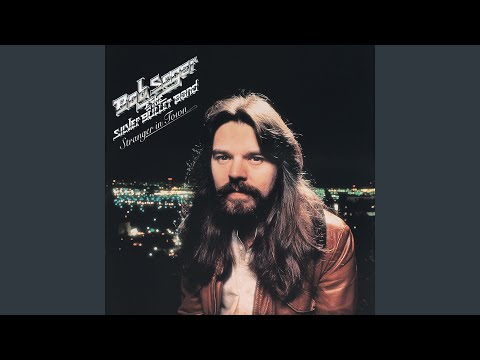
"Old Time Rock & Roll" was written by George Jackson and Tom Jones (not the Welsh singer, but a songwriter of the same name), and Seger's recording of it appears on Stranger in Town, the album released in April 1978 on Capitol Records. The song's lyrical premise is straightforwardly declarative: the narrator prefers the rock and roll of an earlier era to the contemporary sounds surrounding him, finding more emotional truth in the older recordings than in whatever is currently fashionable. It is a song about musical loyalty, about the particular way certain sounds become so thoroughly embedded in personal identity that no amount of stylistic evolution can dislodge them.
Musically the track is built on a piano-driven foundation with a loose, propulsive feel that itself sounds like a tribute to the early rock and roll and rhythm and blues records it celebrates. The Silver Bullet Band's performance throughout is notably relaxed and assured, playing with the confidence of musicians who have spent years together developing a shared instinct for how a track should breathe and move. The arrangement is relatively spare for its era, foregrounding the feel of the performance over production gloss.
The Billboard Run
Released as a single in early 1979, "Old Time Rock & Roll" entered the Billboard Hot 100 on April 7, 1979, debuting at number 72. Over the following weeks it climbed steadily, passing through 60, 53, 41, and 39, before reaching its peak. The song hit its chart summit at number 28 on May 26, 1979, spending a total of 11 weeks on the Hot 100. On the album-oriented rock chart it performed even more strongly, receiving consistent airplay from rock radio stations across the country that recognized the track as a perfect encapsulation of the Seger aesthetic.
The album Stranger in Town itself was a massive commercial success, eventually certified platinum multiple times over and delivering several significant singles. "Old Time Rock & Roll" was among the most enduring of these, its chart run extending well into the spring and reflecting the broad demographic reach that Seger had achieved by this point in his career.
The Risky Business Transformation
The song's second life arrived in 1983 when director Paul Brickman used it in the opening sequence of Risky Business, featuring the now-famous image of Tom Cruise sliding across a hardwood floor in his socks and underwear. The scene became one of the defining images of the decade, and it embedded "Old Time Rock & Roll" in the collective memory of the 1980s in a way that transcended its original chart performance. The placement was a case study in how film can transform a song's cultural meaning, attaching it to a new set of images and associations that proved durable enough to outlast the movie itself.
In the years following Risky Business, "Old Time Rock & Roll" became one of the most played songs at American sporting events, weddings, and any other occasion where a guaranteed crowd response was required. The familiarity bred by this saturation eventually became its own complicated legacy.
Place in the Seger Canon
"Old Time Rock & Roll" is today one of the most recognized songs in the entire Seger catalog, despite not being written by him and despite predating the cultural moment that made it famous. Its place in American music history is secure, and its original 1979 chart run deserves to be understood as part of the larger story of Bob Seger's decade-long climb to the status of one of America's most trusted rock voices. Put on the original recording and pay attention to how the band plays it, how relaxed and lived-in the whole performance sounds. That is where the song's real quality lives.
"Old Time Rock & Roll" — Bob Seger & The Silver Bullet Band's singular moment on the 1970s charts.
02 Song Meaning
"Old Time Rock & Roll" — Themes and Legacy
Musical Nostalgia as Identity
The emotional engine of "Old Time Rock & Roll" is a particular kind of musical loyalty, the feeling that certain sounds heard in youth become so thoroughly part of one's sense of self that no subsequent trend can replace them. The narrator of the song is not dismissive of newer music out of ignorance or cultural conservatism; the position is more personal and more specific than that. The older rock and roll records represent something emotionally irreplaceable, a connection to a time and a feeling that the current musical landscape does not replicate. The preference, in other words, is not aesthetic but existential.
This is a theme that resonated deeply with the demographic that made Bob Seger a star in the late 1970s: adults in their late twenties and thirties who had grown up with rock and roll in the late 1950s and early 1960s and who felt a genuine personal attachment to that music that transcended fashion. Seger himself occupied a complicated position relative to this audience, being both a contemporary rock artist of real quality and a performer who vocally honored the traditions from which his music descended.
The Blue-Collar Rock Ethic
Bob Seger's artistic identity was built on a very specific image of Midwestern working-class authenticity, and "Old Time Rock & Roll" fits neatly within that image. The song celebrates pleasure that is simple, direct, and rooted in physical experience rather than fashionable sophistication. It is emphatically not a song about what critics think or what the industry promotes; it is a song about what the body responds to when the right music starts playing.
In the cultural context of 1979, this was a meaningful stance. Disco had been the dominant commercial force in popular music for the preceding two years, and its emphasis on production sophistication and urban social scenes had created a genuine friction with a segment of the rock audience that found it alienating. Seger's celebration of older, simpler sounds spoke directly to this friction without being explicitly reactive to disco, which gave the song a durability that more pointed genre war anthems typically lacked.
The Film Effect and Cultural Saturation
The meaning of "Old Time Rock & Roll" shifted considerably after its use in Risky Business in 1983. The Tom Cruise scene transformed the song's cultural associations from working-class rock loyalty to youthful exuberance and American affluence, a somewhat ironic shift given the song's original positioning. The scene became a generational touchstone, and the song became attached to the particular cultural textures of the early 1980s even though it predated them.
This kind of secondary meaning layering is unusual in popular music and gives "Old Time Rock & Roll" a distinctive place in the cultural record. The song now carries two distinct sets of associations that exist in productive tension: the original Seger-era identification with musical authenticity and working-class loyalty, and the post-Risky Business association with a certain kind of carefree, exuberant Americanness. Both are genuine responses to the music.
Enduring Resonance
Decades of ubiquitous placement at sporting events, commercial soundtracks, and cultural events have given the song an almost ambient presence in American life. What gets lost in this saturation is the specific quality of the original recording: the looseness of the performance, the piano-driven feel, the sense of a band playing with genuine pleasure rather than precision-engineered efficiency. Returning to those qualities now, stripping away the accumulated cultural freight, reveals a genuinely warm and human piece of music.
"Old Time Rock & Roll" endures not because it is flashy or ambitious but because it is honest, a quality that Bob Seger made his career out of delivering, and that proves as durable as anything the record industry has ever produced.
"Old Time Rock & Roll" — Bob Seger & The Silver Bullet Band's singular moment on the 1970s charts.
→ More from Bob Seger & The Silver Bullet Band
View all Bob Seger & The Silver Bullet Band hits →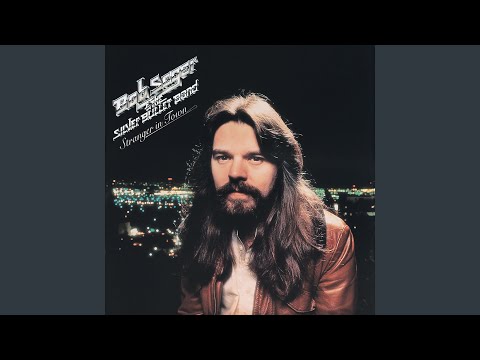


→ More from the 1970s File
View all 1970s hits →




Keep digging