The 1970s File Feature
I.O.I.O.
Bee Gees and "I.O.I.O.": The Reunion Period's Overlooked Curiosity "I.O.I.O." by the Bee Gees appeared on the Billboard Hot 100 for a single week on July 11,…
01 The Story
Bee Gees and "I.O.I.O.": The Reunion Period's Overlooked Curiosity
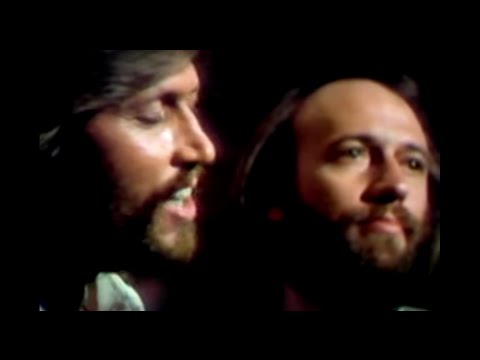
"I.O.I.O." by the Bee Gees appeared on the Billboard Hot 100 for a single week on July 11, 1970, entering and exiting the chart at number 94, a modest commercial showing that placed the recording among the more obscure entries in the group's extensive catalog. Yet the very modesty of the recording's chart performance makes it a revealing document of one of the most turbulent periods in the Bee Gees' long and extraordinarily eventful career, a moment when the group was attempting to reconstitute itself after a dramatic internal collapse and was still finding its footing in the The history of the Bee Gees in the late 1960s was one of spectacular commercial success followed by equally spectacular internal fracture. Barry, Robin, and Maurice Gibb had achieved considerable international fame by 1967 and 1968, producing a series of recordings for Polydor Records and the Robert Stigwood Organisation that combined sophisticated baroque pop arrangements with harmonies of unusual complexity and emotional intensity. "Massachusetts," "To Love Somebody," "Words," and "I've Gotta Get a Message to You" had all been substantial hits on both sides of the Atlantic, establishing the brothers as major figures in the international pop landscape.al pop landscape.
The collapse came with extraordinary speed. By early 1969, internal tensions within the group had become irresolvable, and Robin Gibb departed for a solo career. Barry and Maurice, along with a reconstituted lineup that included non-family members, continued recording under the Bee Gees name for a period. Robin pursued his own path with some success, most notably with "Saved by the Bell," which reached number two in the United Kingdom in 1969. The brothers' separation was professionally damaging to all concerned, even as it demonstrated the degree to which the Bee Gees' identity was bound up with the specific combination ofThe reconciliation and reunion that brought all three brothers back together as the Bee Gees in 1970 was therefore a significant event, and it generated considerable anticipation among the group's established audience. "I.O.I.O." was among the first recordings produced by the reunited group, serving as evidence that the partnership had been restored and that the Bee Gees were again operating as a unit. The song was recorded for Atco Records in the United States and released in the summer of 1970, timed to benefit from the attention that the reunion had generated.on that the reunion had generated.
The title's distinctive formatting, with its periods creating an unusual visual presentation, reflected the group's characteristic willingness to engage with unconventional decisions. The actual vocalized phrase "I.O.I.O." functioned as a kind of scat syllable or nonsense interjection, a device with roots in the do-wop and soul traditions from which the Bee Gees drew many of their influences. This kind of playful phonetic experimentation was consistent with the group's broader tendency toward musical curiosity and their comfort with elements of the avant-garde that distinguished them from more conservative pop acts of the period.
Barry Gibb's vocal on the recording demonstrated the range that made the Bee Gees' harmonies so distinctive, while the arrangement reflected the transition the group was making from the baroque pop of their late-1960s peak toward the soul-influenced direction they would explore through the early 1970s before arriving at the disco sound that would make them global superstars. The recording occupied an in-between space in their development, neither fully committed to what they had been nor yet fully realized as what they were becoming.
The one-week chart appearance of "I.O.I.O." was not the triumphant commercial comeback that the reunion might have been expected to generate. The recording world of mid-1970 was crowded with strong competition, and a single week at number 94 did not represent the kind of return to chart dominance that the group's management and label would have hoped for. The more substantial commercial recovery of the Bee Gees was a gradual process, requiring several more years and significant musical evolution before the extraordinary run of success that began with "Jive Talkin'" in 1975 fully materialized.
In retrospect, "I.O.I.O." stands as a minor but historically interesting artifact of a major act in transition, evidence that even the most talented musicians require time and evolution to find their proper register. The Bee Gees' eventual achievement with disco-era recordings has tended to overshadow the complexity of the path that brought them there, and "I.O.I.O." is one of the markers along that path, a small entry in a very large story.
02 Song Meaning
The Meaning of "I.O.I.O.": Nonsense, Play, and the Sound of Reunion
"I.O.I.O." by the Bee Gees occupies an unusual position in the landscape of popular song meaning. The title phrase itself is not a word or an acronym with settled semantic content but rather a sequence of sounds that function primarily as musical material, a vocalized pattern that belongs to the tradition of scat singing and phonetic play that runs through jazz, gospel, doo-wop, and soul. Understanding what the song means therefore requires engaging with the question of what non-semantic vocal sounds mean in the context of popular music, and that is a genuinely interesting question.
Nonsense syllables in popular music serve several functions that are distinct from the meaning-carrying function of words. They can provide melodic material that is free from the constraints of literal meaning, allowing the voice to function more purely as a musical instrument. They can signal a kind of emotional excess or spontaneity, the sense that the feeling being expressed has overflowed the containers that language provides. They can also create a form of inclusive communication that transcends linguistic barriers, since the pleasure of a vocalized sound pattern is accessible to listeners regardless of whether they understand the surrounding lyrical content.
In the specific case of "I.O.I.O.," the phonetic pattern also had a quality of brightness and openness, the vowel sounds carrying an inherent quality of uplift that suited the circumstances of the recording. The Bee Gees were reconstituting themselves as a group after a painful period of separation, and there was something appropriate about marking that reconstitution with a sound that was more about the pleasure of vocal interaction than about the articulation of specific emotional content. The brothers singing together, particularly their characteristic close harmonies, was itself the message, and the title phrase gave that message a specific sonic form.
The Bee Gees had always been interested in the relationship between sound and feeling, and their early recordings demonstrated a sophisticated understanding of how sonic texture could carry emotional content independently of lyrical meaning. The group's harmonic language was unusually complex for popular music of the period, drawing on influences from gospel to Beatles-era baroque pop to the close-harmony traditions of folk groups, and this complexity meant that their recordings communicated on multiple levels simultaneously. "I.O.I.O." was an experiment in stripping away some of this complexity and working with more elemental sonic material.
The recording also carried meaning through its context as a reunion document. Listeners who were aware of the group's separation and reconstitution would have heard in the brothers' voices something additional to the musical content: evidence that the collaboration had been restored, that the Gibb brothers were again making music together. This contextual meaning was not encoded in the lyrics, since the song's phonetic title phrase carried none, but it was nonetheless available to informed listeners and gave the recording an emotional significance that a cold assessment of its musical content alone would not have revealed.
Barry, Robin, and Maurice Gibb's shared vocal instrument was among the most distinctive sounds in popular music, and any recording that brought them together was a demonstration of that distinctive quality. "I.O.I.O." offered this demonstration in a particularly pure form, with the group's voices serving as the primary source of interest and meaning. That this form of communication was sufficient to bring the recording to the Billboard Hot 100, even briefly, suggested that the audience for the Bee Gees' vocal sound was real and waiting for their return.
→ More from Bee Gees
View all Bee Gees hits →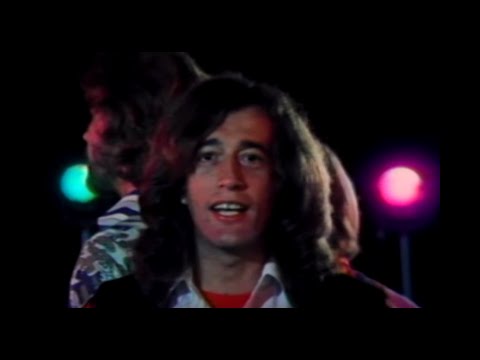



→ More from the 1970s File
View all 1970s hits →




Keep digging