The 1970s File Feature
How Can You Mend A Broken Heart
How Can You Mend A Broken Heart — Bee Gees The Gibb Brothers Before the Disco Era Picture the Bee Gees in the spring of 1971, and the image that comes to min…
01 The Story
How Can You Mend A Broken Heart — Bee Gees
The Gibb Brothers Before the Disco Era
Picture the Bee Gees in the spring of 1971, and the image that comes to mind is almost certainly wrong. The white suits and pulsing dance floor anthems were still years away. In 1971, Barry, Robin, and Maurice Gibb were a baroque pop and rock group with a devoted following, a string of psychedelic-tinged albums, and a recently resolved internal crisis that had temporarily fractured the trio. Robin had briefly pursued a solo career; Barry had released material of his own. The group had reunited by 1970 and released the album 2 Years On, signaling a new chapter that was still finding its direction.
Barry and Robin Gibb wrote "How Can You Mend A Broken Heart" in a single creative session, a song that would become one of the defining recordings of their early career. The writing partnership between the Gibb brothers was extraordinarily productive, capable of moving between tender balladry and orchestral pop with ease, and this song represented some of their finest work in the slower, more emotionally exposed mode.
Sound and Recording
The track was recorded for the album Trafalgar and produced by the group with longtime collaborator Robert Stigwood's organization supporting the broader release effort. The arrangement is orchestral and expansive, with string writing that frames the vocal performance without crowding it. Barry Gibb's lead vocal on the track carries a different emotional temperature than the falsetto he would become famous for in the disco years; this is a fuller, more traditionally masculine delivery, rich with grief and confusion rather than celebration.
The production captured a sound that was simultaneously lush and emotionally direct, striking enough to distinguish itself from the competing orchestral pop of the era. The melody is one of the Gibb brothers' most graceful constructions, moving through its verse and chorus with the inevitability that separates great pop songwriting from competent pop songwriting. The lyric poses its title question across every verse and chorus without ever quite answering it, which turns out to be exactly the right structural choice.
Number One on the Billboard Hot 100
The single debuted on the Hot 100 on June 26, 1971, at position 73, which was a respectable opening for a ballad without an obvious radio gimmick. The climb was steady through the summer. The record reached number one on the Billboard Hot 100 during the week of August 7, 1971, making it the first number-one single for the Bee Gees in the United States as a group. It spent 15 weeks on the chart in total, a sustained run that reflected genuine audience affection rather than a brief spike of novelty attention.
The achievement was significant for a group that had experienced commercial ups and downs through the late 1960s. American radio had not always been receptive to their more baroque and experimental tendencies, but a well-crafted ballad with this kind of melodic clarity cleared every potential obstacle. The number-one position announced them as a viable mainstream act in the American market in a way that their earlier work had not quite managed.
Al Green's Defining Moment
The song's second life arrived almost immediately. Al Green recorded "How Can You Mend A Broken Heart" in 1972, and his version became a landmark of soul music. Green's interpretation brought a different emotional gravity to the material, placing it firmly in the tradition of Southern soul and gospel-inflected R&B. His recording demonstrated that the song's melodic and emotional architecture could support radically different vocal approaches without losing any of its essential power. The existence of two such distinct, accomplished readings of the same song is testament to how thoroughly the Gibb brothers had solved the compositional problem the track presented.
Looking Back from the Disco Years
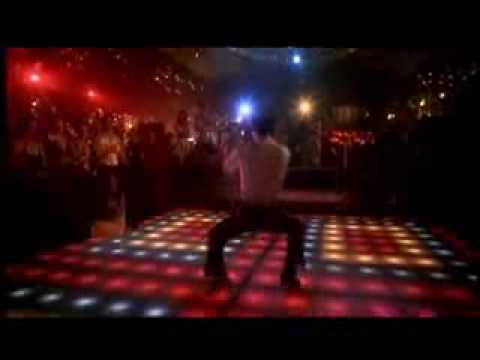
"How Can You Mend A Broken Heart" occupies a peculiar but important position in the Bee Gees' legacy. It predates the explosion of Saturday Night Fever and the tsunami of commercial success that era brought by six years, which means it comes from a different phase of the group's artistic identity entirely. Listeners who only know the Gibb brothers through their disco and post-disco output sometimes discover this song with something like surprise, hearing in it a softness and a willingness to sit with unanswered questions that the dance floor imperative would later crowd out. Put the record on and let those questions hang in the air where they belong.
"How Can You Mend A Broken Heart" — Bee Gees' singular moment on the 1970s charts.
02 Song Meaning
How Can You Mend A Broken Heart — Meaning, Themes, and Legacy
Questions Without Answers
The most striking structural choice in "How Can You Mend A Broken Heart" is its refusal to answer its own question. The title itself is interrogative, and the song sustains that posture across its entire length, repeating the question in various forms without ever arriving at a resolution. Barry and Robin Gibb understood that grief does not resolve into solutions. It cycles, it returns, it poses the same impossible questions again and again. A song that mimics that structure in its own form is more honest about the experience than one that arrives neatly at acceptance or understanding.
This makes the song more complex than it initially appears. On first hearing, it seems to be a straightforward lament, a man asking how he is supposed to recover from loss. But the repetition of the question across multiple verses suggests that the act of asking is itself the point, that articulating the impossibility of healing is a form of processing it.
The Imagery of Stopped Time
The lyric reaches for images of paralysis and impossibility. The narrator describes himself as unable to stop the rain from falling, unable to make the sun shine again. These are not simply romantic metaphors; they are specific descriptions of what serious grief does to perception. The world continues on its ordinary business while the grieving person feels entirely divorced from its rhythms. Time keeps moving, weather keeps changing, other people keep living their lives, and none of that movement reaches the person who is broken in the way the song describes.
That emotional accuracy is what gave Al Green such rich material to work with when he recorded his celebrated cover version. Green's gospel-influenced approach brought a theological dimension to the imagery, hearing in it a lament that reaches beyond romantic loss toward something closer to spiritual abandonment.
The Bee Gees' Emotional Range
This song is important for understanding the Bee Gees' full artistic identity because it reveals a capacity for stillness and vulnerability that the Saturday Night Fever years somewhat obscured. The Gibb brothers were, at their core, songwriters with an extraordinary melodic gift and a genuine ability to inhabit emotional states that were uncomfortable and unresolved. Those qualities are present throughout their career, but they are most legible in songs like this one, where the arrangement and tempo allow them to breathe.
The contrast between this recording and "Stayin' Alive" or "Night Fever" is almost vertiginous. Same voices, same songwriting partnership, entirely different emotional universe. That range is precisely what makes their catalog so durable and so interesting to explore.
Why the Song Travels Across Decades
Some songs about heartbreak have a dated quality, rooted too firmly in the fashions of their era to speak directly to later listeners. "How Can You Mend A Broken Heart" does not have that problem because its central question is permanently contemporary. Every generation produces new listeners who have experienced the specific kind of disorientation the song describes, and for those listeners, hearing this record for the first time can feel like unexpectedly finding language for something they thought was private and inarticulate.
That quality of giving form to experience that resists ordinary language is the highest thing pop music can aspire to, and the Gibb brothers achieved it here with a concision and melodic grace that remains admirable more than fifty years after the recording was made.
→ More from Bee Gees
View all Bee Gees hits →
→ More from the 1970s File
View all 1970s hits →




Keep digging