The 1970s File Feature
I Like To Live The Love
B.B. King's Pop Crossover and the Recording of "I Like To Live The Love" The early 1970s found B.B. King in a position that few blues artists of his generati…
01 The Story
B.B. King's Pop Crossover and the Recording of "I Like To Live The Love"
The early 1970s found B.B. King in a position that few blues artists of his generation had ever occupied: he was famous. After decades of relentless touring, of playing hundreds of dates a year across the African American entertainment circuit known as the Chitlin' Circuit, of recording for labels that reached primarily Black audiences, King had crossed over into the broader American mainstream through a combination of the blues revival's intervention, his 1969 breakthrough with "The Thrill Is Gone," and the enthusiastic embrace of younger white rock audiences who had discovered the blues through the British Invasion artists who had studied it so devotedly. By the turn of the decade, B.B. King was not merely a great blues musician but a recognized American cultural figure.
This mainstream recognition created both new opportunities and new pressures. The commercial logic of crossover success suggested the possibility of reaching even broader audiences through recordings that moved somewhat away from the blues idiom's core conventions and toward the sounds of contemporary pop, soul, and funk. King was not resistant to this logic; he had always been a commercially minded artist who understood the necessity of reaching audiences in the terms they were prepared to accept, and his curiosity about music beyond the blues was genuine rather than merely strategic. He had long admired the jazz tradition and had absorbed much of its harmonic sophistication into his guitar playing.
"I Like To Live The Love" was released in 1973 on ABC Records, the label to which King had moved from Bluesway in 1962 and which had been his commercial home during the period of his mainstream breakthrough. The record represented a deliberate movement toward the contemporary soul and pop idiom that was dominating American radio in the early 1970s, drawing on the lush orchestral arrangements and the warm, funk-influenced rhythm section sounds that characterized the best commercial soul production of the era. The production gave King's guitar a somewhat different role than it occupied in pure blues contexts, placing it within a denser sonic environment where it functioned as one element among many rather than as the dominant expressive vehicle.
The record reached number twenty-eight on the Billboard Hot 100, King's highest pop chart placement in many years and a demonstration that the crossover audience was genuinely receptive to his particular combination of blues authenticity and contemporary production values. On the rhythm-and-blues chart, where King had been a presence since the late 1940s, the performance was similarly strong. The record's commercial success validated the approach and suggested the viability of a strategy that positioned King as a figure who could move between blues authenticity and contemporary soul without compromising either.
The tension between maintaining blues credibility and pursuing mainstream pop success was one that King navigated throughout this phase of his career with characteristic pragmatism. He was not the first blues artist to face this challenge, nor would he be the last, but his particular position as the most widely recognized living blues musician gave the negotiation unusual public visibility. Blues purists occasionally expressed discomfort with his more commercially oriented recordings, while King himself consistently maintained that the blues was a living tradition that had always absorbed and adapted to contemporary influences rather than a museum artifact to be preserved in amber.
The guitar playing that King brought to "I Like To Live The Love," even within the more commercial production context, remained unmistakably his. The vibrato technique he had developed, his particular way of bending strings and sustaining notes, the conversational quality of his phrasing, these were characteristics so deeply individual that no production context could neutralize them. His voice on the record carried the same qualities: the warmth, the expressiveness, the sense of a man singing from genuine feeling rather than technical calculation.
King's career after the early 1970s crossover period continued to evolve through collaborations with artists across multiple genres, including celebrated recordings with Bobby "Blue" Bland, a Grammy-winning collaboration with Eric Clapton in 2000, and sustained touring that maintained his profile as an active and vital performer until shortly before his death in May 2015. "I Like To Live The Love" stands as a document of a particular moment in his trajectory, when the possibility of genuine mainstream pop success seemed both real and worth pursuing, and when his particular brand of blues-inflected soul found its largest pop audience.
02 Song Meaning
Joy, Pleasure, and the Affirmative Vision of "I Like To Live The Love" by B.B. King
In the context of the blues tradition, where so much of the genre's expressive power derives from the articulation of suffering, disappointment, and loss, a song that straightforwardly celebrates the pleasure of living and loving occupies an interesting position. B.B. King's "I Like To Live The Love" is not a blues record in the conventional sense, but it draws on blues's capacity for joy as fully as on its more familiar sorrowful register. The blues has always encompassed both; the Saturday night celebration is as native to the tradition as the Monday morning lament, and the affirmative energy of this record connects to that celebratory dimension with evident conviction.
The title's grammatical construction is worth attending to. "I like to live the love" is not "I like love" or "I love love" but something more specific and more active: the living of love as an ongoing practice, as a way of being in the world rather than an emotion that arrives from outside and acts upon the passive self. This formulation implies a relationship to love that is participatory and volitional, that requires active engagement rather than merely receptive waiting. For an artist who had spent decades making a discipline of his art, performing and recording with relentless commitment regardless of commercial fashion, this active relationship to the thing one values had obvious autobiographical resonance.
The early 1970s context in which the record was released was a period of genuine cultural exploration and affirmation for African American popular music. Soul music's golden era had produced a body of work that celebrated Black life, culture, and experience with an assertiveness and joy that represented both artistic achievement and cultural statement. King's move toward the contemporary soul idiom in "I Like To Live The Love" placed him in conversation with this tradition, connecting the blues heritage he embodied to the contemporary affirmative energy of early-1970s Black popular music. The record's production, with its lush arrangements and contemporary rhythm section sounds, made this conversation explicit at the sonic level.
King's guitar performance on the track also carried meaning. The instrument itself was so thoroughly identified with its player that his guitar lines functioned as a kind of signature, a reminder that the celebratory soul recording the production created was grounded in a blues tradition of extraordinary depth and historical richness. This layering of musical identities, the blues master operating in a soul and pop idiom, created a richness of reference that gave the record a density beyond what the surface presentation might suggest.
The affirmative quality of the song also connected to a theme that had run through African American music for generations: the insistence on joy as a form of resistance, the refusal to allow suffering to have the final word. The celebration of love as something worth living, worth committing to actively, was not naivety in this context but a hard-won philosophical position, an insistence that the capacity for pleasure and connection was not negated by the difficulties that surrounded it but was precisely what made the effort of living worthwhile.
→ More from B.B. King
View all B.B. King hits →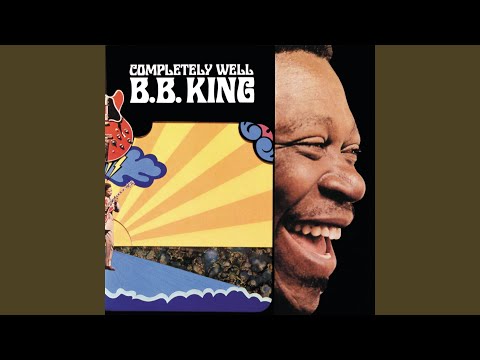


→ More from the 1970s File
View all 1970s hits →




Keep digging