The 1970s File Feature
Your Sweetness Is My Weakness
"Your Sweetness Is My Weakness" — Barry White and the Late-1970s Soul Masterclass The Voice That Rewrote the Rules By the autumn of 1978, Barry White had alr…
01 The Story
"Your Sweetness Is My Weakness" — Barry White and the Late-1970s Soul Masterclass
The Voice That Rewrote the Rules
By the autumn of 1978, Barry White had already accomplished something genuinely rare in pop music: he had turned his own physical presence into an artistic instrument. The deep, unhurried voice, the spoken interludes, the orchestral productions that unfolded with the patience of someone who understood that anticipation was its own pleasure, these elements had combined through the first half of the 1970s to create a commercial phenomenon that no one had entirely predicted and no one who heard it could easily forget. The success of records like "Can't Get Enough of Your Love, Babe" and "You're the First, the Last, My Everything" had made White one of the most recognizable artists of the decade.
The Love Unlimited Orchestra and the Production Approach
White's recordings were never solo efforts in the conventional sense. He worked closely with the Love Unlimited Orchestra, the full orchestral ensemble he had assembled and conducted, which gave his productions a scale and warmth that distinguished them from the leaner soul and R&B of the period. "Your Sweetness Is My Weakness," released in 1978 on 20th Century Records, continued this established approach: lush strings, warm brass, a rhythm section that moved at a tempo designed for maximum emotional effect, and White's voice at the center of it all, delivering its address with the comfortable authority of someone who had been at this long enough to trust the process.
A Nine-Week Chart Journey
"Your Sweetness Is My Weakness" debuted on the Billboard Hot 100 on November 18, 1978, entering at number 93. Its ascent through the chart was methodical, climbing through the mid-80s, then the 70s, reaching its peak position of number 60 on December 23, 1978. The track spent nine weeks on the Hot 100 in total. A chart peak of 60 during the Christmas week underscored the song's atmospheric suitability for the warmest and most emotionally charged stretch of the calendar, a period when romantic longing and intimate celebration were equally in the air.
The Love Unlimited Ecosystem
White's commercial operation by the late 1970s was unusually integrated. Beyond his solo recordings, he had developed the Love Unlimited vocal trio, a female group whose material he wrote and produced, as well as the Love Unlimited Orchestra, the full ensemble that backed his own recordings and released its own instrumental albums. This ecosystem gave him remarkable creative control and an unusually large infrastructure for a solo artist of the period. The orchestral resources available to him were not studio hires brought in for individual sessions but a functioning ensemble with its own identity and audience. "Your Sweetness Is My Weakness" was a product of this system, which is partly why it sounds so fully realized: the musicians and arrangements were not assembled for the occasion but carried an accumulated fluency that recording sessions alone cannot easily replicate.
Disco's Moment and Soul's Endurance
By 1978, disco had become commercially dominant in ways that were reshaping every corner of the music industry. White's position in this landscape was interesting: his sound had influenced the aesthetic foundations of disco through its emphasis on orchestration, groove, and physical sensation, yet his recordings maintained a soulful gravitas that the more mechanized end of the disco spectrum did not always achieve. He occupied a space where the soul tradition he had grown up with and the contemporary sonic vocabulary of 1978 existed in productive rather than uncomfortable proximity.
The Career's Continued Relevance
White's late-1970s work, of which "Your Sweetness Is My Weakness" is a representative example, showed an artist who had found his voice completely and was deploying it with quiet confidence rather than scrambling to remain contemporary. The nine-week Hot 100 run confirmed ongoing commercial viability in a market that had undergone enormous changes since his early-1970s peak. His legacy would continue to grow through the decades, with his recordings being sampled, covered, and revived repeatedly as subsequent generations discovered the particular pleasure of a Barry White production. Hear this one and understand exactly why the voice became an institution.
"Your Sweetness Is My Weakness" — Barry White's singular moment on the 1970s charts.
02 Song Meaning
"Your Sweetness Is My Weakness" — Devotion, Desire, and the Paradox of Surrender
The Paradox in the Title
The phrase "your sweetness is my weakness" contains a compressed philosophical argument about the nature of desire. Sweetness is conventionally valued; weakness is conventionally feared. To declare that the former produces the latter is to admit that love makes you vulnerable in ways that you cannot fully control, and to frame that vulnerability as a direct consequence of someone else's positive qualities. The song builds its emotional world on this paradox, presenting romantic devotion as something that simultaneously strengthens and undoes the person who feels it.
Barry White and the Language of Soul Devotion
White's entire artistic project rested on the sincerity of romantic expression. Where some artists used love as a theme to be explored ironically or at arm's length, White addressed it with complete commitment. His lyrical approach assumed that the fullest possible expression of feeling was the appropriate response to genuine emotion, and that restraint or irony were simply failures of honesty. This directness resonated powerfully with audiences who found in his recordings permission to feel things they were otherwise expected to moderate.
Soul Music and the Aesthetics of Vulnerability
The soul tradition from which White emerged had always been willing to present emotional vulnerability as a legitimate subject for music, drawing on the gospel tradition's comfort with expressing the full range of human feeling before a listening audience. What White did was update this tradition for a particular mid-1970s aesthetic, one that emphasized physical sensation and romantic longing over the more explicitly spiritual framework of gospel. "Your Sweetness Is My Weakness" participates in this tradition, treating romantic feeling with the same seriousness and depth that gospel applied to devotional experience.
Orchestration as Emotional Argument
One of White's most underappreciated contributions to popular music was his insistence that orchestral arrangements had a role to play in Black popular music in the 1970s. At a moment when the stripped-down funk of James Brown and the increasingly electronic production of soul were defining the genre's direction, White maintained that strings and brass and full orchestral texture were not artifacts of an earlier era but living tools for contemporary emotional expression. The orchestration on "Your Sweetness Is My Weakness" makes a case for this position in the most direct way possible: by sounding genuinely beautiful.
Why the Song Endures
Barry White's recordings have been discovered and rediscovered by every generation since their original release, appearing in films, television programs, and advertising contexts that speak to their continued emotional availability. The reason is simpler than any analytical framework can fully capture: they sound like someone means it. "Your Sweetness Is My Weakness" carries the conviction of a performance where the distance between the singer and the sentiment has been completely closed. In popular music, where the performance of feeling is sometimes more visible than the feeling itself, this kind of apparent sincerity is rare and valuable and why, decades later, the track still lands.
→ More from Barry White
View all Barry White hits →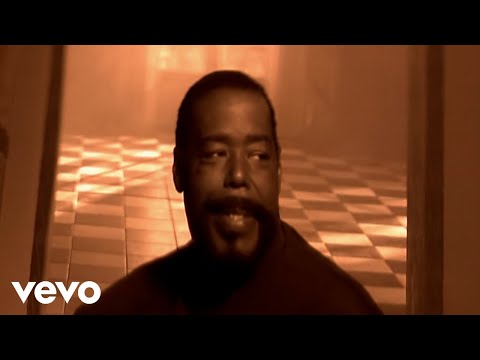



→ More from the 1970s File
View all 1970s hits →




Keep digging