The 1970s File Feature
Tryin' To Get The Feeling Again
"Tryin' To Get The Feeling Again" — Barry Manilow and the Art of the Comeback Ballad The Soft Rock Moment and Its Champion By the spring of 1976, Barry Manil…
01 The Story
"Tryin' To Get The Feeling Again" — Barry Manilow and the Art of the Comeback Ballad
The Soft Rock Moment and Its Champion
By the spring of 1976, Barry Manilow had established himself as one of the most commercially reliable presences on American pop radio. His previous single "I Write the Songs" had reached number one on the Billboard Hot 100 in early 1976, and the audience that had made that possible was hungry for the next installment. What they received was "Tryin' To Get The Feeling Again," a song that situated itself within a specific emotional experience that Manilow's growing fan base understood immediately and viscerally: the desperate, sometimes failing effort to recapture a feeling that has slipped away.
The single debuted on the Hot 100 on March 20, 1976, entering at number 67. Its ascent was measured and steady, characteristic of the way Manilow's material typically built: 57, 45, 37, 25, and continuing upward until the record reached its peak position of number 10 on May 22, 1976, after 15 weeks of chart activity. The 15-week run demonstrated the sustained listener engagement that distinguished Manilow's peak years from one-dimensional pop commercial success.
The Song and Its Origins
The track was written by David Pomeranz, an American songwriter who had developed a substantial reputation as a craftsman of emotionally nuanced pop material. Pomeranz wrote the song with a melodic sophistication that Manilow's production team, including Manilow himself as arranger and co-producer, brought fully to realization. The arrangement is built around the orchestral warmth that was Manilow's commercial signature: strings that swell at the chorus, a rhythm section that stays tasteful and supportive, piano providing the intimate foundation beneath the larger orchestral canvas.
Manilow's relationship with this kind of material was genuinely symbiotic. He had worked as an arranger and musical director before his own performing career took off, and his understanding of how an orchestral arrangement interacts with a vocal performance was unusually deep for a pop star of his era. The subtlety with which the arrangement of "Tryin' To Get The Feeling Again" supports rather than overwhelms the lyrical content reflects that understanding.
Manilow in the Context of Mid-1970s Soft Rock
The mid-1970s pop landscape was bifurcated in ways that contemporary listeners sometimes forget. While disco was building its commercial momentum and rock was exploring increasingly hard-edged directions in punk and arena rock, a substantial portion of the listening public wanted something else entirely: melodically strong, emotionally accessible pop that prioritized feeling over noise. Manilow was one of several artists serving that audience, alongside figures like Neil Diamond, Barbra Streisand, and the Carpenters.
Manilow's commercial approach differed from these contemporaries in his emphasis on the orchestrated ballad form at a moment when many soft rock artists were moving toward a more stripped-down sound. The grandeur of his productions was a deliberate artistic choice, and the audience that responded to it did so with genuine commitment. Manilow's fan base during his peak commercial years was notably devoted, a relationship that went beyond passive consumption into something closer to active advocacy.
Arista Records and Clive Davis
Manilow had signed with Arista Records, the newly founded label operated by industry veteran Clive Davis, in 1974. Davis's involvement in Manilow's career was significant: he had the ability to identify commercially viable material and understood how to position an artist for sustained rather than momentary success. The combination of Davis's commercial instinct and Manilow's genuine musical ability produced one of the decade's most impressive sustained chart runs. "Tryin' To Get The Feeling Again" was one installment in a series of Arista singles that charted consistently through the mid-to-late 1970s.
The Arista infrastructure provided Manilow with strong promotional support and radio access, but the underlying reason for his success was simpler: he had a great voice, he worked with well-crafted songs, and he understood his audience. The commercial framework amplified those qualities without being their source.
The Emotional Specificity of the Lyric
What made the song resonate beyond its radio-friendly production values was the precision of its emotional scenario. The experience of trying to recapture a feeling that was once natural and effortless, whether in a relationship, a creative pursuit, or an emotional state, is familiar enough to be universal while specific enough to feel personal. Pomeranz had identified a precise human experience rather than a generic one, and that precision gave Manilow's performance something to inhabit with genuine conviction.
Pop music in the mid-1970s sometimes trafficked in emotional generality, the vague sentiment that could mean everything and therefore meant nothing to anyone in particular. The best material of the era avoided that trap, and "Tryin' To Get The Feeling Again" is a clear example of a song that succeeded because it earned its emotional resonance through specificity rather than assuming it through grandeur of arrangement.
Put this on and let 1976 soft pop do its intended work. Press play and feel the strings and the longing arrive together, exactly as designed.
"Tryin' To Get The Feeling Again" — Barry Manilow's singular moment on the 1970s charts.
02 Song Meaning
"Tryin' To Get The Feeling Again" — Loss, Longing, and the Memory of Feeling
When Emotion Becomes Effort
There is a particular kind of emotional suffering that is harder to name than heartbreak or grief: the experience of reaching for a feeling you once had and finding that it no longer arrives naturally. Love, joy, creative inspiration, the sensation of being fully alive in a moment: all of these can become things one tries to recover rather than things one simply experiences. "Tryin' To Get The Feeling Again" locates its emotional center in exactly this predicament, describing the specific anguish of effort where ease once was.
The song is not about absence but about near-presence, the feeling being close enough to remember but no longer accessible on demand. That distinction is what makes the lyrical scenario so precise and so universally recognizable. Anyone who has struggled to recapture a creative peak, a romantic connection, or a period of emotional vibrancy in their own life has lived inside this song's central concern.
The Pop Ballad as Emotional Validation
One of the functions that the orchestrated pop ballad served for its 1970s audience was the provision of emotional validation at scale. Feelings that might seem private, idiosyncratic, or even shameful when experienced alone become more manageable when they are acknowledged publicly as common human experiences. Barry Manilow's recordings, including this one, provided that validation consistently and at commercial scale, reaching millions of listeners who found in the music an accurate reflection of their interior lives.
This function is not trivial. The idea that popular music serves purely entertainment purposes underestimates how much emotional work it does for its listeners. People play certain songs at particular moments in their lives not because those songs entertain them but because those songs see them, and being seen by a piece of art is a significant human experience regardless of the genre or the context.
Memory and Feeling in Lyrical Tradition
The song sits within a long tradition of popular music that deals with memory and its emotional complications. The relationship between memory and feeling is one of the fundamental subjects of art across all media: how the past is carried in the body and the mind, how it shapes present experience, and how the inability to access past states of feeling generates its own particular form of grief.
David Pomeranz's lyric engages with this tradition through the specific and concrete scenario of someone who wants to feel again what they once felt naturally, whether in the context of a romantic relationship or in some broader sense of emotional aliveness. The song does not resolve the situation; it inhabits it with honesty. The resolution it offers is purely musical, the sense of being heard rather than being fixed.
Why Manilow Was the Right Vehicle
The success of "Tryin' To Get The Feeling Again" depended partly on Manilow's specific vocal qualities. His voice carries a particular quality of tender pleading that suited the material exactly. He sang at the register of someone who genuinely wants something that is not quite within reach, and that quality made the lyrical scenario feel inhabited rather than performed. The emotional authenticity of his interpretation came through regardless of the lush orchestral production surrounding it, grounding the record in something genuinely felt.
The audience that responded to Manilow during his peak years was responding to exactly this quality. His vocal performances communicated sincerity with a consistency that made listeners trust him with their emotional investment. A song about the effort to recover feeling only works if the performer sounds like they actually understand what that effort costs, and Manilow did.
"Tryin' To Get The Feeling Again" — Barry Manilow's singular moment on the 1970s charts.
→ More from Barry Manilow
View all Barry Manilow hits →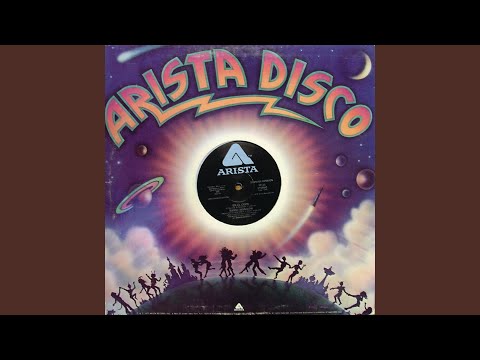


→ More from the 1970s File
View all 1970s hits →




Keep digging