The 1970s File Feature
It's A Miracle
It's A Miracle: Barry Manilow and the Making of a Mid-Decade Pop Success Barry Manilow's career in the mid-1970s traced one of the more remarkable ascents in…
01 The Story
It's A Miracle: Barry Manilow and the Making of a Mid-Decade Pop Success
Barry Manilow's career in the mid-1970s traced one of the more remarkable ascents in the history of American popular music. Beginning as a commercial jingle writer and arranger, including his well-known work on advertising campaigns for brands including State Farm Insurance and Dr. Pepper, Manilow had established himself as an exceptionally skilled craftsman of accessible, melodically sophisticated pop music before his recording career began in earnest. By 1975, that recording career was fully under way, and "It's A Miracle" was one of the singles that consolidated his commercial position during this pivotal period.
The song was co-written by Barry Manilow and Marty Panzer, one of the creative partnerships that produced some of Manilow's most commercially successful material. Panzer was Manilow's primary lyrical collaborator during this period, and the two developed a reliable working method that allowed them to produce songs with a high degree of melodic and lyrical polish. The subject matter of their collaboration tended toward the emotionally direct and the romantically affirmative, which suited the tastes of the adult contemporary audience that Manilow was cultivating.
The production on "It's A Miracle" was handled by Ron Dante and Barry Manilow himself, reflecting Manilow's insistence on maintaining creative control over the sonic presentation of his material. Dante, who had been the uncredited lead voice of the Archies and later worked extensively in commercial and pop production, brought a clean, professional sensibility to the sessions that complemented Manilow's own preferences. The resulting sound was polished and accessible, with orchestral elements that reflected Manilow's background as an arranger while remaining firmly within the parameters of mainstream pop radio.
Released on Arista Records in 1975, "It's A Miracle" performed strongly on the adult contemporary chart and crossed over to the Billboard Hot 100, where it reached a peak position in the top twelve. This chart performance was consistent with the trajectory that Manilow was establishing during this period, during which he placed a remarkable succession of singles on the pop and adult contemporary charts, building an audience of devoted fans whose loyalty would sustain his commercial success across the better part of a decade.
The Arista Records context is important for understanding Manilow's commercial strategy during this period. Arista had been founded by Clive Davis in 1974, and Davis's reputation as one of the most instinctive and effective record executives in the industry had attracted a roster of artists whose commercial potential he was uniquely positioned to develop. Manilow was one of the label's most important early signings, and the relationship between artist and executive was characterized by mutual respect and a shared understanding of what the adult contemporary market wanted and needed.
Manilow's technical abilities as a pianist, arranger, and producer informed every aspect of the recordings he made during this period. His musical training, which had included formal study at the Juilliard School and the New York College of Music, gave him a command of harmonic and melodic structure that distinguished his work from simpler pop production. This musical sophistication was deployed in the service of accessibility rather than complexity, a conscious choice that maximized the songs' appeal to the broadest possible audience while maintaining a level of craft that made them genuinely satisfying to more musically literate listeners as well.
The mid-1970s context for "It's A Miracle" was one of considerable musical diversity on the pop charts, with rock, soul, disco, and country all competing for chart positions alongside the adult contemporary pop that Manilow exemplified. In this crowded environment, the consistency of his chart success was remarkable. Between 1974 and 1983, he placed an extraordinary number of singles on the adult contemporary chart at number one, a record that speaks to both the quality of his material and the loyalty of his audience.
Live performance was central to Manilow's commercial success during this period. He was an exceptionally skilled entertainer whose concerts combined musical professionalism with a genuine warmth and connection with audiences that translated into sustained fan loyalty. The recordings served as calling cards for the live experience, and singles like "It's A Miracle" functioned within a commercial ecosystem in which radio play, album sales, and concert attendance reinforced one another.
Critical opinion of Manilow's work has always been divided, with the popular music press of the 1970s often dismissive of adult contemporary pop as insufficiently authentic or adventurous compared to the rock and soul that critics preferred. However, the commercial success of recordings like "It's A Miracle" demonstrated that Manilow was serving a genuine audience need, providing melodically sophisticated, emotionally warm popular music of a kind that many listeners found deeply satisfying and that the album-oriented rock format largely failed to supply.
In retrospect, "It's A Miracle" represents an important moment in the consolidation of the adult contemporary format as a commercially significant force in American popular music. Manilow, along with contemporaries like Neil Diamond and Barbra Streisand, helped define the parameters of a market segment that would remain commercially important through the 1980s and beyond, providing a model of pop success that operated largely independently of the critical discourse that dominated rock journalism of the period.
02 Song Meaning
Gratitude and Wonder: The Meaning of It's A Miracle
"It's A Miracle" belongs to the tradition of songs that locate the extraordinary within the ordinary circumstances of romantic love. The narrator of the song experiences the presence and affection of another person as something that defies expectation, something so good and so sustaining that it can only be described as miraculous. The word miracle carries strong religious connotations, suggesting that what has happened between the narrator and the beloved falls outside the normal operations of cause and effect and partakes of something more than humanly explicable.
This use of heightened, quasi-religious language to describe romantic experience has a long history in popular song, drawing on a tradition that extends back through gospel music and before. What distinguishes the better examples of this tradition, and what places "It's A Miracle" among them, is the specificity and sincerity of the emotional claim rather than the language itself. The narrator is not simply reaching for a convenient hyperbole but is expressing a genuine sense of wonder at the fact that romantic connection has proved possible and sustaining.
Barry Manilow's approach to this material was always more sophisticated than his critics acknowledged. His musical training and his background as an arranger gave him an unusually precise understanding of how melody, harmony, and lyrical content interact to produce emotional effects in listeners. The settings he created for songs of this type were calibrated to support and amplify the emotional content of the words without overwhelming them, which is a more difficult achievement than it might appear.
The song also participates in a mode of romantic gratitude that was central to Manilow's appeal as an artist. Many of his most successful recordings addressed the experience of receiving love and finding it transformative, a stance that implicitly acknowledged vulnerability and need rather than presenting a masculine posture of emotional self-sufficiency. This was unusual in the mid-1970s pop landscape, where rock music tended to celebrate independence and emotional control, and it accounts in part for the fervent loyalty of his predominantly female audience.
Marty Panzer's lyrics worked consistently toward the emotionally accessible and the personally specific within the conventions of pop song. The collaborative approach that Panzer and Manilow developed allowed lyrics to feel personally felt rather than generically assembled, which was essential to the effectiveness of songs in this emotional register. A song about romantic gratitude can easily feel saccharine or inauthentic if the lyrical specificity is insufficient, and Panzer's writing generally avoided that failure.
The context of mid-1970s American popular culture gives the song additional meaning. The period was one of considerable social uncertainty, with economic difficulties, the ongoing trauma of the Vietnam War's aftermath, and the cynicism generated by Watergate all contributing to a cultural atmosphere in which genuine warmth and emotional affirmation had a particular value. Songs that offered simple, sincere celebrations of love and connection served a genuine emotional function for audiences navigating that environment.
For Manilow's artistic identity, "It's A Miracle" represents the kind of material that defined his relationship with his core audience. His fans experienced his recordings not simply as entertainment but as emotional companionship, music that reflected and validated their own experiences of love, longing, and connection. This quasi-personal relationship between artist and audience was central to the commercial ecosystem he occupied, and the song's affirmative warmth was a primary vehicle through which that relationship was established and sustained.
→ More from Barry Manilow
View all Barry Manilow hits →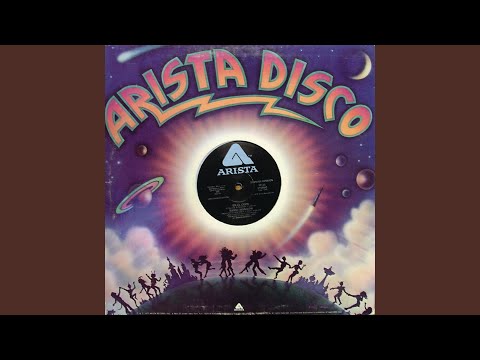


→ More from the 1970s File
View all 1970s hits →




Keep digging