The 1970s File Feature
Young Blood
"Young Blood" — Bad Company Charges Into the Top 20 Hard Rock's Confidence in 1976 By the spring of 1976, Bad Company had established themselves as one of th…
01 The Story
"Young Blood" — Bad Company Charges Into the Top 20
Hard Rock's Confidence in 1976
By the spring of 1976, Bad Company had established themselves as one of the most commercially reliable hard rock acts in the world. The British quartet, assembled in 1973 from the wreckage of some of rock's most distinguished bands, had achieved something that many of their contemporaries could not manage: they made music that was uncompromisingly loud and physical while remaining radio-friendly enough to dominate playlists on both sides of the Atlantic. Vocalist Paul Rodgers was widely acknowledged as one of the finest voices in rock, possessed of a raw authority that could anchor the heaviest riff without losing its humanity.
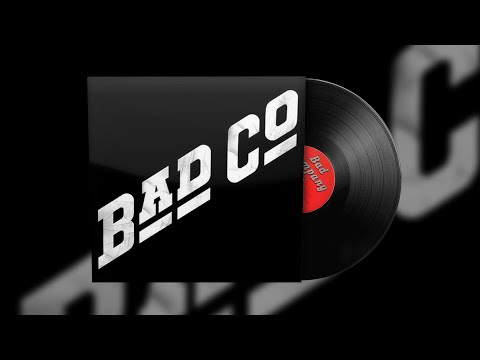
Their albums had moved in enormous quantities. The debut, simply titled Bad Company, had gone to number one in the UK and reached number one in the US as well, producing hits that became permanent fixtures on classic rock radio. Straight Shooter and Run With the Pack continued that commercial momentum. By the time Young Blood arrived, the band was operating at the height of its powers.
The Track and Its Energy
Young Blood came from the band's fourth studio album, Burnin' Sky, and it captured the band in a particular mood: lean, driving, built for volume. The production, handled in the band's characteristically direct manner, gave Mick Ralphs' guitar the forward position the riff demanded. The rhythm section locked into a groove that had the physical insistence of the best British hard rock of the period. Rodgers delivered the vocal with the effortless authority that had made Bad Company famous, finding the balance between power and control that defined his approach.
The track's energy was different from the more reflective or atmospheric material the band had also proven capable of. This was straightforwardly propulsive, the kind of song that rewarded high volume and generated immediate physical response. It was also structurally efficient: no unnecessary adornment, no indulgent passages, just the focused delivery of a central idea.
Charting Through Spring and Into Summer
The single entered the Billboard Hot 100 on March 20, 1976, debuting at number 72. It moved steadily upward through the spring, week by week finding a larger audience as rock radio gave it rotation. By May 22, 1976, it had reached its peak position of number 20, completing a 13-week run on the chart. That peak placed it in the upper range of Hot 100 rock crossover success for the period, a genuine mainstream hit alongside their devoted rock-radio audience.
The timing was favorable. Spring 1976 was a competitive moment on the charts, with an enormous range of styles competing for attention. Bad Company's ability to cut through that noise with a hard rock track and reach the top 20 demonstrated the genuine breadth of their commercial appeal.
Bad Company and the British Hard Rock Tradition
To understand Bad Company in 1976 is to understand something about the lineage they carried. The band had been formed by Rodgers and drummer Simon Kirke from Free, guitarist Mick Ralphs from Mott the Hoople, and bassist Boz Burrell from King Crimson. These were musicians who had already shaped significant chapters of British rock history before they came together. The pedigree was reflected in the efficiency and confidence of their recordings. They did not sound like a new band feeling their way; they sounded like veterans who knew exactly what they were doing.
Free had been one of the most admired British bands of the early 1970s, known for a spare, powerful sound that prioritized space and feel over technical complexity. Bad Company inherited that sensibility and built on it, adding a commercial directness that made their music more accessible without sacrificing its core physicality. Young Blood was a product of that inheritance.
A Career in Full Flight
The mid-1970s represented the peak of Bad Company's commercial and creative standing. They were selling out arenas, their albums were entering the charts at high positions, and their catalog was accumulating the kind of depth that would sustain radio play for decades. The "Young Blood" chart performance added another entry to an already impressive run of pop success, confirming that their appeal was not limited to a narrow rock demographic but extended across the full range of pop radio listeners.
Put this one on and feel what a top-20 rock single sounded like in the year of America's bicentennial, played by four men who meant every note of it.
"Young Blood" — Bad Company's singular moment on the 1970s charts.
02 Song Meaning
"Young Blood" — Vitality, Drive, and the Hard Rock Ethos
What "Young Blood" Means
The phrase "young blood" carries a freight of meaning that extends well beyond its literal sense. Culturally, it implies energy, renewal, and the force of something that has not yet been worn down by time or compromise. In the context of a hard rock track, it takes on a particular resonance: the suggestion that there is a quality of aliveness, of raw physical and emotional intensity, that is available to those who pursue it and that can be lost if the pursuit slackens. Bad Company in 1976 were not young men in the sense of inexperience, but they understood the value of the energy the phrase invoked.
Hard rock as a genre had always been partly about the performance of vitality. Its sonic characteristics, the overdriven guitar, the hard-hitting drums, the powerful unaffected vocals, were all expressions of a particular kind of aliveness. The music did not ask for contemplation; it demanded a physical response. In naming their single "Young Blood," Bad Company announced that the animating principle of that response was what they were celebrating.
The Body in the Music
There is a directness to the Rodgers vocal tradition that connects it to a blues-inflected understanding of what singing is for. The voice in this tradition is not primarily a vehicle for verbal meaning but a physical instrument whose power is felt before it is analyzed. Rodgers embodied that tradition as fully as any British vocalist of his generation. When he sang about energy and desire and movement, the message was delivered as much through timbre and volume as through lyrical content.
This physical dimension of the track was part of what gave it such consistent appeal across demographics. It was not necessary to identify closely with the specific imagery of the lyric to respond to the sonic argument the band was making. The production pulled listeners into the same physical state the music was describing, which is the classic hard rock mechanism and the reason the format has retained its audience across five decades.
1976 and the Rock Landscape
The mid-1970s represented a complex moment in rock's history. Punk was gathering momentum in London's clubs, and its critique of rock's supposed complacency was already shaping conversations in the music press. Against that backdrop, Bad Company's confident traditionalism was a kind of counterargument, a demonstration that the forms punk was rejecting still had genuine life in them when practiced by people who understood them from the inside.
The chart success of "Young Blood" suggested that this counterargument found a large and receptive audience. Radio listeners were not choosing between rock and punk in 1976; most of them had not yet encountered punk at all. What they encountered was Bad Company making the case, in the most direct possible terms, that the music they loved was still capable of generating this kind of heat. The argument was convincing.
Legacy in the Classic Rock Catalog
The track has lived primarily in the Bad Company catalog as a reliable piece of that catalog's energy, a song that demonstrates what the band could do in full-throttle mode. Its top-20 Hot 100 placement confirmed the band's cross-format commercial power and contributed to the body of work that would sustain their reputation long after their initial commercial peak had passed. For the listener encountering it now, it offers a clean and direct experience of what rock radio felt like when it was in its most confident phase.
→ More from Bad Company
View all Bad Company hits →


→ More from the 1970s File
View all 1970s hits →




Keep digging