The 1970s File Feature
Hey You
Hey You: Bachman-Turner Overdrive and the Hard Rock Momentum of 1975 By 1975, Bachman-Turner Overdrive had established themselves as one of the most commerci…
01 The Story
Hey You: Bachman-Turner Overdrive and the Hard Rock Momentum of 1975
By 1975, Bachman-Turner Overdrive had established themselves as one of the most commercially formidable hard rock acts in North America, a band whose combination of heavy riffs, anthemic hooks, and working-class identity had produced a string of major hits and sold millions of albums in a remarkably short time. "Hey You," drawn from their 1975 album Four Wheel Drive, represented a continuation of that formula while reflecting the increasing confidence and ambition of a group that had gone from regional obscurity to arena headliners in roughly three years.
Bachman-Turner Overdrive was formed in Winnipeg, Manitoba, in 1973 by Randy Bachman, who had previously been a member of the Guess Who, and Fred Turner, along with Randy's brothers Tim and Robbie Bachman. Randy Bachman brought with him a deep understanding of commercial rock radio, honed through years of watching the Guess Who navigate the relationship between artistic ambition and chart performance. The band signed with Mercury Records and began releasing albums at a pace that kept them consistently present on radio and in the marketplace while building a live following through constant touring.
Their commercial breakthrough had come with "Takin' Care of Business" and "You Ain't Seen Nothing Yet" in 1974, with the latter becoming a number-one single on the Billboard Hot 100 in late 1974. The success of that single had elevated the group's profile dramatically and created enormous anticipation for the follow-up album. Four Wheel Drive was released in 1975 as the group's attempt to sustain that momentum, and it demonstrated that they had a clear and confident sense of what their audience wanted from them.
"Hey You" was one of the stronger tracks on Four Wheel Drive, built around a riff-driven arrangement that showcased the group's characteristic approach: heavy guitar work layered over a powerful rhythm section, with Fred Turner's gravel-edged vocals delivering the lyric with a directness that complemented the bluntness of the music. The song had the quality of address that distinguished the best BTO tracks: a sense that the band was speaking directly to the listener, acknowledging them rather than performing for them. The single was released on Mercury Records in 1975 and received significant rock radio airplay, contributing to the continued commercial success of the Four Wheel Drive album.
The Four Wheel Drive album title itself was characteristic of the group's branding strategy. BTO had consistently associated themselves with working-class imagery: heavy machinery, trucks, labor, and the specific pride of people who built and drove things. This was not merely marketing but a reflection of genuine cultural identity. Randy Bachman and Fred Turner came from backgrounds that connected them to the blue-collar communities that formed the core of their fanbase, and the music they made was designed to communicate directly with those communities. The hard rock idiom, with its emphasis on power and directness, was a natural vehicle for that communication.
The mid-1970s rock landscape was competitive and crowded, with acts like Led Zeppelin, Aerosmith, and Lynyrd Skynyrd competing for the same hard rock audience. BTO's position in this landscape was distinctive: they were Canadian rather than American or British, they were straightforward rather than theatrical or mystical, and they maintained a work ethic and touring schedule that gave them an exceptional level of visibility relative to their recording output. The band toured extensively throughout 1975, with live performances that reinforced the energy and directness of their studio recordings.
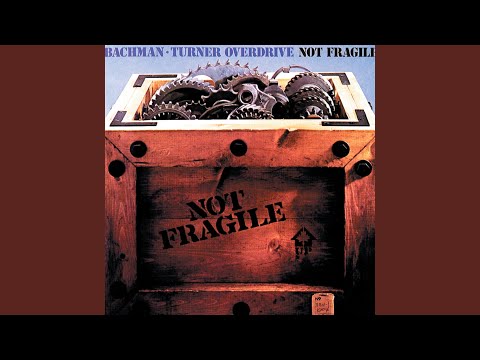
The commercial context of Four Wheel Drive was shaped by the extraordinary success of its predecessor, Not Fragile, which had sold in the millions and produced the number-one single. Any follow-up to that level of success faced inherent challenges, and while Four Wheel Drive and "Hey You" did not match the peak commercial performance of the previous cycle, they demonstrated that the group retained a substantial and loyal audience. The album charted strongly and produced radio play that kept BTO's name prominent through 1975.
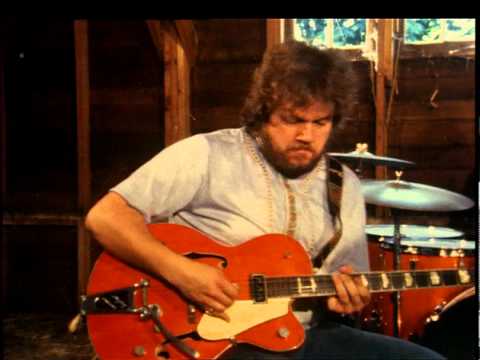
Randy Bachman's guitar work on "Hey You" and throughout the Four Wheel Drive album reflected his deep roots in both rock and country guitar playing, a hybrid approach that gave his riffs a melodic quality that distinguished them from the more purely aggressive approach of some contemporaries. He was a disciplined and precise guitarist whose solos served the song rather than showcasing technique at the expense of structure. This restraint, unusual in the hard rock context of the mid-1970s, was one of the qualities that made BTO's recordings effective on radio, where concision and melodic clarity were competitive advantages. "Hey You" demonstrated those qualities within the established parameters of their sound.
02 Song Meaning
Direct Address and Working-Class Energy: The Meaning of "Hey You"
"Hey You" belongs to a tradition in rock music in which the act of calling out to someone, of demanding attention and initiating contact, becomes the primary subject and emotional engine of the song. The title itself is an imperative, a command for acknowledgment, and the energy of the track from its opening moments is organized around that demanding directness. BTO was not a band that trafficked in emotional nuance or psychological complexity. Their strength was exactly this kind of unmediated communication, a voice speaking directly to another person or to an audience without intermediary or apology.
The working-class cultural identity that BTO constructed through their music and their public persona gave that directness a specific social meaning. When the narrator of "Hey You" calls out, the call carries the quality of someone who has not been trained to soften their demands or dress them in social pleasantry. It is the voice of someone who says exactly what they mean and expects the person they are addressing to understand and respond in kind. This communicative style was one of the central appeals of BTO to their core audience, which recognized in the band's bluntness a reflection of their own experience of the world.
The musical setting reinforces the lyrical directness. The guitar riff that drives the track is not decorative or atmospheric. It is functional, providing the rhythmic and harmonic momentum that keeps the song moving forward with the same kind of purposeful energy that characterizes someone who has somewhere to go and no patience for delay. Fred Turner's vocal delivery is similarly direct: he sings without embellishment or vocal theatrics, delivering the lyric with the clarity and force of someone who means what they say and says only what they mean.
For BTO, the song was part of a broader creative philosophy that prioritized communication over display, energy over sophistication, and the relationship with the audience over the demonstration of technical achievement. Randy Bachman had articulated this philosophy in interviews throughout the band's career, and it was evident in every production decision the group made. The songs were structured to be immediate, to reward a single listen as much as repeated attention, and to work as well in a live arena setting as through a car radio speaker.
The limitations of this approach are worth acknowledging. A band that commits to this degree of directness and simplicity risks becoming formulaic, and some critics felt that by 1975 BTO had found a formula and were working within it rather than challenging themselves to develop beyond it. There is something to this critique. But it also misses something important about the value of commitment to a clearly understood aesthetic. The best rock music in the direct, riff-driven tradition achieves its effects not through complexity but through perfection of the simple: the exact right riff, the exact right vocal, the exact right dynamic shape. "Hey You" operated in this tradition with considerable skill.
The song's place in the BTO catalog is that of a representative track rather than a groundbreaking one, an example of the band at their most characteristic rather than their most innovative. As such, it illuminates the qualities that made the group commercially and culturally significant in the mid-1970s: their identification with their audience, their commitment to physical and sonic directness, and their understanding that rock music could serve a primarily communal and celebratory function without sacrificing its energy or its identity. Those qualities animated "Hey You" and gave it the straightforward appeal that defined the BTO approach at its most effective.
→ More from Bachman-Turner Overdrive
View all Bachman-Turner Overdrive hits →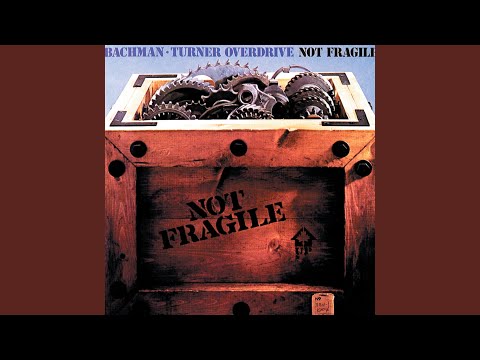

→ More from the 1970s File
View all 1970s hits →




Keep digging