The 1970s File Feature
Spooky
Atlanta Rhythm Section and "Spooky": A Southern Rock Band Revisits Its Roots When Atlanta Rhythm Section released their recording of "Spooky" in 1979, they w…
01 The Story
Atlanta Rhythm Section and "Spooky": A Southern Rock Band Revisits Its Roots
When Atlanta Rhythm Section released their recording of "Spooky" in 1979, they were not simply covering a classic song — they were reclaiming a piece of their own musical lineage. The track had first achieved national recognition in 1967 when the Classics IV recorded it, and the tangled web of personnel connecting those two groups made the Atlanta Rhythm Section's version something far more personal than a typical act of revival.
The story begins in Atlanta's studio culture of the mid-1960s, where a cluster of musicians and producers built careers around the city's recording infrastructure. Buddy Buie, a songwriter and producer from Dothan, Alabama, had co-written "Spooky" with saxophonist Mike Shapiro and helped shape the Classics IV sound alongside guitarist J.R. Cobb. When the Classics IV — fronted by Dennis Yost — released "Spooky" and watched it climb to number three on the Billboard Hot 100 in early 1968, it established a moody, organ-driven soft-rock template that would define the group's identity through several subsequent hits.
Atlanta Rhythm Section was formed in 1970 largely from the ashes of the studio session community that had surrounded the Classics IV and similar acts. Buie and Cobb moved forward together, recruiting keyboardist Dean Daughtry, who had himself played with the Classics IV, along with guitarist Barry Bailey, bassist Paul Goddard, and drummer Robert Nix. The new band pursued a harder-edged Southern rock direction but never entirely abandoned the melodic sensibility that had made the earlier material successful.
By 1979, Atlanta Rhythm Section had already logged a string of Billboard hits including "So Into You," "Imaginary Lover," and "I'm Not Gonna Let It Bother Me Tonight." Their commercial standing gave them the latitude to look backward as well as forward, and "Spooky" presented an irresistible opportunity. The song they had collectively helped build more than a decade earlier could now be filtered through a decade's worth of craft and confidence.
The 1979 recording appeared at a moment when Southern rock was navigating increasing commercial pressure. The genre's rough-hewn energy had been partially smoothed into what radio programmers called "Southern pop," a hybrid that sacrificed some rawness in exchange for broader airplay. Atlanta Rhythm Section occupied a comfortable position in this middle ground, and their treatment of "Spooky" leaned into the cleaner production values that characterized their late-1970s work.
Rodney Justo handled lead vocal duties on the track, bringing a warmer timbre to the song than Dennis Yost's original had employed. The arrangement retained the brooding, nocturnal quality that had always been central to the composition's appeal while adding the band's characteristic guitar textures and tighter rhythmic feel. The result was a version that sounded simultaneously familiar and fresh — a quality difficult to manufacture and only possible when musicians have genuine ownership of the material.
The single entered the Billboard Hot 100 on August 11, 1979, debuting at number 90. Over the following weeks it climbed steadily, reaching its peak position of number 17 on October 13, 1979, and remaining on the chart for 14 weeks in total. This performance made it one of the band's stronger chart showings of the period and demonstrated that the song retained its commercial magnetism more than a decade after its original success.
Radio programmers embraced the record in part because it bridged generational audiences. Listeners old enough to remember the Classics IV original recognized the melody with pleasure, while younger listeners encountered it fresh, drawn in by the production qualities that marked it as a product of its era. This dual appeal was not accidental. Buie, who produced the Atlanta Rhythm Section recording, understood the song's architecture intimately and knew how to present it in a way that maximized its reach without distorting its character.
The record stands as an artifact of a particularly productive creative partnership. The overlap between the Classics IV and Atlanta Rhythm Section was not simply a matter of shared personnel but of shared aesthetic instinct , a belief that Southern music could carry genuine emotional weight without sacrificing accessibility. "Spooky" in its 1979 incarnation made that argument convincingly, reaching a new generation while honoring the original vision that had made the song worth returning to in the first place.
02 Song Meaning
The Meaning of "Spooky": Romantic Tension and the Language of Mystery
"Spooky," as performed by Atlanta Rhythm Section in their 1979 recording, belongs to a tradition of pop songs that use atmospheric language to describe romantic uncertainty. The composition, originally written by Harry Middlebrooks, Mike Shapiro, James Hebb, and Buddy Buie, frames romantic interest through the lens of something elusive and slightly unsettling. The title word itself operates as a compliment disguised as unease: the subject of the song is captivating precisely because she cannot be pinned down or fully understood.
The narrator's situation is one of persistent bewilderment. The object of his affection behaves in ways that defy his attempts at comprehension. She is changeable, unpredictable, and magnetically appealing as a direct result of those qualities. Rather than frustration, however, the narrator conveys something closer to enchantment. The mystery that might reasonably put someone off instead serves as the central source of attraction. This inversion — treating unpredictability as desirable rather than troubling — gives the song its particular emotional flavor.
The word "spooky" in this context carries multiple registers simultaneously. It invokes the supernatural, suggesting that the woman in question has an almost otherworldly quality that sets her apart from ordinary experience. It also captures a more colloquial sense of edginess or instability, acknowledging that the narrator's feelings for her are colored by uncertainty about where he stands. Both meanings operate together, creating a portrait of attraction that acknowledges its own irrationality while embracing it anyway.
Atlanta Rhythm Section's 1979 interpretation leaned into the song's moody quality through their arrangement choices. The deliberate tempo, the emphasis on atmosphere over momentum, and the vocal delivery all reinforce the idea that the narrator is caught in a kind of suspended state, unable to move forward or backward in his pursuit. This emotional stasis is itself meaningful: the song does not resolve its central tension but instead luxuriates in it, suggesting that the pursuit matters as much as any possible outcome.
There is also a seasonal dimension to the imagery traditionally associated with the song. The word "spooky" carries associations with autumn, with Halloween, with the particular quality of light that characterizes the transition from summer to winter. These associations were not incidental to the song's original success or to its lasting appeal. The mood the title conjures reinforces the emotional content: something beautiful and slightly eerie, encountered in a moment between seasons, resistant to full illumination.
The relationship between the song's two principal figures remains deliberately unresolved. The narrator does not win the woman over by the end; he does not lose her either. He remains where he began, fascinated and uncertain, drawn toward someone who seems to recede even as he approaches. This dynamic resonates with a recognizable human experience: the particular ache of attraction to someone whose inner world remains inaccessible, who exists just beyond the reach of full understanding.
What made the Atlanta Rhythm Section recording of "Spooky" significant within the song's history was the way Rodney Justo's vocal performance inhabited that uncertainty. The vocal coloring suggested genuine puzzlement combined with genuine desire, a combination that prevented the song from becoming either a simple love ballad or a complaint. The narrator is not asking for resolution; he is describing a condition he has accepted as part of his emotional life.
In broader cultural terms, "Spooky" belongs to a category of songs that treat romantic attraction as a form of productive confusion. The beloved's inscrutability is not a problem to be solved but a quality that sustains the narrator's interest. This framing reflects something true about how human beings often experience attraction — not always toward those who are transparent and easy to read, but frequently toward those who maintain an element of mystery that keeps attention alive.
→ More from Atlanta Rhythm Section
View all Atlanta Rhythm Section hits →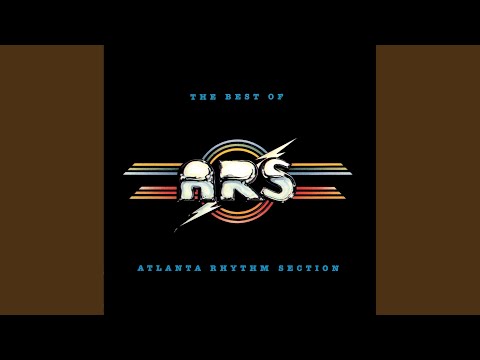

→ More from the 1970s File
View all 1970s hits →




Keep digging