The 1970s File Feature
Spanish Harlem
Spanish Harlem — Aretha Franklin Transforms a Classic The Song Before Aretha By the time Aretha Franklin recorded Spanish Harlem in 1971, the song already ha…
01 The Story
Spanish Harlem — Aretha Franklin Transforms a Classic
The Song Before Aretha
By the time Aretha Franklin recorded Spanish Harlem in 1971, the song already had a history. Written by Jerry Leiber and Phil Spector, the composition had first been a hit for Ben E. King in 1961, a gentle, romantic portrait of East Harlem that became one of the defining singles of the early rock-and-roll era. King's version was elegant and wistful, built around his silky tenor and a production style that emphasized melody over intensity. The idea that this song could be reinvented rather than merely covered required an artist of exceptional confidence and vocal power. Aretha Franklin was exactly that artist.
Aretha in 1971
The early 1970s found Aretha Franklin at one of the peaks of her commercial and artistic career. Her late-1960s run on Atlantic Records had produced a string of landmark recordings that redefined soul music, from "Respect" to "Chain of Fools" to "(You Make Me Feel Like) A Natural Woman." By 1971, she had earned the title she would carry for the rest of her life: the Queen of Soul. Her 1971 album Aretha's Greatest Hits compiled this legacy, but the studio was still producing new material, and Spanish Harlem appeared on her 1971 album Aretha Live at Fillmore West as well as circulating as a single, capturing her approaching familiar material with the authority of someone who had nothing left to prove. The arrangement on her version is fuller, warmer, and considerably more gospel-inflected than King's original, which is precisely the point.
What the Recording Does
Aretha's approach to Spanish Harlem is an object lesson in how a genuinely great vocalist transforms a song rather than simply reproducing it. The melody is recognizable, but the delivery is a completely different emotional proposition. Where King's version floated above the arrangement, Franklin embeds herself in it, her voice rising and falling with the kind of physical commitment that defines great gospel singing. The production retains the warmth of the original while adding layers of orchestration and backing vocals that give the track the scale it deserved. Radio programmers in the summer of 1971 heard something that combined nostalgia, soul, and sheer vocal spectacle.
The Billboard Performance
Spanish Harlem debuted on the Billboard Hot 100 on July 31, 1971, entering at number 69. The climb was rapid and steep: the following week it jumped to 29, then to 19, 14, 9, continuing upward through the summer. The song peaked at number 2 on September 11, 1971, spending twelve weeks on the chart in total. Reaching number 2 represented a commercial validation of what listeners had already understood: this was Aretha at her most accessible without being any less magnificent. The recording also performed strongly on the R&B chart, where it reached number one, confirming Franklin's dominance across both pop and soul audiences.
The Lasting Impression
When you place Aretha Franklin's Spanish Harlem alongside Ben E. King's original, the comparison illuminates something fundamental about artistic interpretation. Both versions are successful on their own terms, but they are doing entirely different things. King offers romantic reverie; Franklin offers emotional testimony. That capacity to convert even a gentle pop melody into something that felt like church was Franklin's defining gift, and it is fully on display here.
The cover version is a genre that has produced many excellent recordings and very few genuinely transformative ones. The transformative ones share a common quality: the covering artist finds something in the original that even its composer or original performer hadn't fully unlocked. Aretha Franklin's Spanish Harlem belongs in that small category. The song was already a considered and well-executed piece of early 1960s pop songwriting. In her hands, it became something with the depth and urgency of a personal statement. Decades after its release, the recording stands as one of the finest cover versions in American popular music, proof that a great song grows rather than diminishes when it passes through a great artist's hands. Press play, and within seconds you understand why no one could touch her.
"Spanish Harlem" — Aretha Franklin's singular moment on the 1970s charts.
02 Song Meaning
Spanish Harlem — Love, Place, and the Alchemy of Interpretation
A Song About a Neighborhood
Spanish Harlem is, on one level, a love song set in a specific urban geography. The neighborhood it celebrates, East Harlem in New York City, had by the early 1960s become primarily home to Puerto Rican and Latino communities, giving the area its popular name. The original Leiber and Spector composition treated this setting with romantic warmth, describing it as a place of beauty and longing rather than poverty or struggle. The rose growing in the concrete, a central image in the song, works as a symbol of life and color persisting in an urban environment that mainstream culture often overlooked.
What Aretha Adds to the Story
When Aretha Franklin recorded the song in 1971, she brought a gospel-rooted emotional intensity that shifted the meaning subtly but significantly. Her version is less of a quiet observation and more of a declaration, a full-voiced affirmation of the beauty the lyrics describe. In Franklin's hands, the song becomes a celebration rather than a reverie. The narrator's love for both the neighborhood and the person who lives there is rendered with the kind of urgency that characterizes the best soul music. You do not hear Franklin describe a rose; you hear her rejoice in it.
Cross-Cultural Resonance in 1971
The early 1970s were a complex cultural moment in urban America. Cities were under financial strain, racial tensions remained high after the upheavals of the 1960s, and the counterculture's promises were curdling into something more complicated. Into this context, a Black artist singing with joy and tenderness about a Latino neighborhood carried a specific kind of meaning. The song's cross-cultural affection felt like a statement of possibility, a declaration that beauty and love could be found in the communities that establishment culture consistently failed to notice. Whether or not Aretha consciously framed it this way, audiences understood the resonance.
The Art of the Cover Version
Few artistic acts reveal character as clearly as covering someone else's song. A great cover communicates not just technical ability but interpretive intelligence; it shows what an artist hears in a composition that others might miss. Aretha's Spanish Harlem demonstrates that she heard the song's latent emotional power and simply amplified it through her own extraordinary instrument. The choice to record it was itself a statement: here is a pop standard, and here is what soul music can do with it. The answer the recording provides is definitive.
Enduring Cultural Meaning
Fifty years after its release, Aretha Franklin's Spanish Harlem endures as both a superb piece of pop craftsmanship and a document of what made her irreplaceable. The combination of a beautiful original melody, a sympathetic arrangement, and a vocalist performing at full capacity produces something that transcends its historical moment. The recording reminds listeners that some voices are not simply instruments but forces of nature, capable of making old material feel freshly minted. The neighborhood it celebrates has changed many times over in the decades since 1971, but the feeling the song creates remains constant.
→ More from Aretha Franklin
View all Aretha Franklin hits →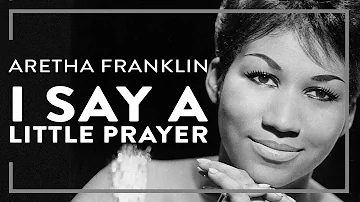


→ More from the 1970s File
View all 1970s hits →




Keep digging