The 1970s File Feature
The End Is Not In Sight (the Cowboy Tune)
"The End Is Not In Sight (the Cowboy Tune)" — Amazing Rhythm Aces The Sound of Southern Comfort The mid-1970s produced a specific strain of American music th…
01 The Story
"The End Is Not In Sight (the Cowboy Tune)" — Amazing Rhythm Aces
The Sound of Southern Comfort
The mid-1970s produced a specific strain of American music that has since come to be understood as one of the era's most distinctive regional sounds: a loose, unhurried blend of country, R&B, rock, and gospel that emerged primarily from the American South and seemed to belong to that landscape in some essential way. The Amazing Rhythm Aces were one of its most capable and least-heralded practitioners, a band from Memphis and Nashville whose recordings had an easy, rolling authority that made everything they did sound inevitable, like music that had always existed and had simply been waiting to be recorded.
The End Is Not In Sight (the Cowboy Tune) appeared in 1976 as a single from their album Too Stuffed to Jump, released on ABC Records. By this point the band had already achieved their most significant commercial success with Third Rate Romance, which had reached number 14 on the Hot 100 in 1975 and established them as a band worth watching. The follow-up single had a somewhat different character, embracing a more explicitly country-influenced sound while retaining the blues and soul elements that made the band distinctive.
The Band's Background and Sound
The Amazing Rhythm Aces formed in the early 1970s around singer and guitarist Russell Smith, and their approach to music reflected the particular geography and musical history of their roots. Memphis had given the world both the blues tradition and the soul music of the 1960s; Nashville had given it country music's most sophisticated recording infrastructure. The Amazing Rhythm Aces absorbed both traditions and recombined them without apparent effort, producing music that felt simultaneously rooted and original.
The "cowboy tune" designation in the title is both descriptive and slightly self-deprecating, acknowledging the song's debt to Western swing and country traditions while gently distancing the band from any single generic identity. This kind of ironic self-awareness was characteristic of the Southern rock and country-rock movements of the era, bands that loved the traditions they drew on but were also sophisticated enough to maintain a certain playful distance from them.
The Chart Run
The single debuted at number 94 on the Hot 100 on September 18, 1976. Its climb was steady if not dramatic: moving through the 80s and 70s over the following weeks before arriving at its peak position of number 42 on November 6, 1976. The track spent 10 weeks total on the chart, a solid if unspectacular commercial performance that reflected consistent radio support across country and adult contemporary formats.
The 1976 chart context was rich with competing sounds. Disco was consolidating its commercial dominance; soft rock was at its commercial peak; and the Southern rock and country-rock movements that had flourished earlier in the decade were beginning to feel the first pressures of changing commercial winds. The Amazing Rhythm Aces' sound, rooted in a regional authenticity that was slightly outside all of these dominant trends, found a loyal audience without crossing into the blockbuster territory that more stylistically contemporary acts were occupying.
ABC Records and the Mid-Decade Landscape
ABC Records was, in the mid-1970s, one of the more interesting major label homes for artists working in country-influenced rock. The label's roster included artists across multiple genres, and the institutional flexibility this created allowed acts like the Amazing Rhythm Aces to develop and record without the kind of genre-categorization pressure that might have constrained more commercially conservative label environments. The willingness to release a single that labeled itself a "cowboy tune" and contained the assertion that "the end is not in sight" reflected a label culture that trusted the band's instincts about their audience.
The album Too Stuffed to Jump, from which the single was drawn, demonstrated the band's range across a full record's worth of material. Their approach to album construction was as confident as their approach to singles: varied in tone and style, anchored by the consistent quality of the musicianship and the coherence of Russell Smith's songwriting voice.
Legacy of a Band That Deserved More
The Amazing Rhythm Aces occupy the category of critically respected acts whose commercial success never fully matched the esteem in which fellow musicians and dedicated followers held them. Their recordings from the mid-1970s have aged exceptionally well, retaining the quality of relaxed authority that was their most distinctive feature. The End Is Not In Sight is a particularly good entry point for listeners discovering the band: its combination of country ease, R&B feel, and rock energy demonstrates exactly what made the Amazing Rhythm Aces worth paying attention to. Press play and find out what it sounds like when a band from Memphis and Nashville makes exactly the music they believe in.
"The End Is Not In Sight (the Cowboy Tune)" — Amazing Rhythm Aces' singular moment on the 1970s charts.
02 Song Meaning
"The End Is Not In Sight (the Cowboy Tune)" — Perseverance, Genre, and Southern Identity
The Title as Philosophy
A song called The End Is Not In Sight is making a statement about persistence before the music even begins. The phrase contains within it a tension: is the lack of an end a comfort or a burden? For the cowboy figure of the title, whose Western myths suggest a life of endless motion and horizon-chasing, the absence of an end might be read as freedom. For a narrator weary of whatever journey they are on, the same absence might feel like punishment. The parenthetical "the Cowboy Tune" adds a layer of self-awareness, acknowledging the song's genre conventions while wearing them lightly.
This kind of double-layered meaning was characteristic of the smarter country-influenced rock writing of the mid-1970s. Artists who had absorbed both the folk revival's emphasis on authentic experience and the rock era's permission to be ironic and self-aware produced material that could be taken straight by listeners who valued the traditional elements and slightly askance by those who appreciated the knowing distance.
The Cowboy Myth in American Music
The cowboy is one of American popular culture's most durable mythological figures, and American music has returned to the image repeatedly across genres and generations. From early 20th-century folk songs and Western swing through the outlaw country movement of the 1970s and the alt-country revival of the 1990s, the cowboy has functioned as a symbol of a particular kind of American selfhood: independent, mobile, defined by the landscape rather than by social institutions.
The Amazing Rhythm Aces were working in this tradition while bringing their own regional sensibility to it. The Memphis and Nashville musical environments that shaped the band had their own complex relationships with the cowboy myth, absorbing it through country music while inflecting it with Southern blues and soul traditions. The resulting hybrid was something specifically Southern rather than generically Western, rooted in a particular geography and musical history that gave the familiar myth local texture.
The Mid-1970s Southern Rock Context
Southern rock as a genre had by 1976 achieved significant commercial success, with acts like the Allman Brothers Band, Lynyrd Skynyrd, and the Marshall Tucker Band demonstrating that there was a substantial audience for music rooted in the South's specific musical traditions. The Amazing Rhythm Aces occupied adjacent territory without fully belonging to any single sub-genre, their sound too R&B-influenced to be straightforwardly country-rock and too country-influenced to be straightforwardly Southern rock in the Allman Brothers mode.
This generic ambiguity had both advantages and disadvantages. The musical range it permitted was genuinely unusual, allowing the band to move between sounds and styles without violating any single genre's conventions because they had never fully committed to one. The disadvantage was that format radio, which sorted artists into categories, found them harder to place, limiting the consistency of their radio coverage.
Perseverance as an American Theme
The thematic content of the song speaks to one of the most persistent strands of American popular mythology: the idea that continuing onward, maintaining motion and purpose in the face of difficulty, is itself a form of virtue. The cowboy does not arrive; the cowboy keeps riding. This celebration of process over destination resonated strongly with a mid-1970s audience that had reason to be suspicious of grand conclusions and promised endings.
The aftermath of Vietnam, Watergate, and the oil shocks of the early 1970s had created a cultural mood in which cynicism about official narratives of progress and resolution was widespread. A song that acknowledged the end was not in sight but found a way to keep moving anyway offered a form of stoic comfort: not the false optimism of promised resolution, but the genuine satisfaction of continued engagement with life on its own terms.
The Southern musical tradition that the Amazing Rhythm Aces drew on had its own complex history with exactly this kind of resilience, having been shaped in large part by communities with abundant reason to keep moving in the absence of promised arrivals. The music carried that history in its bones, and listeners responded to it even when they could not have articulated why.
→ More from Amazing Rhythm Aces
View all Amazing Rhythm Aces hits →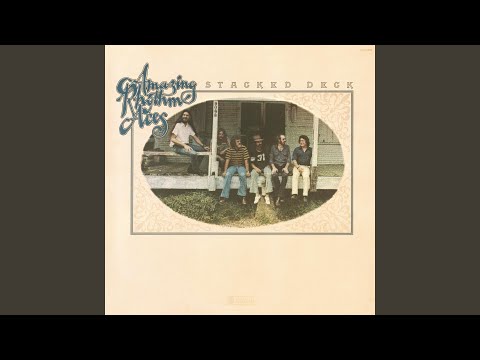
→ More from the 1970s File
View all 1970s hits →




Keep digging