The 1970s File Feature
Draw The Line
"Draw the Line" — Aerosmith On the Edge of the Known By the autumn of 1977, Aerosmith had spent five years building one of the most ferocious live reputation…
01 The Story
"Draw the Line" — Aerosmith
On the Edge of the Known
By the autumn of 1977, Aerosmith had spent five years building one of the most ferocious live reputations in American rock. They had sold out arenas, survived the road, and released a string of albums that made them undeniable contenders for the title of America's greatest hard rock band. The problem was that the machinery was beginning to grind. The excess that fueled the band's energy was also consuming it, and the sessions that produced the Draw the Line album were, by most accounts, fragmented, difficult, and chemically complicated. None of that, however, diminished the title track's impact when it finally reached radio.
"Draw the Line" was the title track of Aerosmith's fifth studio album, released in November 1977 on Columbia Records. The album was recorded primarily in a converted church in Armonk, New York, a location that gave the sessions a particular atmosphere, isolated and ecclesiastical in ways that perhaps suited the band's increasingly extreme circumstances. The production was handled by Jack Douglas, who had worked with the band on several previous albums and understood how to capture their live aggression on tape.
The Sound of Controlled Chaos
The track opens with a distinctive, lurching guitar figure from Joe Perry and Brad Whitford that immediately signals something rougher and more ragged than the polished arena rock of the era. This was not the gleaming stadium sound of many contemporaries. The recording has grit in it, a sense that the musicians are playing at the edge of their technical precision and enjoying the danger of it. The rhythm section drives the track with muscular efficiency, and Steven Tyler's vocal performance is raw in the best sense, delivered with the kind of swagger that sounds entirely unaffected because it is.
The song's structure is relatively spare for a band known for elaborate arrangements on songs like "Sweet Emotion" or "Back in the Saddle." "Draw the Line" does not waste motion. The guitar work is aggressive and economical at once, and the mix allows the rhythm section to push up through the arrangement in a way that gives the track a bottom-heavy, kinetic energy.
Charting Through the Competition
The single debuted on the Billboard Hot 100 on October 22, 1977, entering at number 79. Its climb was steady if not spectacular: 68, then 57, then 47. The track peaked at number 42 on November 19, 1977, spending 11 weeks on the chart in total. That chart position, while not among the band's highest, reflected the competitive landscape of late 1977, a period when rock radio was crowded with strong material from established artists.
The Draw the Line album itself reached number 11 on the Billboard 200, confirming that the group's commercial standing remained strong despite the turbulence in the camp. Radio programmers responded well to the title track's directness; it fit comfortably into the hard rock rotation that FM stations had built through the mid-1970s, even as it pushed harder than much of what surrounded it.
A Band at Its Own Limits
The story of the Draw the Line recording period is inseparable from the band's well-documented struggles with substance abuse during the late 1970s. Creative output became increasingly difficult to sustain, and the album showed the strain in places. Yet the title track itself stands as evidence that the core musical chemistry between Tyler and Perry remained powerful even under those conditions. The song sounds like a band playing through chaos rather than despite it, and that tension is part of what makes it compelling.
The band's personal reinvention in the early 1980s, followed by their commercial resurgence later in the decade, cast these late-1970s recordings in a particular light. "Draw the Line" belongs to the first chapter, the raw and ragged Aerosmith whose energy was undeniable even as it was burning through its own fuel. The music documentarians and rock historians who have revisited this period consistently note that the title track stands above much of the surrounding album as a concentrated statement of what the band could do at their most primal.
The Long Tail
Decades later, "Draw the Line" remains a fixture in retrospective assessments of the band's classic period. It appears on compilation albums and has been licensed for use in media seeking the sound of hard-driving late-1970s rock. For fans who came to Aerosmith through their later, more polished commercial successes, the track offers a window into an earlier and in some ways more interesting version of the band: less calculated, more dangerous, and willing to let the recording catch fire rather than contain it. The song rewards cranking the volume.
"Draw the Line" — Aerosmith's singular moment on the 1970s charts.
02 Song Meaning
"Draw the Line" — Meaning and Legacy
The Rhetoric of the Limit
The phrase "draw the line" carries a specific cultural weight in American English. It invokes the moment when something goes too far, when a limit is reached and asserted. For Aerosmith in 1977, the phrase resonated on multiple levels. On the surface, the song stakes out territory, asserting identity, pride, and defiance in the face of unspecified opposition. At a deeper level, given the biographical context of the recording period, the line being drawn was one the band itself was struggling to locate. The tension between the song's confident declarations and the band's actual circumstances gives the track a complexity it might not otherwise possess.
This kind of unintentional irony is common in rock music from the hard-living late 1970s. Artists who were genuinely testing their own limits wrote songs about strength and defiance, and the resulting recordings carry a double meaning for listeners who know the history. The music does not wink at this. It plays it completely straight, and that commitment to the pose is itself a kind of authenticity.
Hard Rock as Masculine Mythology
The lyrical and sonic register of "Draw the Line" draws on a long tradition of American hard rock's engagement with themes of toughness, survival, and self-assertion. Steven Tyler's persona as a vocalist operated in a space between bravado and vulnerability, and even on a track as assertive as this one, there are moments where the delivery suggests something more complicated than simple swagger. The hard rock genre of the 1970s was full of songs that used aggressive sound to address anxieties about identity, status, and belonging, though the genre's conventions required these anxieties to be expressed through posture rather than confession.
The song fits within a lineage that runs from the Rolling Stones through the Yardbirds and Led Zeppelin to the American hard rock bands that dominated FM radio in the mid-1970s. Aerosmith drew heavily from British blues-rock sources while filtering them through a distinctly American sensibility, and "Draw the Line" is a clear expression of that synthesis.
The Production as Message
The sonic character of the recording is itself meaningful. The rawness of the mix, the way the guitars cut rather than shimmer, the rhythm section's refusal to smooth over the edges, all of this communicates something about value. Clean, polished production dominated much of the commercial rock landscape in 1977, and the deliberate roughness of this track was a statement of aesthetic priorities. Real rock, the recording implies, should sound like it was played by humans in a room, not assembled into perfection by engineering. That philosophy aligned with the garage rock and punk currents that were gathering force at the same moment, even though Aerosmith had no particular connection to those movements.
Revisiting the Classic-Period Aerosmith
For listeners approaching Aerosmith's catalog now, "Draw the Line" offers a valuable corrective to any impression formed primarily by the band's later, more radio-friendly work. The later albums, commercially dominant as they were, present a different band: cleaner, more controlled, more deliberate. The 1977 track shows the group at their most unguarded, their most raw, and in some respects their most vital. The chemistry between Tyler and Perry on the recording is unmistakable, a musical conversation between two performers who have internalized each other's instincts completely.
That chemistry, strained to its limits in this period but never quite broken, was what the band eventually rebuilt their career on. "Draw the Line" documents it at full pressure and at the last moment before the strain became too much. It is a record worth hearing not only as entertainment but as evidence of what a great rock band sounds like when the stakes are genuinely high.
→ More from Aerosmith
View all Aerosmith hits →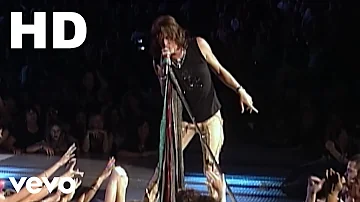




→ More from the 1970s File
View all 1970s hits →




Keep digging