The 1970s File Feature
Chip Away The Stone
Chip Away The Stone — Aerosmith Aerosmith's "Chip Away the Stone" arrived as a commercial single in 1979 on Columbia Records , drawn from the context of the …
01 The Story
Chip Away The Stone — Aerosmith
Aerosmith's "Chip Away the Stone" arrived as a commercial single in 1979 on Columbia Records, drawn from the context of the band's Live! Bootleg album released in late 1978. The track was written by Richie Supa, a songwriter and musician who had connections to the broader New York rock scene and who contributed to Aerosmith's catalog at a particularly volatile moment in the band's history. By 1979, Aerosmith was navigating severe internal tensions driven by substance abuse problems affecting multiple members, and the period surrounding Live! Bootleg and its associated singles represented both a commercial holding action and a preview of the difficulties that would derail the band's momentum in the early 1980s.
The song appeared on the Live! Bootleg record as a performance that captured the band's stage energy during what had been one of the most commercially productive periods of their career. Live! Bootleg itself was released to satisfy audience demand for a concert document while the band worked on new studio material, a common strategy for major rock acts of the era. Columbia Records and the band's management understood that maintaining a commercial presence between studio albums was important for sustaining the momentum the group had built with records like Toys in the Attic and Rocks, and live recordings provided that bridge material with relatively low production cost.
Richie Supa's songwriting for "Chip Away the Stone" fit naturally within the Aerosmith aesthetic. The hard rock framework, propelled by the rhythm section of Tom Hamilton and Joey Kramer, provided the kind of muscular forward motion that the band had perfected over the course of several albums. Joe Perry's guitar work gave the track its characteristic edge, and Steven Tyler's vocal performance demonstrated the range and physical intensity that had made him one of the most compelling front men in American rock. The interaction between Tyler's voice and the band's tight ensemble playing was the defining quality of Aerosmith at their best, and "Chip Away the Stone" captured that interaction in a live context that emphasized its visceral power.
The single's performance on the Billboard Hot 100 reflected Aerosmith's established commercial standing. The band had built a substantial rock audience across the mid-1970s, and that audience responded to the new material even as signs of the creative and personal difficulties ahead were becoming visible to industry insiders. Rock radio, which remained the primary promotional vehicle for hard rock acts in 1979, gave the single strong rotation, and its guitar-forward arrangement suited the format perfectly.
The title's central metaphor, the idea of gradual persistent effort as a way of achieving transformation, was characteristic of a certain strain of American rock lyric writing in the 1970s that favored simple, powerful physical imagery as a vehicle for larger emotional or philosophical content. Supa's construction of this metaphor gave the song a directness that worked well in the live performance context where it was captured, translating clearly across the distance between stage and arena audience in a way that more subtle lyrical content sometimes could not.
Aerosmith's Columbia period, spanning roughly from their debut in 1973 through their contractual relationship with the label in the late 1970s, produced a catalog that is now recognized as one of the most important in American hard rock history. The band's synthesis of blues-based rock, glam rock theatricality, and sheer physical intensity created a template that influenced subsequent generations of rock acts, and the recordings from this period retain their vitality in large part because they captured a band operating at the intersection of genuine artistic ambition and commercial calculation.
"Chip Away the Stone" occupies a specific place in this catalog as a single released at the hinge point between the band's commercial peak and the difficult period that would follow. It captured the Aerosmith of their prime in a live context that documented what they sounded like as a concert act, which was how most of their core audience had experienced them, and it demonstrated that even amid the personal difficulties that were beginning to affect their output, the fundamental musical chemistry that had made them successful remained intact.
The song's legacy within the Aerosmith catalog is as a bridge document, a record that preserved something essential about the band's live power at a moment when that power was beginning to be eroded by factors outside the music itself. Its continued presence in discussions of the band's late-1970s work reflects the degree to which it succeeds in that documentary function, offering listeners an accurate picture of what Aerosmith sounded like when everything was working as it should.
02 Song Meaning
Persistence as Power: The Meaning of "Chip Away the Stone"
"Chip Away the Stone" takes its central metaphor from the world of physical labor and craft, the patient, repetitive work of a sculptor reducing a block of stone to a desired form. This choice of imagery gives the song a quality of earned wisdom rather than abstract inspiration. Chipping away at stone is unglamorous work, requiring sustained attention and physical effort over long periods with no guarantee that the final form will emerge as intended. As a metaphor for human persistence and self-making, it is both humble and profound.
Richie Supa's lyrical approach to this material favored directness over complexity, which suited both the hard rock context in which the song was placed and the live performance environment where it made its most powerful impression. Steven Tyler's delivery of the lyric brought an additional quality of urgency and conviction, transforming what might have read as straightforward motivational material into something that felt personally invested and emotionally real. Tyler's vocal performances at their best combined technical command with a quality of apparent spontaneity that made even prepared material sound freshly discovered, and "Chip Away the Stone" benefited from this quality.
The song's emotional register is one of determination in the face of resistance, a theme that resonated strongly with the working-class and suburban rock audiences that formed Aerosmith's core constituency in the 1970s. These listeners understood physical effort and long-term persistence in concrete ways, and a song that elevated those qualities to the subject of a hard rock anthem validated experiences and values that were not always celebrated in popular culture. The metaphor worked because it was grounded in something real and legible.
The song also functions on a more personal level when read in the context of Aerosmith's own situation in the late 1970s. A band struggling with internal difficulties might have found particular resonance in a lyric about the patient, persistent work of achieving a desired form against resistance. Whether this reading was intentional or retrospective, it gives the song an additional layer of meaning within the band's narrative arc.
The live recording context in which the song was captured and released emphasizes its communal quality. Hard rock concerts of the 1970s were participatory events in which the audience's energy was as much a part of the performance as the musicians' playing, and a song about persistence and effort speaks to the shared experience of being in a crowd and feeling part of something larger than ordinary individual life. The recording captures this dynamic with enough fidelity to communicate it to listeners who were not present at the original performance.
For Aerosmith's catalog, "Chip Away the Stone" represents the values of their best work: a combination of blues-rooted musical directness, physically committed performance, and lyrical material that aimed for emotional resonance without sentimentality. The song's durability as a fan favorite reflects how well it embodies these values and how reliably they translate across the decades since its original release.
→ More from Aerosmith
View all Aerosmith hits →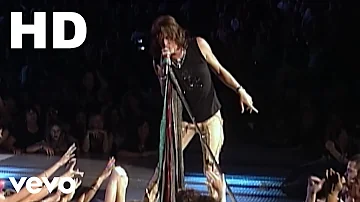




→ More from the 1970s File
View all 1970s hits →




Keep digging