The 1970s File Feature
Art For Art's Sake
"Art for Art's Sake" — 10cc's Sardonic Meditation on Commerce and Creativity The Brilliant Cynics of British Pop Somewhere in the mid-1970s, a band was makin…
01 The Story
"Art for Art's Sake" — 10cc's Sardonic Meditation on Commerce and Creativity
The Brilliant Cynics of British Pop
Somewhere in the mid-1970s, a band was making British pop music that thought harder about itself than almost anyone else in the room. 10cc, the Manchester group formed by Graham Gouldman, Eric Stewart, Lol Creme, and Kevin Godley, had built a reputation for meticulously crafted songs that could simultaneously be Top 40 radio fodder and pointed cultural commentary. By 1975, they had already scored major hits with "Donna" and "The Dean and I," but more importantly they had established that their real subject matter was often the music industry itself and the strange alchemy of art meeting commerce. "Art for Art's Sake" arrived as one of their most explicit explorations of that tension.
The year 1975 was an interesting moment for rock music to be asking questions about its own relationship to money. The first great wave of punk was still a year away, but a certain cynicism about the music industry's commercial mechanisms was spreading. Bands that had entered the decade with idealistic notions about music as countercultural force had spent five years watching those notions get processed by record label accounting departments. 10cc, who were as commercially shrewd as they were artistically ambitious, had a particular vantage point on this contradiction.
The Song's Construction and Sound
10cc released "Art for Art's Sake" on Mercury Records in 1975, and it appeared on their album How Dare You!, which became one of their most critically discussed records. The album was recorded at Strawberry Studios in Stockport, the studio the band had helped establish and that was central to their sonic identity throughout this period. The four members of the band wrote and produced their material themselves, an unusual degree of artistic control for a mainstream rock act of that era, and this autonomy fed directly into the self-referential quality of songs like "Art for Art's Sake."
The recording itself is layered and precise, reflecting the group's studio obsessiveness. Godley and Creme in particular had developed an approach to production that valued texture and sonic experiment as much as conventional melodic appeal. The song moves through sections with a restless intelligence, never settling into comfortable repetition for too long before redirecting the listener's attention.
Entering the Billboard Hot 100
The single debuted on the Billboard Hot 100 on November 29, 1975, entering at number 97. It climbed slowly through the winter chart weeks, ascending to 94, then 92, then 87, before reaching its peak position of number 83 on December 27, 1975. The six-week chart run represented a modest but genuine American commercial showing for a group whose strongest US success came with slightly different material. The band's ironic, literary sensibility translated more completely to British audiences, where the cultural context for their jokes and allusions was better understood.
The contemporary chart environment in late 1975 included material from artists as varied as Barry Manilow, Earth Wind and Fire, Elton John, and the nascent disco movement beginning to assert itself. Against this backdrop, 10cc's cerebral rock occupied a distinctive niche, appreciated by listeners who wanted more complexity than the chart's biggest sellers were offering.
The Timing: Just Before the Split
In retrospect, "Art for Art's Sake" and the How Dare You! album it came from occupy a particularly charged moment in the band's history. Godley and Creme would depart after this album, pursuing a separate creative partnership that would eventually produce their own distinctive body of work. Stewart and Gouldman continued as 10cc, achieving arguably their biggest commercial success with "I'm Not in Love" and later "The Things We Do for Love," but the four-person configuration that had produced the band's most adventurous material was nearing its end.
"Art for Art's Sake" thus lands as a kind of statement from a group on the cusp of a significant change, asserting their intellectual identity at exactly the moment when the internal tensions that would dissolve that particular configuration were already present. The song's subject matter, the conflict between creative integrity and commercial necessity, resonates differently knowing what came next.
Legacy Among 10cc's Catalogue
Within 10cc's body of work, "Art for Art's Sake" is regarded as one of their more intellectually satisfying singles, the kind of song that rewards close listening rather than casual exposure. The band's reputation as one of the most sophisticated pop acts of the 1970s rests on records like this one, which demonstrate that irony, intelligence, and chart ambition do not have to be mutually exclusive positions.
Press play on this track and you hear a group that genuinely enjoyed the game it was criticizing, cheerfully selling a song about the compromises of selling songs. That paradox was never lost on the band, and it remains the most enjoyable thing about the record.
"Art for Art's Sake" — 10cc's singular moment on the 1970s charts.
02 Song Meaning
"Art for Art's Sake" — Commerce, Creativity, and the Pop Industry's Mirror
The Central Paradox
A song called "Art for Art's Sake" that was released as a commercial single, aimed at chart placement, and manufactured by a band operating within the conventional machinery of the record industry contains an obvious paradox at its center. 10cc were fully aware of this contradiction and leaned into it deliberately, using the song as a space to examine the uncomfortable relationship between artistic ambition and commercial reality that every pop act of the era had to navigate in some form. The title is ironic in the most precise sense: the song is about the difficulty, perhaps impossibility, of making art that serves no purpose beyond itself.
Money as the Song's True Subject
The lyrical content of "Art for Art's Sake" circles around the acknowledgment that financial considerations shape creative decisions, whether artists admit it openly or dress the process in more elevated language. The song takes aim at the mythology of pure artistic motivation, the idea that real artists create without reference to commercial return. In the world the song describes, money is always present in the room, even when nobody mentions it by name. This was a genuinely subversive argument to make within the framework of a mainstream pop release, and 10cc's delivery carries the winking awareness that the medium is part of the message.
By 1975, enough rock musicians had become wealthy enough through their craft that the pretense of poverty-era idealism had grown strained. The image of the struggling artist at odds with corrupt commerce was harder to maintain when the most prominent artists of the era were negotiating multi-album deals and acquiring property. 10cc's willingness to name this openly gave "Art for Art's Sake" a satirical edge that much of their contemporaries' work lacked.
British Pop Irony and Its Traditions
The kind of self-aware pop commentary that 10cc practiced in this song had specific British roots. The tradition of music-hall satire, which had shaped British popular entertainment for decades before rock arrived, valued the knowing wink at the audience, the performer who holds the conventions of the form at arm's length even while deploying them. Gouldman, Stewart, Creme, and Godley were all sophisticated enough students of popular music's history to be aware of this tradition, and it inflects their songwriting throughout the early 1970s catalogue.
This sensibility distinguished 10cc from most of their American contemporaries, who tended to take the claims of rock authenticity more earnestly. The British pop tradition allowed for a more theatrical relationship with sincerity, one that could simultaneously feel emotionally engaged and intellectually distanced from what it was doing.
The Listener's Position
What does it mean to enjoy a song that is, in part, making fun of your enjoyment? 10cc trusted their audience to hold this complexity, and that trust was part of the band's appeal to a specific kind of listener: the person who wanted their pop music to be smarter than average, who enjoyed being implicated in the joke rather than protected from it. The song succeeds because it does not deliver its critique from a position of superior detachment; it acknowledges that the band itself is part of the system it describes, which is a more honest and more interesting position to argue from.
This self-implication is what keeps the song from feeling preachy or self-righteous. 10cc was not lecturing from outside the commercial pop machine; they were reporting from inside it, with the particular clarity that comes from having no illusions about where you are standing.
Why the Song Still Resonates
The tensions "Art for Art's Sake" describes have not resolved themselves in the decades since the record was released. The question of how artists sustain creative integrity within commercial frameworks remains as live as it was in 1975, arguably more so given the streaming economy's particular pressures on how music is made and consumed. The song functions as a kind of diagnostic, one that remains applicable to each successive generation of musicians who discover that making art for a living requires making peace with the fact that "for a living" changes what the art becomes. 10cc never pretended that was a comfortable peace to make, and the song is more honest for it.
→ More from 10cc
View all 10cc hits →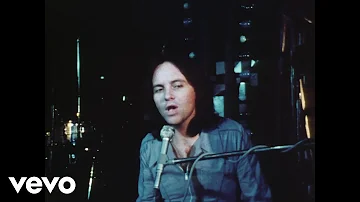


→ More from the 1970s File
View all 1970s hits →




Keep digging