The 1960s File Feature
If I Had A Hammer
If I Had A Hammer — Trini Lopez's Live Recording That Conquered the Charts The Song Before the Record Long before Trini Lopez got hold of it, "If I Had a Ham…
01 The Story
If I Had A Hammer — Trini Lopez's Live Recording That Conquered the Charts
The Song Before the Record
Long before Trini Lopez got hold of it, "If I Had a Hammer (The Hammer Song)" had already lived a remarkable life. Pete Seeger and Lee Hays wrote it in 1949 for the Weavers, the politically engaged folk group that became a vehicle for progressive American songwriting during an era of intense social tension. The song's imagery of hammers and bells and songs spreading messages of justice across the land connected it directly to the labor movement and civil rights activism that the Weavers championed. By the late 1950s the song had been recorded multiple times, but it was Peter, Paul and Mary who brought it to a mainstream folk revival audience in 1962, taking it to number ten on the Hot 100.
Trini Lopez, a young singer and guitarist from Dallas, Texas, of Mexican-American heritage, was working the club circuit when Frank Sinatra caught his act and signed him to Reprise Records. This was a significant moment: Sinatra's label was home to serious artists, and Lopez's signing indicated that someone at the label's highest levels believed his energetic, guitar-driven approach to folk and pop material had genuine commercial potential.
The Live Recording That Made History
The specific recording of "If I Had a Hammer" that became Trini Lopez's commercial breakthrough was captured live at PJ's nightclub in Los Angeles. The album Trini Lopez at PJ's, released in 1963 on Reprise Records, documented a live performance that crackled with the energy of a room full of engaged listeners responding to a natural entertainer working at the top of his form. Lopez's version stripped the song of its earnest folk solemnity and replaced it with something looser, more rhythmically alive, driven by his own guitar playing and the infectious call-and-response energy of a live club setting.
The tempo is brisker than the Peter, Paul and Mary version, the rhythm more dance-friendly, and Lopez's vocal delivery is exuberant where the folk revival approach tended toward gravitas. This transformation was not a diminishment of the song's content but rather a translation of its emotional message into a different register, one that proved enormously appealing to a broad commercial audience.
A Rocket Climb to Number Three
The single entered the Billboard Hot 100 on July 27, 1963, debuting at number 76. Its climb over the following weeks was rapid and sustained: from 58 to 29 to 17 to 11, each week adding significant ground. The song peaked at number 3 on September 7, 1963, spending fourteen weeks on the chart in total. A top-three finish made it one of the biggest pop hits of the year and established Lopez as a genuine national star rather than merely a successful regional or club act.
The record also performed strongly internationally, reaching number one in several European markets and introducing Lopez to audiences that would remain loyal throughout a long career. In the United Kingdom in particular, the track was a major hit, an early indication that American pop with Latin flavoring and folk-influenced content could travel effectively across the Atlantic.
Lopez's Cultural Significance
The commercial success of "If I Had a Hammer" was significant beyond its chart numbers. Trini Lopez was one of very few Mexican-American artists to achieve mainstream pop stardom in the early 1960s, a period when the American music industry's diversity was extremely limited. His success opened conversations about representation and market possibilities that would take decades to fully develop but that his breakthrough made more difficult to ignore.
Lopez's approach, combining guitar-driven energy with folk material and an undeniable rhythmic sensibility that owed something to both Latin music and rock and roll, created a sound that was genuinely his own. He was not simply covering folk songs; he was recontextualizing them through a perspective and a musical vocabulary that his specific cultural background uniquely enabled.
Fourteen Weeks of Cultural Reach
The fourteen-week Hot 100 run of "If I Had a Hammer" confirmed that Lopez's commercial breakthrough was not a fluke. The song's folk origins gave it a level of cultural legitimacy that pure pop confections sometimes lacked, while Lopez's energetic delivery made it accessible to listeners who might have found the folk revival's earnestness off-putting. This combination proved remarkably durable on radio, and the resulting chart campaign was one of the more impressive of 1963.
The record stands as one of the essential crossover moments of the early 1960s: folk music's political and cultural seriousness rendered joyful and danceable, delivered by an artist whose own story was inseparable from the themes of justice and freedom that the song's original writers had intended. Put this record on and you will hear exactly why 1963 audiences responded to it so enthusiastically.
"If I Had A Hammer" — Trini Lopez's singular moment on the 1960s charts.
02 Song Meaning
If I Had A Hammer — Justice, Joy, and the Sound of a Social Movement Made Danceable
The Song's Original Vision
Pete Seeger and Lee Hays wrote "The Hammer Song" in 1949 with a specific political imagination: a vision of tools (hammers, bells, songs) spreading justice and freedom across the land. The imagery is deliberately vernacular, connecting abstract principles of social change to the concrete tools of working people's lives. The song's original intent was explicitly political, connected to the labor and civil rights movements that the Weavers served as musical advocates for throughout the late 1940s and 1950s.
What Trini Lopez did with this material in 1963 was not strip away its meaning but rather transform the emotional register through which that meaning was delivered. Lopez's exuberant, rhythmically driving performance does not sound like protest music in the traditional sense; it sounds like celebration. This was a significant choice, and it proved to be the right one for the historical moment.
The Civil Rights Moment of 1963
The year 1963 was one of the most significant in the American civil rights movement. The March on Washington and Martin Luther King Jr.'s "I Have a Dream" speech occurred in August of that year, at almost precisely the moment when Lopez's version of "If I Had a Hammer" was climbing toward its peak of number three on the Hot 100. This coincidence of timing was not lost on listeners. A song about spreading justice and freedom was reaching mass audiences during one of the most concentrated periods of activism for exactly those values in American history.
Lopez's Mexican-American identity added another layer of resonance. The themes of the song, about the moral imperative to work toward fairness and equality, connected to struggles that were not limited to the African-American civil rights movement but extended across multiple communities facing discrimination in 1963 America. Lopez's success as a mainstream pop artist was itself a small piece of the larger story the song was telling.
Joy as a Political Instrument
One of the most interesting things about Lopez's version of "If I Had a Hammer" is how it deploys joy as the emotional vehicle for the song's serious content. The folk revival's approach to protest material tended toward earnestness, even solemnity, which was appropriate for the traditions from which it emerged. Lopez's approach was fundamentally different: his version insists that the pursuit of justice can sound like a good time, that the emotional experience of working toward something better can be celebratory rather than grim.
This is a significant political and artistic argument. Movements for social change have always needed to sustain themselves emotionally, and joy is more sustaining than anger over long periods. A song that makes people want to dance while they contemplate its message of justice is doing more complex cultural work than it might appear to be doing on the surface.
The Endurance of a Song Written in 1949
The fact that a song written in 1949 could reach number three on the Billboard Hot 100 in 1963 and then continue to be performed and recorded for decades afterward speaks to the depth of the song's core concept. The imagery of hammer, bell, and song as tools for spreading justice is simple enough to be universally accessible and specific enough to be genuinely evocative. The song has outlasted the particular political context of its creation because its underlying vision is not tied to any single movement or moment.
Lopez's contribution to the song's longevity was substantial. His recording reached audiences that the folk revival version had not, bringing the song's themes into contact with pop listeners across demographic and geographic boundaries. The fourteen-week chart run reflected an audience that kept returning to a piece of music that delivered genuine pleasure while carrying genuine meaning, a combination that is rarer and more valuable than either quality alone.
→ More from Trini Lopez
View all Trini Lopez hits →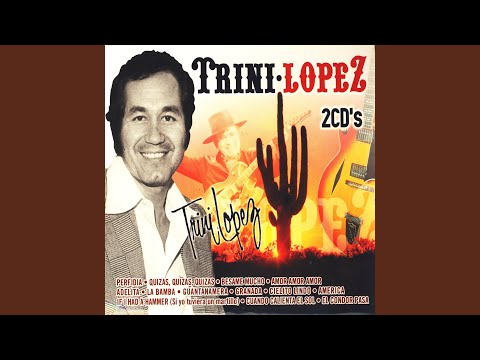

→ More from the 1960s File
View all 1960s hits →




Keep digging