The 1960s File Feature
Sweet Pea
Sweet Pea: Tommy Roe and the Bubblegum Pop Sound of 1966 Tommy Roe occupies a specific and clearly defined place in the history of American popular music: th…
01 The Story
Sweet Pea: Tommy Roe and the Bubblegum Pop Sound of 1966
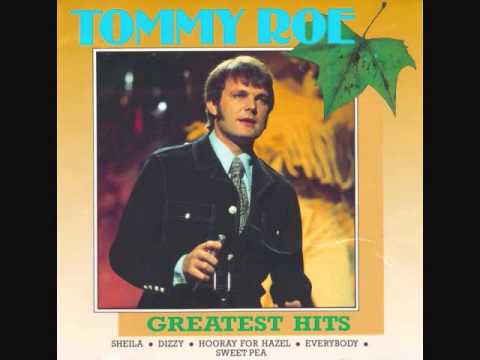
Tommy Roe occupies a specific and clearly defined place in the history of American popular music: that of the reliable craftsman of bubblegum pop, the artist who understood better than almost anyone how to construct short, bright, irresistibly singable songs built around a hook and a feeling of uncomplicated joy. "Sweet Pea," released in 1966 on ABC Records, was among the most successful examples of this craft, reaching a wide audience and reinforcing Roe's commercial standing at a moment when the pop landscape was being dramatically transformed by the British Invasion and the emergence of rock as a serious artistic form.
Roe was born Thomas David Roe in Atlanta, Georgia, in 1942, and had first achieved national success in 1962 with "Sheila," a song that reached number one on the Billboard Hot 100 and announced his particular gift for the innocent, energetic pop that would define his career. The early success was followed by a period of lesser chart performance, but by the mid-1960s Roe had found a consistent commercial formula that served him well. "Sweet Pea" was both a commercial success and a stylistic statement, confirming that his approach to pop songwriting was neither dated nor exhausted by changes in the musical environment.
"Sweet Pea" reached number eight on the Billboard Hot 100 in the summer of 1966, giving Roe one of his bigger hits of the decade and demonstrating the continuing vitality of straightforward, uptempo pop at a moment when some observers were predicting its eclipse by harder-edged rock. The song's cheerful energy and its central image of affectionate nickname as romantic address gave it an approachability that translated directly into radio appeal. ABC Records was a label with significant pop infrastructure, and the promotion and distribution support it provided helped "Sweet Pea" reach the audience it deserved.
The production of "Sweet Pea" followed the conventions of mid-1960s American pop with considerable skill. The rhythm was bright and propulsive, the arrangement clean and uncluttered, and Roe's vocal delivery was enthusiastic without being aggressive. This last quality was crucial to the bubblegum aesthetic: the emotional temperature was warm and inviting rather than intense or demanding, which made the songs suitable for the widest possible demographic range, from young teenagers to adults who might have been put off by the more confrontational energy of contemporary rock recordings.
The term "bubblegum pop" would become associated, often dismissively, with the style of music that Roe helped to define, but the skill required to execute it effectively is easily underestimated. Writing a song that is genuinely catchy without being irritating, that is simple without being stupid, and that conveys genuine feeling within the strictest commercial constraints is a craft that relatively few songwriters master. Roe demonstrated over the course of his career that he possessed this craft in abundance, and "Sweet Pea" is among the cleanest examples of it.
By 1966, the pop marketplace was navigating a complex set of competing aesthetics. The Beatles had demonstrated that pop music could be sophisticated and artistically ambitious; Bob Dylan had argued that it could be literary and politically engaged; the Rolling Stones and other British Invasion acts had given it an edge and aggression that earlier pop had lacked. In this environment, the simple joy of "Sweet Pea" might have seemed like a throwback, but the chart performance demonstrated that large segments of the American radio audience remained committed to music that made them feel good without complicating that feeling.
ABC Records during this period was one of the significant independent labels in American pop, competing with the major labels for chart space and radio airplay with a roster that included multiple pop and soul acts alongside Roe. The label's infrastructure and its relationships with radio programmers were essential to placing "Sweet Pea" in the rotation where it could accumulate the airplay that drove chart performance in the pre-streaming era.
Roe would continue to chart successfully for several more years, culminating in the massive 1969 hit "Dizzy," which returned him to number one on the Hot 100 and demonstrated that the bubblegum approach could remain commercially viable into the psychedelic era. "Sweet Pea" in retrospect looks like a crucial step in that career arc, a demonstration that the commercial instincts and the songwriting gift were fully operational and ready for the run of success that followed. Its place in the 1966 chart landscape remains one of the cheerful facts of a year in pop music that combined extraordinary artistic ambition with the continuing pleasure of straightforward, well-crafted pop songs.
02 Song Meaning
Joy as Craft: The Meaning and Appeal of "Sweet Pea"
"Sweet Pea" is a song whose meaning is, in the best sense, exactly what it appears to be: an expression of uncomplicated affection and pleasure. The nickname of the title, a term of endearment with a long history in American vernacular speech, frames the object of the narrator's affection as something small and bright and inherently dear. There is no darkness here, no complicating ambivalence, no suggestion that the happiness might not last. The song exists entirely within the emotional space of feeling good about someone you love, and that simplicity is its artistic identity rather than a limitation.
This kind of deliberate emotional simplicity requires a defense against the charge of superficiality, and the defense is embedded in the song's own craft. The hook works, the melody is genuinely memorable, and the performance communicates actual delight rather than manufactured cheerfulness. These are not small achievements. The history of pop music is littered with attempts at simple joy that fell flat because the craft was insufficient, and "Sweet Pea" demonstrates by contrast that genuine bubblegum requires real songwriting skill.
Tommy Roe's approach to lyrical content in his best work was to find the universally recognizable emotional experience and frame it in the most direct and accessible possible language. The use of a pet name as a song's central image is a perfect example of this instinct. Almost everyone who has been in a loving relationship has used or received a term of endearment, and almost everyone recognizes the warmth and intimacy that such language encodes. "Sweet Pea" taps into that recognition without needing to explain or elaborate; the emotional logic is immediate.
The song also participates in a long tradition of American popular music in which romantic love is presented as a source of pure, uncomplicated pleasure rather than as a site of conflict, growth, or pain. This tradition runs from the Tin Pan Alley songwriters through the early rock and roll era to the bubblegum pop of the 1960s and beyond. Within this tradition, the value of songs like "Sweet Pea" is precisely their refusal to complicate what they celebrate. Love feels good, and the song says so, and that is enough.
The bubblegum pop aesthetic that "Sweet Pea" exemplifies has often been dismissed by critics who prefer their pop music to carry heavier freight, but the aesthetic has its own coherence and its own pleasures. There is something valuable in music that insists on joy as a sufficient artistic aim, that refuses to apologize for making the listener feel happy without also making them think or suffer. "Sweet Pea" is a fully realized example of this approach, accomplished within its own terms rather than judged against terms it was never trying to meet.
In the context of 1966, when much of the most celebrated popular music was moving toward greater complexity, ambition, and darkness, "Sweet Pea" represented a kind of cheerful resistance. It did not argue against the sophistication of the Beatles' "Revolver" or the gravity of Dylan's "Blonde on Blonde," but it insisted by its existence and its commercial success that there was still a large and genuine audience for the simpler pleasures of a well-made pop song about being happy in love. That insistence was proved correct by the charts, and the song remains a clear-eyed and enjoyable artifact of a particular moment in American pop history when multiple musical philosophies competed for the same airwaves and the same audience's affection.
→ More from Tommy Roe
View all Tommy Roe hits →



→ More from the 1960s File
View all 1960s hits →




Keep digging