The 1960s File Feature
Hurt
Timi Yuro and "Hurt": A Breakthrough in 1961 Timi Yuro was born Rosemarie Timothy Yuro in Chicago in 1940 and raised in Los Angeles, where her family's Itali…
01 The Story
Timi Yuro and "Hurt": A Breakthrough in 1961
Timi Yuro was born Rosemarie Timothy Yuro in Chicago in 1940 and raised in Los Angeles, where her family's Italian heritage and the city's vibrant post-war music scene shaped her early musical development. By the time she recorded "Hurt" in 1961, she had been performing in clubs in the Los Angeles area for several years, developing a vocal style that was remarkable for its emotional intensity and its deliberate engagement with the conventions of Black American soul and blues music. Yuro occupied a genuinely unusual position in the popular music landscape of the early 1960s: a young white woman who sang with a depth of feeling and a stylistic fluency in gospel-rooted soul that was uncommon among her demographic peers.
"Hurt" was written by Jimmie Crane and Al Jacobs and had been recorded previously by several artists, most notably Roy Hamilton, whose 1954 recording on Epic Records established the song as a standard within the rhythm-and-blues repertoire. Hamilton's version was itself a significant performance: a powerful baritone delivery with gospel roots that fit naturally within the emotional world of mid-1950s R&B. The song's subject matter, the pain of a love betrayed, gave it a directness that translated across multiple interpretive approaches.
When Yuro recorded "Hurt" for Liberty Records in 1961, she brought to it a vocal intensity that exceeded most of what was appearing on pop radio at the time. Her voice had an unusually wide dynamic range, capable of moving from intimate softness to full-throated power within a single phrase, and she used that range to give the song an emotional scope that matched its lyrical content. Producer Dave Pell and arranger Don Ralke constructed an orchestral backdrop that supported her voice without overwhelming it, using strings and brass to amplify the song's emotional peaks rather than to substitute for them.
The single was released by Liberty Records in the summer of 1961 and debuted on the Billboard Hot 100 on July 24, entering at number 66. Its ascent was rapid by the standards of the era: within two weeks it had moved to number 35, and by early August it had reached the top twenty. The trajectory continued upward through August, and the single reached its peak position of number four on September 11, 1961. The 12-week chart run reflected a level of sustained radio support that demonstrated Yuro's ability to hold listener attention across a broad demographic range.
The achievement was particularly notable given the context of American popular music in 1961. The pop charts were still navigating the post-rock-and-roll consolidation of the late 1950s, when the major labels had reasserted commercial control by promoting artists who worked within more conventional pop frameworks. Yuro's success with a deeply felt soul-oriented recording demonstrated that the emotional intensity of gospel-rooted music had not lost its appeal to mainstream audiences, even as the commercial landscape had shifted.
She was frequently described in contemporary press coverage as sounding Black, a characterization that was meant in the context of the era to indicate the depth and stylistic authenticity of her connection to soul and blues music. The comment, however problematic its implicit assumptions, pointed to something genuine about her approach: she was not simply copying surface mannerisms but had internalized the emotional and technical vocabulary of a tradition that was not her own by heritage and had made it genuinely her own through immersion and practice.
The Liberty Records promotional apparatus worked effectively to place "Hurt" in front of both pop and rhythm-and-blues audiences, and Yuro achieved the unusual distinction of crossing between formats at a time when those formats were substantially segregated in both radio programming and commercial strategy. Her success with Black audiences as well as white pop audiences reflected the power of a vocal performance that communicated across demographic lines through sheer emotional force.
Following "Hurt," Yuro charted several additional singles, including "Smile" and "What's a Matter Baby (Is It Hurting You)," establishing a brief but genuine chart presence that positioned her as one of the most individual vocal talents in early-1960s pop. Her career was interrupted by significant health challenges in the mid-1960s, and though she continued to perform and record over the following decades, she never fully replicated the commercial heights of her early Liberty Records period.
The song itself went on to become one of the most recorded titles in the American popular music catalog. Among the most historically significant later versions was the recording by Johnny Cash made in 1994, which was actually a cover of the Nine Inch Nails song of the same name, a separate composition that shares its title but not its melody or lyric with the Crane-Jacobs standard. The confusion between the two songs, both titled "Hurt" and both associated with powerful vocal performances oriented around pain and loss, has occasionally obscured the distinct histories of each composition.
Yuro's recording remained the definitive interpretation of the original composition for decades. Her voice, captured on tape in 1961 with all the technical limitations of that era's recording technology, retained a presence and emotional power that subsequent technological improvements in recording only made more apparent by contrast. The performance documented something that could not be replicated through technical refinement alone: a specific combination of vocal talent, emotional investment, and stylistic conviction that placed her in a category that cut across the conventional categories of her time.
Health problems, including a serious stroke in 1980, limited her activities significantly in her later decades, but Yuro continued to be recognized by fellow musicians and critics as a foundational figure in the history of white artists working in soul and blues traditions. She died in 2004, leaving behind a small but historically significant catalog anchored by the 1961 recording that had introduced her to the national audience that number four on the Hot 100 represented.
02 Song Meaning
The Meaning of "Hurt" by Timi Yuro
"Hurt," written by Jimmie Crane and Al Jacobs, is a song about the specific devastation that follows betrayal by a romantic partner. Its emotional center is not the initial experience of being hurt, but the sustained condition of living with that hurt after the damage has been done. The speaker addresses the person who caused the pain directly, giving the lyric a confrontational dimension that coexists with the vulnerability inherent in admitting that the betrayal still has power over her.
The emotional architecture of the song asks the listener to hold two responses simultaneously: the pain of having been hurt and the lingering love for the person who inflicted that pain. This combination, which is one of the most common and most complicated experiences in romantic life, is what gives the song its durability across time and across the many artists who have recorded it. The coexistence of love and pain in the same emotional moment, without resolution or simple narrative closure, mirrors actual human experience in a way that simpler emotional constructions cannot achieve.
Timi Yuro's interpretation of the song placed particular emphasis on this complexity. Her vocal approach did not sentimentalize the pain or minimize it in favor of a cleaner emotional narrative. She inhabited the song's emotional territory fully, moving through its various registers, from quiet acknowledgment to passionate declaration, in a way that made the emotional contradictions feel lived rather than performed. Her background in gospel-rooted soul music gave her the technical vocabulary to handle those extremes without losing the through-line of emotional coherence.
The song's address to the absent partner who has caused the pain is one of its most psychologically interesting features. Rather than directing her feelings inward or addressing them to a neutral audience, the speaker speaks directly to the person who hurt her, which creates a sense of ongoing relationship even in the context of its failure. The person who caused the pain is still present in the song's emotional universe; the speaker has not moved past them or beyond them. This unresolved attachment is the source of both the song's emotional power and its most honest quality.
In the context of 1961, when Yuro's recording entered the Hot 100 and climbed to number four, the song's directness was unusual within the mainstream pop landscape. The conventions of early-1960s pop often demanded emotional tidiness, with narratives that resolved into either affirmation or clean grief rather than the messier middle ground of love that persists through damage. "Hurt" refused that tidiness, and part of Yuro's contribution was to find in the song a performance style, rooted in soul and gospel rather than pop convention, that could carry its emotional complexity to a mainstream audience without diluting it.
The song also resonated with listeners who had experienced the specific form of hurt that comes not from abandonment alone but from betrayal: the discovery that someone who was trusted chose to act in a way that violated that trust. This is a more complicated emotional position than simple loss, because it requires the injured party to reckon with their own judgment and with the nature of what they believed the relationship to be. The speaker in "Hurt" is dealing not only with the loss of the other person but with the revision of her understanding of who that person was.
The song's endurance as a recorded standard, covered by numerous artists across decades, reflects how effectively Crane and Jacobs located a universal emotional experience and translated it into a lyrical form that remained applicable across a wide range of personal circumstances and cultural moments. Yuro's recording brought it to its largest initial audience, and her interpretation established a standard of emotional intensity that subsequent recordings had to reckon with. That original 1961 performance, captured at the beginning of a career that would be marked by both achievement and difficulty, remains one of the more emotionally unguarded vocal documents of its era.
→ More from Timi Yuro
View all Timi Yuro hits →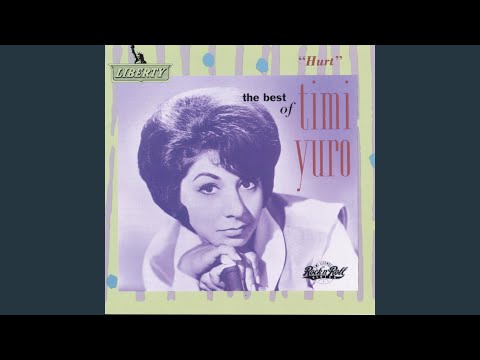

→ More from the 1960s File
View all 1960s hits →




Keep digging