The 1960s File Feature
Time Of The Season
Time of the Season: How a Zombie Came Back to Life Two Years Late The story of Time of the Season is one of the more unusual success narratives in the histor…
01 The Story
Time of the Season: How a Zombie Came Back to Life Two Years Late
The story of Time of the Season is one of the more unusual success narratives in the history of the Billboard Hot 100. The song was recorded by The Zombies in 1967 for the concept album Odessey and Oracle, released in April 1968 in the United Kingdom on CBS Records. By that time, the band had already broken up. When the track finally climbed to number three on the Hot 100 in early 1969, the group that had made it no longer existed in any functional sense. It was, in a quite literal way, a hit without a band.
The Zombies formed in St Albans, Hertfordshire in 1961, originally coming together as a group of grammar school students with a shared enthusiasm for rhythm and blues, jazz, and the early sounds of rock and roll. By the time they entered the Abbey Road Studios to record Odessey and Oracle in the summer of 1967, they were a refined and technically accomplished unit, but one whose commercial fortunes had declined sharply since their 1964 debut single She's Not There had reached number two on the Hot 100 and number twelve in the UK. Time of the Season was written by the band's keyboardist and primary songwriter, Rod Argent, who had a gift for constructing melodies of unusual sophistication within the apparent confines of the pop song format.
The recording of Odessey and Oracle was funded in part by CBS Records, though the label was not particularly enthusiastic about the project and allocated only a modest budget. The sessions at Abbey Road, which overlapped in time with the recording of the Beatles' Sgt. Pepper's Lonely Hearts Club Band in adjacent studios, were conducted with meticulous care. Producer Chris White, who also served as the band's bassist, worked alongside Argent to create arrangements that made imaginative use of the studio's resources. Time of the Season was constructed with notable sparseness. The track opens with Colin Blunstone's distinctive breathy tenor vocal and a hand-clap rhythm that creates an intimate, almost hypnotic atmosphere before the full band arrangement enters.
The production choices on the track were unconventional for 1967. The bass line, played by White, has a chromatic descending character that gives the track its distinctive propulsive quality. Argent's organ work is restrained, appearing primarily in fills between vocal phrases rather than dominating the arrangement. The result is a track that breathes in an era when many recordings packed every available space with sound. CBS in the United States initially declined to release Odessey and Oracle at all, considering it uncommercial. It was only after the band had formally disbanded in late 1967 that the American arm of the label, under pressure from disc jockeys who had obtained promotional copies, agreed to release Time of the Season as a single.
The single entered the Hot 100 in late 1968 and climbed steadily through the winter, reaching its peak position of number three in February 1969. This made it the highest-charting single of the band's career, surpassing even She's Not There. The irony was not lost on anyone involved. Rod Argent and Colin Blunstone were approached repeatedly during this period by promoters eager to assemble a touring version of the Zombies to capitalize on the hit. Both men declined to participate in what they regarded as an inauthentic exercise, though a number of ersatz Zombies lineups did perform under variations of the band name during this period, a phenomenon that generated some legal complications.
The album Odessey and Oracle, despite the success of the single, did not chart particularly well in its initial release. It was reissued in 1969 by Date Records in the United States, reaching a modest position on the Billboard 200. The album's reputation, however, has grown continuously in the decades since, to the point where it is now routinely included on lists of the finest pop-rock albums of the 1960s. Time Out magazine named it among the greatest British albums ever recorded, and Rolling Stone has consistently cited it among the top fifty albums of the rock era.
The Zombies reunited periodically over subsequent decades, most significantly for a full reunion that produced new recordings and extensive touring from 2004 onward. The band was inducted into the Rock and Roll Hall of Fame in 2019, with Time of the Season cited prominently in the induction materials as evidence of the group's lasting influence. At the induction ceremony, Argent and Blunstone performed the song together for the first time in decades to a substantial audience, a moment that underscored how thoroughly the song had outlasted the context of its creation.
The track has appeared in numerous films and television programs over the decades, each appearance introducing it to a new generation of listeners. Its use in period pieces set in the late 1960s has become almost obligatory, reflecting the degree to which the song's sonic character has come to represent an idealized version of that moment in popular culture. The hand-clap rhythm, the breathy vocal, and the chromatic bass line are immediately identifiable signifiers of a particular cultural moment, even to listeners who have never heard the original recording in its album context.
02 Song Meaning
Desire and the Season: Unpacking Time of the Season
Time of the Season arrives with an immediacy that has not diminished in the half-century since its recording. The song's opening, with its sparse percussion and Colin Blunstone's close-miked vocal, creates a sense of intimacy that is almost uncomfortable in its directness. Rod Argent wrote a lyric that is overtly about romantic pursuit but carries enough ambiguity in its phrasing to sustain interpretations that go well beyond the surface of a conventional love song.
The central question the song poses, delivered as a challenge to a specific unnamed woman, concerns her authenticity in a relationship context. The interrogation of whether she loves the person or what he represents cuts to an anxiety that was particularly resonant in 1967 and 1968, a period when questions of authenticity, both in personal and political terms, were central to the cultural conversation. The song does not resolve this question. It presses it and lets it hang, which is considerably more interesting than providing an answer.
The production's sparseness reinforces the lyric's interrogative quality. A song about stripping away pretense and asking direct questions is appropriately served by an arrangement that strips away the sonic comfort of dense orchestration. Rod Argent's musical instincts were particularly well-aligned with Blunstone's vocal delivery, which has always conveyed vulnerability even in contexts of apparent confidence. The result is a track that sounds simultaneously intimate and slightly threatening, a combination that is extremely difficult to achieve and that the band accomplished with apparent effortlessness.
Within the context of Odessey and Oracle as a complete work, Time of the Season functions as one of the more directly emotional tracks on an album that tends toward the reflective and elegiac. The album was conceived partly as a farewell statement, recorded by a band that knew it was likely disbanding, and many of its tracks have a valedictory quality. Time of the Season is one of the few moments on the record that feels fully present rather than retrospective, engaged with the immediate rather than the remembered. This distinction helps explain its particular impact as a single extracted from the album context.
The song's cultural afterlife has been shaped significantly by its repeated use in film and television. Each placement tends to emphasize a slightly different aspect of the lyric. In period dramas, it functions as a signifier of late-1960s romantic freedom. In contemporary settings, it carries a nostalgic charge that complicates whatever scene it scores. This flexibility of meaning is a mark of genuine literary quality in the lyric, the ability to generate different interpretations depending on the context in which it is encountered.
Colin Blunstone's vocal technique deserves particular attention in any serious discussion of the song's meaning. His characteristic breathiness is not simply an aesthetic choice but a communicative one, suggesting a speaker who is controlling emotion with effort, who is asking the central question at some personal cost. This quality gives the song a psychological complexity that a more conventionally confident vocal approach would have eliminated. The meaning of the song is partly located in how Blunstone sings it, in the register of controlled vulnerability, rather than exclusively in what the lyrics say.
The enduring appeal of Time of the Season for successive generations of listeners rests on this combination of accessibility and depth. The hook is immediate, the rhythm is physical and compelling, the vocal is charismatic. But the song also rewards repeated listening, revealing in its arrangement and lyric nuances that are not available on first encounter. This layered quality, pop accessibility covering genuine artistic seriousness, is what distinguishes the finest recordings of the late-1960s British rock scene from the more disposable product of the same period.
→ More from The Zombies
View all The Zombies hits →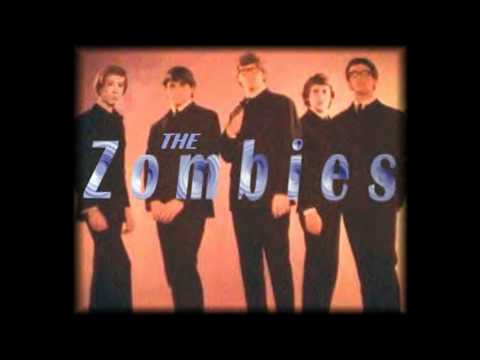


→ More from the 1960s File
View all 1960s hits →




Keep digging