The 1960s File Feature
Airplane Song (My Airplane)
"Airplane Song (My Airplane)" — The Royal Guardsmen's 1967 Summer Flight The summer of 1967 is one of the most mythologized seasons in pop music history, the…
01 The Story
"Airplane Song (My Airplane)" — The Royal Guardsmen's 1967 Summer Flight
The summer of 1967 is one of the most mythologized seasons in pop music history, the Summer of Love, with its psychedelia, its flower power, and its ambitions of social transformation. But the pop mainstream that summer was considerably more eclectic than the counterculture mythology suggests: novelty acts, bubblegum pop, and songs with the kind of cheerful directness that had nothing to do with San Francisco were competing vigorously on the radio alongside the more culturally significant releases. The Royal Guardsmen were operating firmly in this commercial territory.
The Royal Guardsmen's Particular Niche
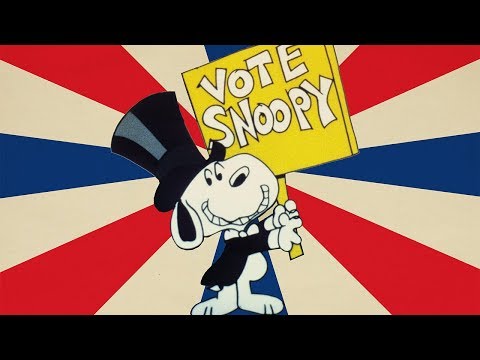
The Royal Guardsmen had already established their commercial niche with "Snoopy vs. The Red Baron," their novelty hit from late 1966 that had used the Peanuts character and World War I aviation as its central conceit. The formula had worked spectacularly, reaching the top five on the Hot 100 and establishing the band as masters of a specific kind of playful, catchy pop with a loosely aviation-related theme. Their follow-ups naturally tried to capture the same audience with related material, and "Airplane Song (My Airplane)" was one of these attempts, applying the aviation theme in a different direction.
From Snoopy to a New Scenario
"Airplane Song (My Airplane)" steps away from the Peanuts universe and into a more direct treatment of aviation themes. The song's production style reflects the same bright, cheerful pop approach that had worked in the Snoopy material, with an upbeat tempo and a melodic simplicity that suited the AM radio format of the period. The Royal Guardsmen's particular commercial gift was for this kind of immediately accessible pop, music that required nothing from the listener but a willingness to receive it on its own unambitious terms and that delivered its modest pleasures with consistent professional competence.
Six Weeks to Number 46
The song debuted on the Billboard Hot 100 on June 17, 1967, at position 87. It climbed steadily: to 72, then 54, then 48, reaching its peak of 46 on the week of July 15, 1967. Six weeks on the Hot 100, peaking at number 46 on July 15, 1967: a solid mid-chart result for a follow-up single working within the same commercial territory as its predecessor. The chart performance confirmed that the band's audience was real and loyal rather than purely novelty-driven, and it gave the band and the label confidence that the formula had more commercial life in it.
Pop Music's Lighter Registers in 1967
The critical narrative about 1967 in pop music tends to focus on the album releases and the psychedelic experiments that defined the counterculture's musical expression. The commercial reality of the singles chart in that year was considerably more varied: novelty pop, teen idols, established R&B acts, and the newly dominant rock bands were all competing for the same radio time. Acts like The Royal Guardsmen served a real function in this ecology, providing the kind of unpretentious entertainment that a significant portion of the radio audience preferred to the more demanding offerings that history has tended to remember as the period's defining music.
The Novelty Act's Commercial Logic
Novelty records have always occupied a specific and somewhat uncomfortable commercial niche in popular music. They can achieve rapid commercial success when they catch a cultural moment, but they are difficult to sustain over the long term because the audience's appetite for any specific novelty is finite. The Royal Guardsmen's aviation theme showed genuine creative ingenuity in its initial formulation, and "Airplane Song" is evidence that the theme had some additional commercial mileage in it after the Snoopy breakthrough. Their commercial arc in 1967 demonstrates both the opportunity and the limitation of the novelty approach as a career strategy.
Take a step back from 1967's mythologized significance and let this remind you what a large part of that summer sounded like on the radio.
"Airplane Song (My Airplane)" — The Royal Guardsmen's singular moment on the 1960s charts.
02 Song Meaning
Flight as Fun: What "Airplane Song (My Airplane)" Offers
The airplane in popular culture of the 1960s was charged with multiple kinds of meaning. It was a symbol of modernity and technological achievement, of the postwar American confidence in its ability to conquer physical and practical challenges through innovation. It was also, for the youth audience of the era, associated with a sense of freedom and possibility that the expanding commercial aviation industry was making newly available to the middle class. And in the hands of The Royal Guardsmen, fresh from their Snoopy aviation adventures, it was an occasion for fun.
The Aviation Theme in Pop
Aviation had appeared in pop music well before The Royal Guardsmen made it their commercial territory, but their Snoopy recordings had given it a specific tonal character: warm, humorous, historically allusive without being historically serious, and fundamentally optimistic in its relationship to the adventure of flight. "Airplane Song" inhabits this same tonal space. The airplane is a vehicle for joy rather than an occasion for reflection, which suited the band's commercial approach and the portion of the 1967 pop audience that wanted its music to be a reliable source of simple good feeling.
Novelty as a Legitimate Register
Pop music criticism has always been somewhat uncomfortable with novelty as a mode, inclined to treat it as a lower order of musical achievement than serious artistic statement. But novelty serves real functions: it provides entertainment, it creates shared cultural references, it lightens the ambient mood of the media environment. These functions are not trivial, and the artists who perform them well deserve recognition on the terms of what they are actually trying to do rather than being measured against standards they have never claimed to meet.
The Audience for Unpretentious Pop
In any era, a substantial portion of the pop music audience is not interested in being challenged, provoked, or transformed by the music they consume. They want something that is pleasant to hear, easy to sing along to, and emotionally uncomplicated. This audience is often overlooked in critical histories of popular music, which tend to focus on the records that were important rather than the ones that were enjoyed. The Royal Guardsmen were in the business of making records that were enjoyed, and their chart performances demonstrate that they were competent at it.
Songs About Things, Not Just Feelings
One of the characteristics of novelty pop as a genre is its willingness to take concrete things, objects, places, cultural figures, as its primary subject matter rather than the emotional states that dominate most popular song. "Airplane Song" is about an airplane in a way that most pop songs are not about anything so specific. That concreteness gives the song a different kind of emotional structure than the romantic or confessional mode that dominates the repertoire: you are engaged with the thing rather than with a feeling about something else.
What 1967 Pop Actually Sounded Like
The distance between what we remember as the defining sound of 1967 in pop music and what actually occupied the majority of radio time that year is substantial. The Summer of Love produced some extraordinary recordings, but it also coincided with an enormous volume of straightforward commercial pop of the kind that The Royal Guardsmen were producing. Recovering that fuller picture of what a given year in pop music actually sounded like is a worthwhile historical exercise, because it reveals the complexity of the audience and the diversity of what counted as popular at any given moment.
→ More from The Royal Guardsmen
View all The Royal Guardsmen hits →

→ More from the 1960s File
View all 1960s hits →




Keep digging