The 1960s File Feature
California Sun
"California Sun" — The Rivieras' Surf Rock Moment Midwest Boys Dreaming of the Coast Something remarkable happened to American popular music in the early mon…
01 The Story
"California Sun" — The Rivieras' Surf Rock Moment
Midwest Boys Dreaming of the Coast
Something remarkable happened to American popular music in the early months of 1964, and it was happening on multiple fronts simultaneously. The British Invasion was about to arrive with seismic force, but for a brief window in January and February, the American surf and hot rod sound was still competing at the very top of the charts. Into that charged moment walked the Rivieras, a five-piece garage band from South Bend, Indiana who had no experience of surfboards or the California coast but who possessed something just as valuable: an understanding of what made that sound irresistible to teenagers across the country, regardless of geography.
The Rivieras formed in South Bend, Indiana, deep in Midwestern American heartland, and the fact that they produced one of the era's most convincing surf rock records says something important about how musical genres travel through popular culture. California Sun was actually written by Henry Glover and Morris Levy, with the song previously having been recorded by Joe Jones in 1961 before the Rivieras transformed it into the raw, energetic version that became their signature recording. The earlier version had been considerably more restrained; the Rivieras attacked it with garage rock abandon that changed the song's character entirely.
The Record That Caught Fire
Released on Riviera Records and picked up for national distribution, California Sun had the qualities that made surf records work: a driving, slightly dirty guitar sound, a tempo that translated directly to physical movement, and a lyrical premise that every landlocked teenager in America could project themselves into. The California of this song was not a documentary reality but an imaginative destination, a place where the sun always shone and dancing on the beach was the primary occupation. The arrangement stripped things down to essentials: rhythm guitar, bass, drums, and vocals working together with a looseness that felt live and immediate rather than polished and produced.
The Rivieras' recording caught the particular energy of early 1964 American teenage music at a moment when that energy was about to be thoroughly disrupted. It sounded like a document of one cultural moment even as it was being made, which gives it a nostalgic charge that has only intensified over the decades.
The Remarkable Chart Climb
The single entered the Billboard Hot 100 on January 25, 1964, at number 70. Its climb over the following weeks was extraordinary by any measure. By February 1, it had jumped to number 38. A week later it was at 23. Then 14, then 8, then number 5 on February 29, 1964, with the record having spent a total of ten weeks on the chart overall. Debuting outside the top 100 and reaching number 5 represented one of the steeper ascent trajectories any record achieved in early 1964, and it placed the Rivieras briefly among the most successful acts in American pop.
The timing created a fascinating historical circumstance: the Rivieras were peaking on the charts at almost exactly the moment the Beatles made their American television debut on The Ed Sullivan Show on February 9, 1964, an event that would begin reshaping the entire commercial landscape of American popular music within weeks.
The British Invasion and What Came After
For the Rivieras, as for many American acts who were succeeding in early 1964, the arrival of the British Invasion created a suddenly more competitive environment. The market shifted rapidly in the weeks following Beatlemania's American breakthrough, and acts that had been thriving found radio and retail attention redirected toward the new wave of British artists. The Rivieras did not sustain the commercial success of California Sun at the same level in the subsequent months, though they continued to record and perform.
This pattern was common enough among American acts of the era that it has become a historical shorthand: the pre-Beatles American Top 40 and what replaced it. The Rivieras had the particular historical position of peaking right at the cusp of that transformation.
Enduring Life of a Garage Classic
Decades have been very kind to California Sun. The record has appeared in countless films, television shows, and commercials devoted to evoking early-1960s Americana. It has been covered by artists ranging across punk, surf revival, and classic rock. The Ramones recorded a version that introduced the song to punk audiences in the 1970s. Each generation of garage rock and surf revivalists has found their way back to it as a touchstone of what the form could achieve at its most exuberant.
The song's persistence is a testament to the quality of the performance rather than the reputation of the act. The Rivieras were not superstars, and their catalog was not extensive. But this one recording captured something essential about youthful energy and aspirational escapism that never goes stale. Press play and you'll understand exactly why it rocketed to number 5 in February 1964.
"California Sun" — The Rivieras' singular moment on the 1960s charts.
02 Song Meaning
"California Sun" — Escape, Youth, and the American Dream of Endless Summer
California as the National Imagination
California has functioned as a destination of imaginative escape in American culture for well over a century, but the early 1960s surf explosion gave that imagination a specific, sensory-rich form that proved enormously appealing to teenagers across the country. Sun, sand, ocean, physical freedom, perpetual summer: these elements combined into a vision of existence that stood in pointed contrast to the ordinary lives most young Americans were actually living. The surf rock genre was fundamentally a music of aspiration, and California Sun distilled that aspiration to its essential elements with a directness that left no room for ambiguity.
The Rivieras came from South Bend, Indiana, which made their recording of this material not an expression of lived experience but an expression of shared cultural longing. Teenagers in landlocked states who had never seen the Pacific Ocean could fully inhabit the song's world, because the California of early-1960s popular music was never primarily a geographical reality but an emotional one.
The Body in Motion
What the surf rock genre delivered to its listeners was permission to move. The genre's rhythmic drive, its physical insistence, its tempo calibrated for dancing rather than listening, all of this served the fundamental purpose of getting bodies into motion. Early-1960s popular music was obsessed with dance in a way that later decades would modulate or complicate, and the beach as a setting provided perfect symbolic permission: sand, sun, and bodies in motion without the social constraints of the formal dance hall or the teenage bedroom.
The lyrical content of California Sun is essentially a description of physical pleasure: warmth on skin, movement, social ease. The song makes no claim to emotional depth or cultural significance. Its entire purpose is to communicate the sensation of pleasurable physical existence, and that purpose is accomplished so completely that additional ambition would be a distraction.
The Democratic Fantasy
One of the surf rock genre's interesting cultural functions was its egalitarianism of aspiration. The California it described belonged to everyone who could tune in a radio or drop a coin in a jukebox, regardless of geography, income, or background. The democratization of a particular vision of leisure and pleasure was a significant cultural project in early-1960s America, when the postwar economic expansion was making consumption and recreation available to a broader population than ever before.
Surf music was part of this broader cultural conversation about what American prosperity made possible and what it meant to be young in a country that was, for the first time, treating youth as a significant market with distinct cultural desires. The genre spoke directly to those desires without condescension or qualification, and its audience responded accordingly.
The Garage Sound and Its Meaning
The Rivieras' recording had a roughness that distinguished it from the more polished West Coast surf productions. Their Midwestern garage band approach gave the track a slightly raw quality that made it feel more energetically immediate than many of its genre contemporaries. This roughness was part of the record's appeal, suggesting that the California sun was something you could feel even in a South Bend rehearsal space if the music was played with enough conviction.
That quality of rough conviction is what garage rock would build on throughout the decade, and in retrospect the Rivieras' recording sounds like an early prototype of that ethos. The Ramones' later cover version made the connection explicit, translating the song's energy into the terms of 1970s punk without losing the essential spirit. Both versions shared the belief that volume, tempo, and simple joy could do what sophistication sometimes cannot: make a listener feel genuinely alive in the moment of hearing.
"California Sun" — The Rivieras' singular moment on the 1960s charts.
→ More from The Rivieras
View all The Rivieras hits →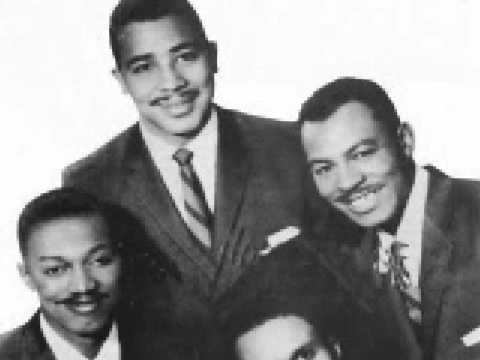

→ More from the 1960s File
View all 1960s hits →




Keep digging