The 1960s File Feature
Sleepy Lagoon
Sleepy Lagoon: The Platters and the Dawn of the 1960s Charts February 1960 was a transitional moment in American popular music, sitting precisely between the…
01 The Story
Sleepy Lagoon: The Platters and the Dawn of the 1960s Charts
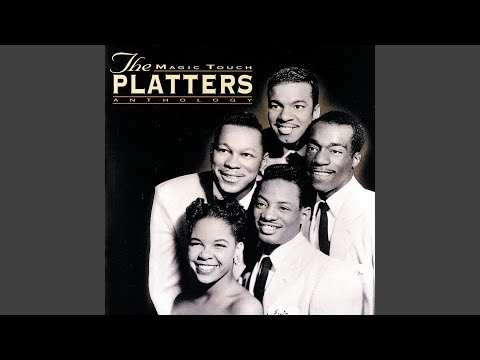
February 1960 was a transitional moment in American popular music, sitting precisely between the era of the classic pop vocal and the rock and roll revolution that was already underway but had not yet completely reshaped the landscape. The Platters, one of the most successful vocal groups in American pop history, were navigating that transition with a grace born of genuine musicianship and commercial instinct. Their version of “Sleepy Lagoon,” a song that had originated decades earlier, brought a classic piece of American popular music into a new decade with the group's distinctive harmonic sensibility intact.
The Platters at the Turn of the Decade
By early 1960, the Platters had been one of the dominant forces in American popular music for several years. Their run of hits in the mid-to-late 1950s, including “Only You,” “The Great Pretender,” and “Smoke Gets In Your Eyes,” had established them as one of the most commercially successful and critically respected vocal groups of the rock and roll era. Their achievement was particularly significant because they had managed to build crossover success that reached pop, R&B, and mainstream audiences simultaneously, at a moment when such crossover was difficult and the boundaries between charts were significant.
The Song's History
“Sleepy Lagoon” was not a new song in 1960. The melody was written by British composer Eric Coates in 1930, and it had been popularized as a vocal number by Harry James with Dick Haymes on vocals in 1942, becoming a major hit during the big band era. The Platters' decision to record it was consistent with their practice of bringing classic pop standards into a new vocal group context, finding in older material the kind of harmonic richness that their arrangements could illuminate. By returning to “Sleepy Lagoon” in 1960, they were implicitly connecting the emerging decade to the tradition of the American songbook from which they had always drawn.
Five Weeks on the Hot 100
“Sleepy Lagoon” entered the Billboard Hot 100 on February 22, 1960, at number 93. The following week it made a significant jump to its peak position of number 65 on February 29, 1960, then moved back and forth in the 70s and 90s over the remaining three weeks, completing five total weeks on the chart. This was a modest performance but consistent with the Platters' position at a moment when the charts were increasingly dominated by the new generation of rock and roll acts rather than by the vocal group tradition the Platters represented.
The Vocal Arrangement
What the Platters brought to “Sleepy Lagoon” was their characteristic approach to harmonic arrangement: rich, close-voiced, with the interplay between Tony Williams's lead tenor and the supporting voices creating a texture that transformed even familiar material into something distinctively their own. The Platters' sound was immediately recognizable regardless of the specific material they were singing, which was itself an achievement that required both consistent artistic identity and genuine technical skill across all members of the group.
The End of an Era in Sight
“Sleepy Lagoon” belongs to a transitional period in the Platters' career and in American pop music more broadly. The group would continue recording and performing for years, but the commercial dominance they had enjoyed in the late 1950s was giving way to a new generation of artists who operated in modes that the Platters' elegant, harmonized pop had not prepared for. The beauty of what they were doing in early 1960 was not diminished by that transition; it was simply becoming a different kind of treasure, one that the future would have to rediscover rather than simply inherit. Press play and hear one of the great vocal groups at a graceful turning point.
The Platters and the Crossover Achievement
The Platters' ability to maintain chart presence at the turn of the decade reflected the genuine breadth of their appeal. They were an African American group that had built substantial crossover success across racial lines in the late 1950s, a commercial achievement that was significant both as a business fact and as a cultural one. Their presence on the early 1960 Hot 100 with a recording of a 1930s British composition demonstrated the unusual reach of their appeal: they could connect with pop audiences who would not have identified with R&B acts, and they could bring standard repertoire to audiences who might not have encountered it through any other vehicle. That breadth of appeal was a function of genuine artistry applied to a consistent set of aesthetic values, and it gave their recordings a quality of wide welcome that was genuinely unusual.
“Sleepy Lagoon” - The Platters' singular moment on the 1960s charts.
02 Song Meaning
Dreaming by the Water: The Emotional World of “Sleepy Lagoon”
A sleepy lagoon is one of the most evocative images in the vocabulary of relaxation and reverie: still water, warmth, protected enclosure, the gentle rhythm of small waves or none at all. The image carries associations of timelessness, of a place removed from the urgency and pressure of ordinary life, where consciousness can soften into the half-waking state that is closest to dreaming. Songs built around this kind of image are offering their listeners a specific kind of imaginative experience, an invitation to mentally inhabit a space of peace and unhurried sensation.
The Tradition of the Escape Song
Music has always offered escape, but the specific mode of escape varies considerably across different types of songs. “Sleepy Lagoon” belongs to the tradition of the geographical escape song, the song that names a specific or evocative place as the destination of the imaginative journey it invites. The lagoon functions as an idealized space, a location that exists primarily in the imagination rather than on any map, where the specific pressures of the listener's actual life cannot follow. This kind of imaginative geography has deep roots in the American popular tradition, from the idealized Southern landscapes of the parlor song tradition through the Hawaiian-inflected pop of the 1930s and 1940s.
Eric Coates's Melodic Gift
The melody that Eric Coates composed in 1930 was one of his more successful exercises in creating a musical analogue for a specific kind of sensory and emotional experience. The phrases of the melody rise and fall gently, like breath or small waves; the overall shape suggests gradual relaxation and the slow dissolution of tension. The Platters' harmonic treatment amplified these qualities, using the warmth of their vocal blend to create a sonic environment that genuinely felt like the image the title described. Great melodies often generate something like a physical experience in the listener; this is one of them.
Tony Williams and the Lead Vocal
Tony Williams's tenor was one of the remarkable instruments in American vocal music of the late 1950s and early 1960s. His ability to move between fullness of tone and a floating, nearly weightless quality was unusual and served the Platters' repertoire particularly well when the material called for reverie rather than intensity. In “Sleepy Lagoon,” Williams modulated his delivery to match the song's invitational quality, singing with a softness that suggested the dreamy state the title described rather than performing at full vocal power. That restraint was itself an artistic choice that made the performance more evocative.
The Standard as a Living Form
The practice of recording pop standards, songs that had proven their durability across multiple performances and arrangements by multiple artists, was central to the Platters' artistic approach. By singing “Sleepy Lagoon” in 1960, they were participating in the ongoing life of a piece of music that had already proven its value across three decades and multiple cultural contexts. Each new recording of a standard is both a tribute to the original and a claim that the material remains living enough to bear new interpretation. The Platters' version made that claim successfully, finding in the 1930 melody something that spoke to a 1960 audience without either betraying the original or pretending that the decades between them had not happened.
Rest as a Value
At the most fundamental level, a song about a sleepy lagoon is a song about the value of rest, of unstructured, purposeless time spent simply being rather than doing or achieving. In the early 1960s American context, with its emphasis on productivity, progress, and the energetic pursuit of the postwar American dream, a song that celebrated stillness and unhurried reverie was offering something genuinely countercultural in a quiet way. The Platters' version, with its unhurried tempo and soft harmonic warmth, created a small space of peace within the busy commercial radio landscape of 1960, and listeners who found it were offered a brief, genuine respite from the acceleration that defined the era.
→ More from The Platters
View all The Platters hits →



→ More from the 1960s File
View all 1960s hits →




Keep digging