The 1960s File Feature
All Day And All Of The Night
All Day and All of the Night: The Kinks' Relentless 1964 Rocker The Kinks emerged from the North London suburb of Muswell Hill as one of the defining bands o…
01 The Story
All Day and All of the Night: The Kinks' Relentless 1964 Rocker
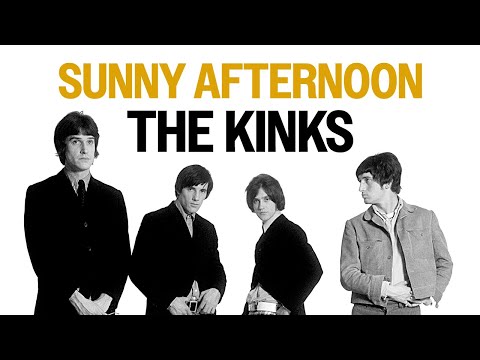
The Kinks emerged from the North London suburb of Muswell Hill as one of the defining bands of the first wave of the British Invasion, and their early singles demonstrated an aggressive, distorted guitar approach that influenced hard rock, punk, and heavy metal in ways that took decades to fully recognize. "All Day and All of the Night," released in October 1964 on Pye Records in the United Kingdom and through Reprise Records in the United States, arrived just months after their debut single "You Really Got Me" had established the band as a commercial force on both sides of the Atlantic. Where "You Really Got Me" had announced the template, "All Day and All of the Night" confirmed that the band could deliver the same ferocity a second time without simply repeating themselves.
The song was written by Ray Davies, the band's primary songwriter and creative force, who was developing at remarkable speed during the extraordinary creative ferment of 1964. The British Invasion was at its height during this period, with the Beatles dominating the charts on both sides of the Atlantic and creating enormous commercial space for other British acts to exploit. The Kinks occupied a distinctive corner of this space, one characterized by a rawer, more aggressive guitar sound that drew on American R&B in a more physically direct way than many of their contemporaries.
The guitar riff at the heart of "All Day and All of the Night" was played by Dave Davies, Ray's younger brother, whose distorted, slashed-string approach on songs like this one laid the foundation for a generation of hard rock guitarists. Dave Davies had famously created his signature distortion sound by slashing the speaker of a small amplifier with a razor blade, a crude but effective technique that produced the ripping, aggressive tone that defined the early Kinks sound. This approach was documented in numerous accounts of the band's early recording sessions and has been cited by artists ranging from Pete Townshend to Eddie Van Halen as an influence on their own approaches to electric guitar.
"All Day and All of the Night" reached number two on the UK Singles Chart in November 1964, being held off the top position during a particularly competitive period. In the United States, the single performed strongly on the Billboard Hot 100, reaching number seven in early 1965, continuing the transatlantic success that "You Really Got Me" had initiated. The American chart performance was particularly significant given the intense competition from other British acts during this period, including the Beatles, Rolling Stones, Dave Clark Five, and Hermits, all competing simultaneously for American chart positions.
The recording was produced by Shel Talmy, the American producer based in London who had also produced "You Really Got Me" and who became one of the key sonic architects of the early Kinks sound. Talmy's production approach favored immediacy and rawness over polish, which suited the band's aggressive style perfectly and helped create recordings that still sound physically powerful decades later. His relationship with the Kinks during their initial period of success was enormously productive, even as business and contractual disputes later complicated the history.
The cultural impact of "All Day and All of the Night" extended far beyond its initial chart performance. The song was covered and built upon by subsequent generations of rock musicians who recognized the guitar riff as a foundational statement of what electric rock music could do. The heavy metal tradition in particular drew significantly from the sonic template established by this and other early Kinks recordings, making Davies and the band indirect architects of a genre that would not fully crystallize until the early 1970s. Rock historians have consistently pointed to the early Kinks singles as among the most important recordings in the genealogy of hard rock.
The BBC archives contain evidence of the band performing the song on television programs of the period, documenting its reception in a live context and confirming the impact that their performance style made on contemporary audiences. The energy of the recording translated directly to live performance, making the Kinks an effective concert draw during a period when live performance was still a primary mechanism for building and sustaining commercial momentum.
02 Song Meaning
The Themes Behind "All Day and All of the Night"
"All Day and All of the Night" is a song of total, consuming romantic obsession, describing a narrator whose desire for his partner occupies every waking moment and extends through his sleeping hours as well. The language is direct and unambiguous: the narrator wants to spend all his time with his partner and the song exists essentially as a sustained expression of that wanting, with little narrative complication or lyrical development beyond the basic assertion of total absorption in another person. This simplicity is not a limitation but a strength, as it concentrates the song's energy entirely into its rhythmic and musical elements.
The emotional register is one of barely contained urgency, which perfectly matches the aggressive, compressed guitar work of Dave Davies and the pounding rhythm section. The sonic environment communicates desire as a physical, even violent force, and the simplicity of the lyrical content allows that sonic communication to operate at maximum intensity. Ray Davies understood, at a precociously young age, that the most effective rock songs are often those in which the music and the emotional content are perfectly aligned, with neither working against the other.
In the context of 1964 British pop, "All Day and All of the Night" represented a more physically aggressive statement than most of what the mainstream was producing. While contemporaries like the Beatles were crafting songs of considerable lyrical and harmonic sophistication, the Kinks were exploring what rock music could do when stripped to its most essential elements: a riff, a rhythm, and a simple but powerful emotional claim. This approach drew directly on American R&B influences, particularly the Chicago blues tradition, and translated them into something that felt distinctively English while retaining the raw force of the source material.
The song also participates in a broader cultural moment in 1964 in which young British musicians were processing and transforming their American musical influences in real time, creating something new in the process. The British Invasion was fundamentally a phenomenon of creative transformation rather than mere imitation, and "All Day and All of the Night" is a clear example of that process at work, taking the vocabulary of American blues and rock and roll and combining it with a specifically British directness and physicality to produce something that sounded like neither its American sources nor its British pop contemporaries.
For Ray Davies as a songwriter, the song represents the beginning of a remarkable career of lyrical and musical development. His later work would become celebrated for ironic wit, social observation, and theatrical complexity, but these early songs demonstrate that he was also capable of pure, direct emotional expression without any of those later sophistications, and that this directness was itself a form of mastery. The foundation he established in 1964 made everything that came after it possible.
→ More from The Kinks
View all The Kinks hits →


→ More from the 1960s File
View all 1960s hits →




Keep digging