The 1960s File Feature
Money
The Kingsmen Cash In With Money It is early 1964, and a scrappy band from the Pacific Northwest is riding one of the unlikeliest hot streaks in rock history.…
01 The Story
The Kingsmen Cash In With "Money"
It is early 1964, and a scrappy band from the Pacific Northwest is riding one of the unlikeliest hot streaks in rock history. The Kingsmen had stumbled into immortality with their gloriously sloppy, barely intelligible cover of "Louie Louie," a record that became a frat-party legend and a national sensation. Eager to keep the momentum alive, they reached for another raw, garage-rock workout, and "Money (That's What I Want)" was the result. It punched its way onto the Billboard Hot 100 and proved the Kingsmen were more than a one-time fluke.
Life After "Louie Louie"
The Kingsmen came out of Portland, Oregon, and for a moment they were the most talked-about garage band in America. "Louie Louie" had turned their primitive, energetic sound into a phenomenon, even drawing the attention of authorities convinced the mumbled lyrics hid something obscene. That notoriety only fueled their fame. The challenge facing any act that breaks through with such a singular novelty is the follow-up, and the Kingsmen needed to show that their appeal extended beyond one immortal three-chord stomp.
A Garage-Rock Standard
"Money (That's What I Want)" was a shrewd choice for a band built on raw enthusiasm. The song had been an early hit for Barrett Strong on the Motown-affiliated Anna label, a tough, driving R&B number with a chorus that cut straight to the point. The Kingsmen attacked it with the same crude, exhilarating force they had brought to their breakthrough, all snarling vocals and relentless drive. It was a song practically designed for a garage band, simple enough to play loud and fast, with a sentiment so blunt it needed no decoding. Their version became a cornerstone of the emerging garage-rock template. The song had first been a hit for Barrett Strong in 1960, an early success for the Detroit operation that would soon become the Motown empire.
Surviving the Invasion
The timing of this single is worth dwelling on. The Kingsmen released "Money" just as the British Invasion was crashing over American shores, threatening to wash homegrown rock and roll right off the radio. For a scrappy band from the Pacific Northwest, that was a daunting environment. The charts were suddenly thick with accents from across the Atlantic, and American labels were scrambling to keep up. Yet the Kingsmen held their ground. Their sound was so raw and so distinctly American that it offered listeners something the Invasion bands could not quite replicate, a crude and exhilarating noise born in garages and basements rather than dance halls. The success of "Money" proved there was still a strong appetite for unpolished domestic rock, a current that would keep flowing through the decade and beyond.
A Solid Climb to Number Sixteen
The chart performance confirmed the Kingsmen still had pull. "Money" debuted at number 82 on March 14, 1964, then climbed briskly, moving to 63, then 42, then 22, then 19. It peaked at number 16 on May 2, 1964, and it stuck around for eleven weeks on the Billboard Hot 100. Reaching the top twenty in the spring of 1964, just as the British Invasion was flooding American radio, was no small accomplishment for a homegrown garage act. It showed that the appetite for raw, unpolished American rock and roll had not vanished even as the Beatles and their countrymen dominated the conversation.
A Blueprint for Garage Rock
The Kingsmen never quite recaptured the lightning of "Louie Louie," but records like this one secured their place as godfathers of garage rock. Their loose, defiantly amateur sound would inspire countless basement bands across the coming years, and the raw template they helped popularize echoes through punk and beyond. "Money" is a vital piece of that legacy, a snapshot of a band turning crude energy and a great old R&B tune into pure rock and roll.
Turn it up loud and let the Kingsmen rattle your speakers, the gloriously rough sound that helped invent garage rock. Press play and hear a band that made noise its calling card.
"Money" — The Kingsmen's singular moment on the 1960s charts.
02 Song Meaning
The Meaning Behind The Kingsmen's "Money"
Few songs are as bracingly honest as "Money (That's What I Want)." There is no metaphor, no veil, no pretense of higher feeling. The song says exactly what it means: love and sentiment are fine, but what the singer really wants is cold, hard cash. The Kingsmen deliver that blunt confession with a snarl that makes it feel almost gleefully shameless.
A Brutally Honest Confession
The lyric, in spirit, brushes aside romantic clichés to get to the point. The singer acknowledges that the best things in life might be free, then immediately insists that he would rather have the money. The central theme is naked materialism, the unapologetic admission that wealth, not love, is the true object of desire. It is a sentiment most songs would dress up, and this one refuses to.
Defiance Dressed as Greed
What gives the song its kick is its attitude. The bluntness reads less like a confession than a provocation, a thumbed nose at sentimental pop convention. The emotional message is rebellious honesty, the thrill of saying the quiet part out loud. Sung by a garage band, that defiance turns into something punkish and exhilarating rather than merely cynical.
A Hunger With Universal Reach
Arriving in 1964, the song spoke to a timeless human craving with no expiration date. The track reflects the eternal pull of money as the engine of want, a desire that crosses every era and every class. Its appeal had nothing to do with fashion and everything to do with a truth most people feel and rarely admit.
Saying the Forbidden Thing
Pop music has always trafficked in romance and sentiment, which is exactly why this song's bluntness lands like a jolt. The track refuses the polite fiction that love conquers all, insisting instead that material comfort matters more than pretty feelings. That refusal is half the thrill. There is something liberating about a song willing to voice a desire most people keep hidden behind nobler talk. Sung by a garage band with no interest in subtlety, the sentiment becomes almost comic in its honesty, a cheerful middle finger to the soft lies of love songs everywhere.
Why It Hit Home
Listeners connected because the song voices something familiar and forbidden. The track gives blunt expression to a wish everyone recognizes, delivered with enough swagger to make it fun rather than grim. The Kingsmen's raw treatment turned a simple sentiment into a fist-pumping anthem.
An Enduring Statement
The meaning lasts because the desire it names never goes away. As long as people chase security and comfort, a song this honest about wanting money will keep ringing true. The Kingsmen's version remains a loud, unrepentant celebration of pop's bluntest confession.
→ More from The Kingsmen
View all The Kingsmen hits →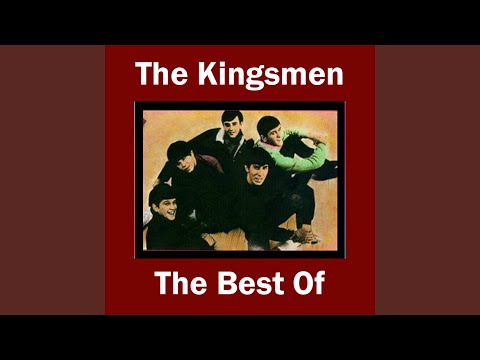

→ More from the 1960s File
View all 1960s hits →




Keep digging