The 1960s File Feature
A Love That's Real
The Intruders and the Early Gamble and Huff Sound on "A Love That's Real" The Intruders occupy a foundational position in the history of Philadelphia soul th…
01 The Story
The Intruders and the Early Gamble and Huff Sound on "A Love That's Real"
The Intruders occupy a foundational position in the history of Philadelphia soul that is not always fully appreciated by listeners who came to that musical tradition through the more commercially polished recordings of the early and mid-1970s. The group was among the first acts to record extensively with Kenny Gamble and Leon Huff, the production and songwriting partnership that would eventually create Philadelphia International Records and reshape American soul music for an entire decade. "A Love That's Real," which entered the Billboard Hot 100 in December 1967, was among the early Gamble and Huff productions that demonstrated what the partnership was capable of achieving.
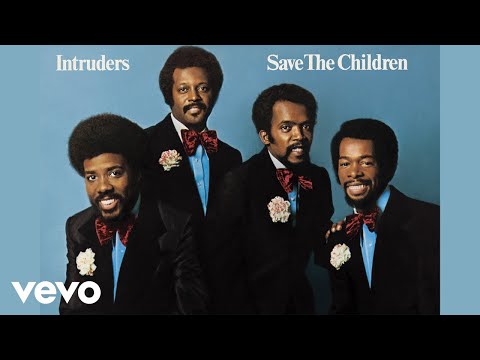
The Intruders formed in Philadelphia in the early 1960s, with Sam "Little Sonny" Brown, Eugene "Bird" Daughtry, Phillip Terry, and Robert "Big Sonny" Edwards constituting the core lineup. They had been recording since the mid-1960s on various small Philadelphia labels before their relationship with Gamble and Huff began to produce the material that would define their artistic legacy. The group's sound drew on the vocal harmony tradition of doo-wop and gospel while embracing the more sophisticated production values that the emerging Philadelphia soul aesthetic was developing.
Kenny Gamble and Leon Huff were still building their production infrastructure when they worked with the Intruders on "A Love That's Real." The two men had been working in the Philadelphia music world since the early 1960s, Gamble as a singer and songwriter and Huff as a pianist and session musician, before they began collaborating as a production team. Their partnership had an immediate creative chemistry that was evident from early recordings, and the Intruders provided an ideal vehicle for developing the lush, string-enhanced soul sound that would become the Philadelphia International signature. Working with the Intruders, Gamble and Huff were learning the craft that would eventually make them two of the most commercially successful producers in the history of popular music.
"A Love That's Real" was released on the Gamble Records label, one of the early imprints through which Gamble and Huff distributed their work before establishing the infrastructure that would eventually evolve into Philadelphia International. The logistics of independent production and distribution in the late 1960s required considerable entrepreneurial creativity, and the fact that Gamble was simultaneously managing his own label while developing his production and songwriting craft reflected the kind of determined self-sufficiency that would eventually characterize his entire business approach.
The record entered the Billboard Hot 100 on December 2, 1967, debuting at number 94. It reached its peak position of number 82 during the week of December 9, 1967, and held that position through December 16, spending three weeks on the chart in total. The brief but genuine Hot 100 presence documented a real, if modest, national commercial reach for both the Intruders and for Gamble and Huff as producers. In the context of the late 1967 pop marketplace, any Hot 100 entry by an independent Philadelphia act represented a meaningful commercial achievement that required genuine audience response to accomplish.
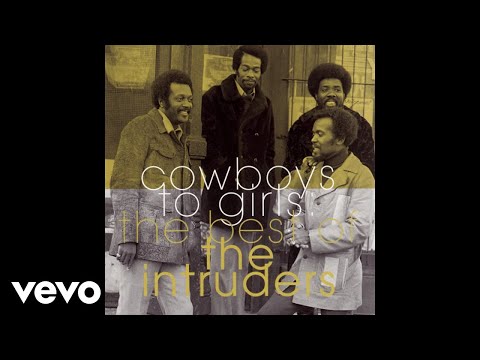
The Intruders' commercial profile expanded significantly in subsequent years, with Gamble and Huff refining their production approach through each successive recording. The group achieved their greatest commercial success with "Cowboys to Girls" in 1968, which reached number six on the Hot 100 and number one on the R&B chart, establishing both the Intruders and their producers as major commercial forces. Looking back from that achievement, "A Love That's Real" reads as an early chapter in a success story that was still being written when the recording was made.
The broader significance of the Intruders' early work with Gamble and Huff extends beyond the individual commercial performance of any single record. These recordings constituted the laboratory in which the Philadelphia soul sound was developed, the environment where production decisions were made, tested, and refined that would eventually produce some of the most beloved and commercially successful music of the 1970s. The Intruders were not merely the beneficiaries of Gamble and Huff's genius but active participants in its development, and their contribution to the emergence of what would become one of American music's most distinctive regional sounds deserves recognition in any serious historical account of the genre.
02 Song Meaning
Authenticity and Devotion in The Intruders' "A Love That's Real"
"A Love That's Real" makes its central claim in its title with the directness characteristic of the Philadelphia soul tradition at its most earnest. The adjective "real" carries considerable weight in a musical tradition that has always placed authenticity at the center of its value system, distinguishing between the performance of feeling and genuine feeling itself, between love that exists primarily as social convention and love that is experienced as a deep and transformative truth. The Intruders' recording positions this distinction as the organizing principle of the song's emotional world, with the narrator either asserting the realness of his own love or seeking a love of that quality from another.
The word "real" in soul music discourse had accumulated specific resonances by the late 1960s that went beyond its ordinary descriptive function. Soul itself was understood by its practitioners and audiences as a music of genuine feeling, a tradition that valued authentic emotional expression above technical perfection or commercial calculation. When a soul singer asserted that something was real, the claim was being made within this broader framework, invoking a standard of authenticity that the tradition had established and that audiences understood implicitly. The Intruders were working within this established framework while also contributing to its development through the particular qualities of their vocal approach.
The group's use of vocal harmony to deliver this content added a communal dimension to what might otherwise have read as purely individual testimony. When multiple voices agree that a love is real, the assertion carries a different weight than when a single narrator makes the same claim. The harmony structure of the Intruders' performances reflected the gospel quartet tradition in which communal testimony, multiple voices witnessing to the same truth, was understood as a form of spiritual authentication. Secular soul music adapted this structure to romantic content without entirely losing the quasi-devotional quality of the original framework.
The early Gamble and Huff production context gave "A Love That's Real" a sonic environment that contributed to its thematic content in subtle but significant ways. The production values developing at this stage of their collaborative work emphasized warmth and sincerity over flash and spectacle, creating a sonic equivalent of the realness the lyric described. A love that is real, in this sonic framing, does not require elaborate presentation or dramatic staging; it is simply present, warm, and sustaining, exactly the qualities that the production aesthetic was attempting to communicate.
The song also participates in a broader project within early Philadelphia soul of defining and defending love as a value of genuine importance in a world that offered multiple competing claims on attention and energy. The late 1960s were a period of significant social disruption, and the music that emerged from the Philadelphia community during this time often implicitly or explicitly positioned love, in its personal and communal forms, as a resource for navigating difficulty. A love that was real, in this context, was not merely a private romantic achievement but a form of social sustenance with implications that extended beyond the individual relationship it described.
The three-week chart run that "A Love That's Real" achieved was brief by comparison with the longer chart lives that subsequent Intruders and Philadelphia International recordings would enjoy, but it documented real audience recognition at a formative moment. The listeners who responded to this recording in December 1967 were among the earliest members of an audience that would grow substantially over the following decade as Gamble and Huff refined the sound this recording helped initiate. For students of Philadelphia soul history, the song's meaning includes its position at the beginning of that longer story, the moment when what would become one of American music's most beloved sounds was still finding its form.
→ More from The Intruders
View all The Intruders hits →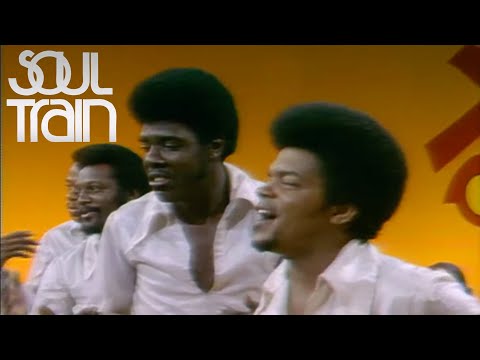

→ More from the 1960s File
View all 1960s hits →




Keep digging