The 1960s File Feature
Sorry Suzanne
Sorry Suzanne — The Hollies The Hollies at a Crossroads Spring 1969 found the Hollies navigating one of the most turbulent periods in their history. The grou…
01 The Story
Sorry Suzanne — The Hollies
The Hollies at a Crossroads
Spring 1969 found the Hollies navigating one of the most turbulent periods in their history. The group had just weathered the departure of Graham Nash, who left in late 1968 to form Crosby, Stills and Nash. Nash had been a central creative force, and his exit raised real questions about what the Hollies would sound like without him. The answer, it turned out, was polished, professional, and still commercially viable, even if the experimental ambition Nash had pushed for was now largely off the table. The band leaned back into its strengths: airtight harmonies, catchy melodic hooks, and a production sensibility honed over six years of chart-chasing.
Sorry Suzanne was the first major statement of this reconstituted Hollies identity. The song was written by Tony Macaulay and Geoff Stephens, a professional songwriting team well versed in the demands of British pop. Macaulay in particular was one of the most successful hit-makers of the late 1960s British scene, with an instinct for melodies that lodged themselves in the memory on first hearing. Stephens brought a lyrical sensibility attuned to the emotional mechanics of the pop breakup narrative.
Recording and Sound
The production gave the Hollies' harmonies the space they needed. The track opened with a gentle guitar figure before the familiar three-part vocal blend rose to meet it, Allan Clarke's lead voice anchored by Tony Hicks and Bobby Elliott providing the close-harmony cushion the group had perfected over years of studio work. The arrangement had a slightly orchestrated quality without being overwhelmed by strings, a balance that kept the recording feeling contemporary for 1969 while giving it the polish associated with the Hollies' best work.
The song was released by Parlophone in the United Kingdom and performed strongly there, reaching number three on the UK Singles Chart. Its reception in the United States was more modest. The track debuted on the Billboard Hot 100 on April 19, 1969, entering at position 96, and spent eight weeks on the chart before reaching its peak of number 56 on May 31, 1969. That peak placed it firmly in the middle tier of American chart performance, respectable for a group that had seen the US market grow more competitive since the mid-1960s heyday of the British Invasion.
A New Chapter, the Same Voice
The fact that the Hollies absorbed Nash's departure without losing commercial footing says something significant about the depth of the group's identity. The harmonies were the Hollies; no single member owned them, and Clarke's voice had always been the public face of the sound as much as Nash's. Sorry Suzanne demonstrated that the core of the band remained intact. The song leaned on the group's accumulated expertise, its studio confidence, and its ability to shape a professional song into something that felt genuinely alive rather than merely competent.
Tony Macaulay's songwriting had provided hits for a range of British artists in this period, including David Soul, Long John Baldry, and the Love Affair. His collaboration with Stephens on Sorry Suzanne produced a song tailored precisely to what the Hollies did best: a melody with a clear emotional arc, a lyric centered on romantic regret, and a chorus that invited the kind of vocal layering the group had turned into an art form.
Lasting Significance in the Hollies Catalog
Within the Hollies' catalog, Sorry Suzanne occupies an interesting transitional position. It arrived just as the band was redefining itself without Nash, and its commercial success, particularly in Britain, provided reassurance that the group could sustain its career into the new decade. The song's American performance, while not explosive, showed that the Hollies' audience remained engaged and that the harmonies still translated across the Atlantic.
The Hollies would go on to continued success in the early 1970s, including the massive international hit The Air That I Breathe in 1974. Looking back, Sorry Suzanne reads as a steadying moment, a recording that proved the post-Nash Hollies had a future. If the lush harmonies and aching melody speak to you, go back and hear how a great group handled transition with grace.
"Sorry Suzanne" — The Hollies' singular moment on the 1960s charts.
02 Song Meaning
Sorry Suzanne — Guilt, Regret, and the Pop Apology
The Anatomy of an Apology Song
Pop music has always had a fondness for the apology, the moment when the wrongdoer turns to face the consequences of their actions and reaches out with words that might not be enough but are offered anyway. Sorry Suzanne fits squarely into this tradition, presenting a narrator who has clearly done the beloved harm and now seeks reconciliation. The lyric does not specify the transgression, which is a deliberate choice: named offenses date a song; vague guilt travels across decades.
The emotional structure is familiar but effective. The opening establishes fault, the verses fill in the emotional landscape, and the chorus repeats the name and the apology with the urgency that the Hollies' harmonies amplify into something close to a plea. The name "Suzanne" is important here; it gives the listener a specific human being to imagine, a face to put to the hurt, without the song becoming so particular that it loses general applicability.
The Sound of Romantic Regret
Tony Macaulay and Geoff Stephens wrote the song with the Hollies' vocal architecture firmly in mind. The melody rises naturally to the moments of greatest emotional intensity, allowing Allan Clarke's lead to carry the weight of contrition while the harmonies beneath suggest a kind of communal acknowledgment. Three voices saying sorry carries more weight than one.
In the cultural context of 1969, the song landed in a moment when the utopian energies of the earlier 1960s were visibly fraying. The idealism of the Summer of Love had given way to harder realities, and music that addressed ordinary romantic failure with sincerity found a receptive audience. Songs of regret and reconciliation offered a counterpoint to the grandiose ambitions of progressive rock and the increasingly dark territory that blues-rock was exploring. There was comfort in a well-crafted apology, in music that acknowledged human imperfection without making it a catastrophe.
Hollies Harmonies as Emotional Texture
One of the most interesting aspects of Sorry Suzanne is how the band's signature sound changes the emotional register of the words. A solo voice singing an apology reads as individual confession; three voices in close harmony transform it into something more communal, almost liturgical. The Hollies' harmonic blend, developed across years of recording together, had a warmth that softened the edges of regret without erasing its genuineness. You felt the sorrow, but you also felt the affection underneath it.
This is part of what distinguished the Hollies from their British Invasion contemporaries. While other groups sought sonic experimentation or lyrical density, the Hollies' strength was emotional accessibility delivered through technically sophisticated vocal arrangement. Sorry Suzanne represents that approach at a high point, a song whose emotional effect is inseparable from the specific voices performing it.
Why It Endures
The song has aged well because the emotional territory it maps is perennial. Every generation produces people who have hurt someone they loved and struggled to find the right words. The Hollies gave that universal experience a melody and a harmony structure worthy of its weight. The combination of Macaulay and Stephens' craftsmanship with the Hollies' performance skill produced a recording that holds up not as a period piece but as a study in how to make a simple human feeling resonate at scale. That resonance is the measure of a song that earned its place in the cultural record.
→ More from The Hollies
View all The Hollies hits →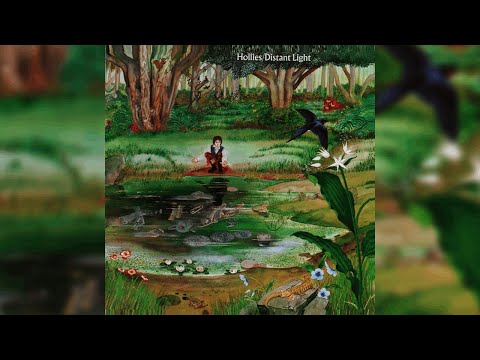


→ More from the 1960s File
View all 1960s hits →




Keep digging