The 1960s File Feature
I Can't Let Go
"I Can't Let Go" — The Hollies and the Art of the Perfect Pop Single Manchester's Most Melodic Export in Full Flight Imagine British radio in early 1966: the…
01 The Story
"I Can't Let Go" — The Hollies and the Art of the Perfect Pop Single
Manchester's Most Melodic Export in Full Flight
Imagine British radio in early 1966: the Beatles were reinventing what an album could be, Mick Jagger was sneering through television appearances, and the Kinks were writing social satire sharp enough to draw blood. And then there were the Hollies, Manchester's most melodically gifted export, turning out pristine three-minute pop records with a consistency and craft that their more celebrated contemporaries rarely matched. "I Can't Let Go" arrived in the spring of 1966 as a demonstration of everything the Hollies did best: a melody that hooks from the first bar, harmonies that feel inevitable, and a production that makes the whole thing shimmer.
The Hollies had been operating at this level for several years by the time "I Can't Let Go" was released. Their run of British hits through the mid-1960s established them as pop craftsmen of the highest order, capable of taking a song from any source and making it sound definitively theirs. The track was written by Chip Taylor and Al Gorgoni, two American songwriters with strong pop sensibilities, and in the hands of the Hollies it was transformed into something that carried the full weight of the British Invasion's melodic sophistication.
The Hollies Sound and What Made It Special
Understanding what made "I Can't Let Go" work requires understanding the specific qualities that distinguished the Hollies from their peers. The band's vocal blend was extraordinary: Allan Clarke's lead vocal had a bright, carrying quality that worked perfectly with the counter-harmonies supplied by Tony Hicks and Graham Nash, whose voices together created a texture that was identifiably the Hollies and no one else. That blend was not an accident but the product of years of live performance and studio discipline, a harmonic language developed through constant use.
The rhythm section provided the kind of propulsive, locked-in support that allowed the vocal architecture to float above it with apparent effortlessness. The guitar work, understated but precise, filled the arrangement without cluttering it. The production ethos was pure pop: every element in service of the hook, nothing wasted, nothing showing off. "I Can't Let Go" exemplifies that philosophy, demonstrating that maximum emotional impact and maximum sonic efficiency are not merely compatible but actually the same thing when craft is operating at this level.
The American Chart Run
"I Can't Let Go" debuted on the Billboard Hot 100 on March 19, 1966, entering at number 91. The track built steadily through the spring, climbing week by week with the kind of gradual acceleration that reflects growing radio saturation and consumer response. By May 7, 1966, the song had reached its peak position of number 42, and it spent a total of 10 weeks on the Hot 100 before its chart run concluded.
Reaching number 42 on the Hot 100 in 1966 was a meaningful achievement for a British act navigating the complexities of the American market three years into the British Invasion. The initial wave of fascination with British music had crested, and American radio was increasingly selective about which imported acts received sustained support. The Hollies had established enough credibility with American audiences through their earlier singles that "I Can't Let Go" received the kind of sustained airplay its chart performance reflects. Their consistency as hit makers was both their calling card and their greatest commercial asset.
The Hollies Among Their Contemporaries
In the spring of 1966, the Hot 100 was a genuinely competitive environment. The Mamas and the Papas were rising, the Beach Boys were approaching their creative peak, and Bob Dylan was reshaping what pop could mean as a lyrical art form. Within that landscape, a meticulously crafted single from a British band built on harmonies and melody occupied a specific and valued niche. The Hollies never tried to out-Dylan Dylan or out-psychedelia the Beatles; they perfected a form that required its own rigorous discipline and served audiences who wanted melody, energy, and the satisfaction of a well-constructed pop record.
That positioning proved sustainable across multiple years and multiple chart entries. "I Can't Let Go" was one of several American chart appearances the Hollies would make through the mid-to-late 1960s, and each one reinforced their reputation as producers of quality pop that wore its craft lightly but wore it always.
A Legacy Built on Consistency
The Hollies have sometimes been undervalued in the broader narrative of 1960s British pop because they did not reinvent the form in the way the Beatles did or generate the controversy of the Rolling Stones. What they did instead was execute the pop single at an extraordinarily high level for an extended period, and that consistency is its own form of achievement. "I Can't Let Go" sits comfortably in that legacy as an example of the band at their most characteristic, delivering exactly what they did better than almost anyone else in the spring of 1966.
Press play and you are immediately inside one of the great melodic moments of the British Invasion, a track that captures the Hollies at the precise intersection of craft and inspiration that defines their finest work.
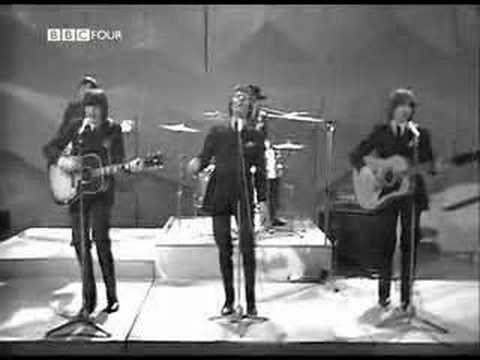
"I Can't Let Go" — The Hollies' singular moment on the 1960s charts.
02 Song Meaning
"I Can't Let Go" — Desire, Helplessness, and the Grammar of Yearning
When Holding On Is the Only Option
The emotional grammar of "I Can't Let Go" is built on a simple but powerful construction: the negative conditional, the acknowledgment of something one is incapable of stopping. There is a difference between choosing not to let go and being unable to do so, and the Hollies' track lives in the territory of the second. The singer is not asserting strength or making a vow; the singer is confessing a helplessness in the face of feeling, and that confession is what gives the song its particular vulnerability and power.
Pop songs of the mid-1960s frequently described romantic obsession in terms that would strike a later era as either charmingly earnest or problematically intense, but "I Can't Let Go" navigates that territory with more nuance than its production era might suggest. The incapacity it describes reads as emotional depth rather than pathology because the delivery is so committed and the music so joyous. The contradiction between the helpless lyric and the radiant sound is part of the song's emotional texture, the way desire can feel simultaneously like suffering and like the best possible state to be in.
Harmony as Emotional Amplifier
The Hollies' trademark vocal blend transforms the meaning of the lyric in interesting ways. A single voice confessing inability to let go of someone has a specific emotional quality: intimate, slightly desperate, private. Three voices singing the same sentiment, in the close, interlocking harmonies the Hollies had developed to such a high degree, expands that emotion into something more universal. The harmony creates the impression that this feeling is shared, that the experience of being unable to release someone from your emotional hold is so common it requires a chorus.
That amplification through harmony was one of the fundamental devices of 1960s British pop, and the Hollies were among its most skilled practitioners. Their vocal arrangement turns a personal lyric into something communal, which is precisely why pop harmonies create such strong audience identification. Listeners do not just identify with the lyric; they feel included in it, their own versions of the same feeling acknowledged and validated.
The Mid-Sixties Pop Moment and Emotional Directness
In 1966, American and British pop were navigating the space between the emotional directness of early rock and roll and the more conceptually ambitious territory that Dylan, the Beatles, and others were beginning to explore. "I Can't Let Go" sits firmly in the emotionally direct tradition, a pop record that knows exactly what it wants to say and says it without ambiguity or irony. That quality was becoming slightly less fashionable in certain quarters of the music world, but it retained enormous commercial appeal and genuine emotional power.
The song belongs to a lineage of pop records that trust the emotional simplicity of the statement to carry the weight of the song. Written by Chip Taylor, who would later write "Wild Thing" and demonstrate his own range as a songwriter, the lyric is deceptively direct, achieving its effect not through verbal complexity but through the precision of its emotional targeting. The song knows exactly where it wants to hit the listener and hits there with accuracy.
A Sentiment That Transcends Its Era
What has allowed "I Can't Let Go" to remain a meaningful listening experience more than half a century after its release is the universality of the emotion it describes. The incapacity to detach emotionally from someone who matters deeply, whether through the end of a relationship or in the midst of one where the feeling is overwhelming, is not a historically specific experience. Every generation produces new listeners for whom this song articulates something they have felt but perhaps not been able to name.
The Hollies delivered it with such musical grace and such vocal warmth that the track never feels dated in the way that some period-specific pop can. The harmonies sound as fresh now as they did in 1966, and the melody retains its immediate appeal. That combination of emotional universality and musical quality is what gives the song its staying power, the ability to find new audiences who connect with it as though it were written for them specifically, which is the highest achievement any pop song can aspire to.
→ More from The Hollies
View all The Hollies hits →


→ More from the 1960s File
View all 1960s hits →




Keep digging