The 1960s File Feature
Heaven Knows
Heaven Knows — The Grass Roots The Reliable Hitmakers of the Late 1960s By the end of 1969, the Grass Roots had spent several years proving themselves one of…
01 The Story
Heaven Knows — The Grass Roots
The Reliable Hitmakers of the Late 1960s
By the end of 1969, the Grass Roots had spent several years proving themselves one of the most consistently successful bands operating in the mainstream pop-rock space. They were not the critics' darlings; they were not the avatars of the counterculture. They were something perhaps more useful in the commercial landscape of the late 1960s: a group with excellent taste in songs, a tight professional sound, and an instinct for the hook that kept delivering returns for their label, Dunhill Records, and their producers. "Heaven Knows," released in late 1969, was another demonstration of this formula working exactly as designed.
Dunhill Records and the Production Team
The Grass Roots recorded for Dunhill Records, the Los Angeles-based label that had become one of the more successful pop-rock imprints of the late 1960s, home to artists including the Mamas and the Papas and Three Dog Night. The label had a production sensibility that prioritized radio accessibility without condescending to its audience, crafting records that had genuine melodic and emotional appeal rather than simply chasing trends. The Grass Roots benefited from this environment, consistently releasing singles that were crafted with enough care to justify their pop ambitions.
The Chart Ascent
The single debuted on the Billboard Hot 100 on November 8, 1969, at position 57. Its climb was steady and measured, moving through the upper portions of the chart with the methodical efficiency that characterized the Grass Roots' best chart runs. The record reached its peak of number 24 on December 13, 1969, spending eight weeks on the Hot 100 in total. A top 25 single in the extraordinarily competitive pop market of late 1969, when artists from the Rolling Stones to the Beatles to Creedence Clearwater Revival were all competing for radio time, represented a genuine commercial achievement.
The Sound of the Record
What the Grass Roots did consistently well was present emotionally immediate pop music with enough instrumental sophistication to satisfy listeners who wanted something beyond the simplest formulas. "Heaven Knows" had the characteristic elements of their approach: a vocal performance from lead singer Rob Grill that was warm and direct without affectation, production that layered the sound generously without obscuring the central melody, and an arrangement that moved with enough energy to hold attention across a full play. The record was designed for the radio and delivered on that brief completely.
Year-End 1969 and the End of an Era
There is something poignant about a song called "Heaven Knows" charting in December 1969, as the decade closed. The Woodstock festival had happened in August; the Altamont disaster would occur in December of that same year. The cultural optimism of the earlier 1960s had reached its limit, and the music industry was about to shift in ways that would reshape the pop landscape significantly. The Grass Roots would continue charting into the early 1970s, but the late 1960s Dunhill sound they had helped define was approaching its end. "Heaven Knows" stands as one of the group's late-decade dispatches from a pop world still functioning on pre-Altamont optimism.
What the Grass Roots Built
The group's commercial run across the late 1960s and into the early 1970s produced a catalog of singles that holds up as a remarkably consistent body of work. Rob Grill's voice was the constant through all of it, a warm and reliable instrument that gave every Dunhill production a human center. The band around him changed over the years, but the Grass Roots' sound remained recognizable: that combination of hooky melody, solid rhythm playing, and production values that prioritized clarity over experimentation. In an era when psychedelic excess was fashionable, their commitment to directness was a kind of discipline, a refusal to chase trends at the expense of the qualities that made their records work. "Heaven Knows" exemplified that discipline, arriving at the end of a decade as a reminder that good pop craft had its own logic independent of whatever the avant-garde was doing at any given moment. Press play and hear the sound of a very particular moment preserving itself in amber.
"Heaven Knows" — The Grass Roots' singular moment on the 1960s charts.
02 Song Meaning
Heaven Knows — Meaning and Cultural Legacy
The Uncertainty at the Title's Core
The phrase "heaven knows" is an admission of limited understanding dressed as an appeal to a higher authority. When human comprehension fails, when the logic of a situation escapes rational explanation, the appeal to heaven acknowledges that some things exceed ordinary knowing. In the context of a pop song about romantic uncertainty, this appeal works on multiple levels: it is partly comic (the exasperation of someone who cannot understand why they feel what they feel), partly sincere (genuine wonder at the depth of emotion), and partly a graceful concession that love operates beyond logic. The title sets up a lyric about romantic feeling as something that overwhelms ordinary categories of explanation.
The Grass Roots and Mainstream Pop Craft
The Grass Roots have sometimes been undervalued precisely because of their consistency. They did not reinvent the form or stake out avant-garde territory; they made well-constructed pop music for a broad audience with reliable skill. In late 1969, when much of the rock world was moving toward progressive forms, longer album tracks, and increasingly elaborate studio experimentation, there was something almost countercultural about a group that simply made tight, effective pop singles. "Heaven Knows" embodied that commitment to the three-minute form at a moment when that form was being questioned from multiple directions.
Late 1960s Pop's Emotional Register
The emotional vocabulary of mainstream pop in 1969 was still largely centered on romantic themes, even as the broader cultural conversation was being dominated by political urgency. The Grass Roots occupied this mainstream emotional space with clarity and purpose. Their audience wanted records that made them feel something recognizable about love, connection, and longing, and the group delivered that consistently. The record represents a kind of emotional anchor in a turbulent cultural moment, offering the familiar pleasures of well-made pop music when the world outside was anything but settled.
Rob Grill's Vocal Contribution
Much of what made the Grass Roots work as a commercial entity was the quality of Rob Grill's lead vocal performances. Grill had a voice with natural warmth and a directness that made emotional content legible immediately, without the theatrical excess that some of his contemporaries employed. His vocal on "Heaven Knows" exemplified the group's aesthetic: sincere without being maudlin, energetic without being forced, professional without being cold. This combination of qualities was not common, and it was central to why the group maintained chart presence across so many years.
A Legacy of Reliable Pleasure
The Grass Roots will not be the first name mentioned in any history of 1960s rock. Their legacy is quieter than that, built from a long series of records that consistently delivered what they promised. "Heaven Knows" is a representative example of their best work: a track that is immediately pleasurable, emotionally honest within the conventions of pop, and crafted with enough skill that its appeal does not depend on nostalgia to function. In a decade that produced extraordinary music at every level of the cultural hierarchy, there is a real place for artists who simply mastered their particular craft.
→ More from The Grass Roots
View all The Grass Roots hits →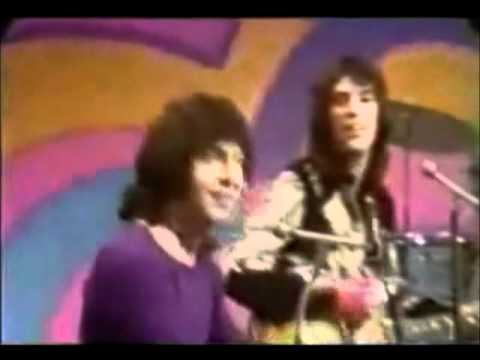

→ More from the 1960s File
View all 1960s hits →




Keep digging