The 1960s File Feature
Grazing In The Grass
Grazing in the Grass: How The Friends of Distinction Turned an Instrumental Hit into a Vocal Landmark The story of "Grazing in the Grass" by The Friends of D…
01 The Story
Grazing in the Grass: How The Friends of Distinction Turned an Instrumental Hit into a Vocal Landmark
The story of "Grazing in the Grass" by The Friends of Distinction begins, necessarily, with an earlier recording. In 1968, South African jazz trumpeter and flugelhornist Hugh Masekela released an instrumental version of a composition by Philemon Hou that became one of the unexpected pop hits of the decade. Masekela's instrumental "Grazing in the Grass" reached number one on the Billboard Hot 100 in July 1968, staying there for two weeks and crossing over from jazz audiences into mainstream pop radio with remarkable ease. The track's loose, sun-drenched groove struck a chord with listeners in the summer of liberation, and it became one of the definitive sounds of its moment.
It was this instrumental success that created the opening for The Friends of Distinction. The Los Angeles-based vocal group, which had been formed in the mid-1960s, took the underlying melody and groove and built a fully realized vocal arrangement around it. Where Masekela's version had been an almost wordless celebration of instrumental expression, the Friends of Distinction version added lyrics that described a state of natural contentment, the simple pleasure of being outdoors in a sunlit landscape, surrounded by beauty and free from care. The words gave the melody a narrative home without diminishing any of its open, pastoral feeling.
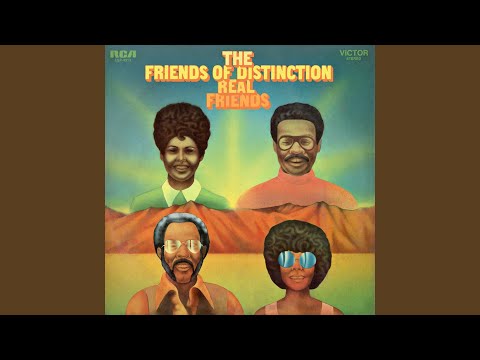
The group was composed of Harry Elston, Floyd Butler, Jessica Cleaves, and Barbara Jean Love, and they had come together with strong connections to Ray Charles's organization. Elston and Butler had previously performed with the Hi-Fi's, a group associated with the Ray Charles Singers. RCA Records signed the Friends of Distinction in 1969, providing them with the major-label support needed to compete in the crowded late-1960s pop market. Their debut single was "Grazing in the Grass," and it proved immediately that the group had a distinctive identity.
The production of the Friends of Distinction's version maintained much of the breezy, loping feel of the Masekela original while adding the harmonic sophistication that came naturally to a vocal group with their background. The four-part harmonies were warm and intricately arranged, weaving around the melody rather than simply doubling it. The production, supervised to bring out the best of the vocal blend, placed the group's voices in a setting that felt simultaneously lush and light, a combination that suited the lyric perfectly. The arrangement preserved the qualities that had made the instrumental version so appealing while adding a human warmth that opened it up to an even wider audience.
The commercial results were dramatic. "Grazing in the Grass" climbed to number three on the Billboard Hot 100 in 1969, an outstanding performance for a new group's debut single. It also performed strongly on the rhythm and blues charts, demonstrating the group's crossover appeal. The single confirmed that The Friends of Distinction could compete at the highest level of the pop market and that their particular blend of sophisticated soul harmonies and accessible pop sensibility had broad appeal. Radio programmers across formats embraced the record, and it received heavy rotation through the summer of 1969.
The timing was significant. By 1969, the pop landscape had fragmented considerably from its early-decade simplicity. Rock music was moving in increasingly experimental directions, while soul and rhythm and blues were evolving rapidly in the wake of the upheavals of the late 1960s. Into this complicated environment, "Grazing in the Grass" offered something that many listeners were hungry for: pure pleasure, uncomplicated and generous. The song was not making a social statement or exploring psychological complexity. It was describing a moment of simple, unqualified happiness, and in 1969 that was not a small thing.
The album that followed, Highly Distinct, released on RCA in 1969, built on the success of the single and introduced the group's broader range to a growing fanbase. The Friends of Distinction would go on to score additional chart success through the early 1970s, but "Grazing in the Grass" remained their signature recording and the track most associated with their name. It also helped bring renewed attention to Philemon Hou's original composition and to Hugh Masekela's instrumental version, creating an interesting situation in which two separate recordings of the same basic material were both recognized as significant hits in their own right.
The cultural footprint of the Friends of Distinction's recording extended into the 1970s through consistent airplay and inclusion in compilation albums focused on the late-1960s pop moment. The track's sunny, open-hearted quality made it a natural choice for nostalgic programming as the decade turned, and it retained its capacity to evoke a specific mood and era with unusual precision. The recording has been licensed for film and television use on numerous occasions, consistently chosen when a producer wants to evoke the warmth and optimism of the late 1960s without resorting to more obvious sonic shorthand. For The Friends of Distinction, it represents the fullest expression of their talents as a vocal group and their most lasting contribution to the pop canon.
02 Song Meaning
Joy Without Argument: The Meaning of "Grazing in the Grass"
What distinguishes "Grazing in the Grass" as a lyrical achievement is its radical commitment to uncomplicated happiness. In a pop landscape that by 1969 was increasingly drawn toward social commentary, political urgency, and psychological complexity, the Friends of Distinction's vocal version offered something genuinely countercultural in its own quiet way: a description of contentment so pure and undefended that it almost felt like a provocation. The lyric describes a natural scene with the same attention and gratitude that religious poetry might bring to a vision of paradise, and the emotional effect is similarly transporting.
The setting of the lyric is outdoors, in a sunlit, open landscape where the natural world is simply itself, beautiful and unhurried. The narrator is present in this scene not as a viewer contemplating it from outside but as a participant fully immersed in its textures and rhythms. Grass, sky, sounds, light: these are described with a sensory attention that grounds the lyric in physical experience rather than abstract sentiment. The song earns its happiness because it works to make the listener feel the specific quality of the moment it describes.
The philosophical stance of the lyric is quietist and grateful, finding meaning in the simple availability of beauty rather than in achievement, ambition, or romantic love. This was an unusual subject for a pop song, which typically organized itself around human relationships. "Grazing in the Grass" displaces the human drama that pop usually centers and replaces it with an appreciation of the non-human world, asking the listener to share in a moment of natural wonder rather than emotional conflict. The result feels genuinely refreshing, like a breath of actual outdoor air in a room that has been too long sealed.
For The Friends of Distinction as artists, the song revealed something important about their sensibility. Their harmonies were sophisticated and their training was serious, but they were not interested in using that sophistication to create distance from the listener. "Grazing in the Grass" deployed its vocal complexity in service of accessibility, using the warmth of four blended voices to make the lyric feel embracing rather than exclusive. The song welcomed the listener into its mood rather than performing for them from a stage.
The relationship between this vocal version and Hugh Masekela's original instrumental also carries interpretive interest. Masekela's version had communicated the same basic emotional content, that open, pastoral happiness, without any words at all. The fact that the Friends of Distinction could add a complete lyric without diminishing the original's meaning is evidence of how thoroughly that meaning was already present in the melody and groove. The words did not create the feeling; they gave it a habitation and a name, making explicit what the music had already communicated implicitly.
The song's longevity in licensing and compilation contexts reflects its emotional utility as a cultural artifact. When filmmakers and producers want to evoke a specific kind of late-1960s optimism, not the psychedelic variety or the politically charged variety, but the domestic, sunlit, small-pleasures variety, they reach for tracks like "Grazing in the Grass." It captures a mood that was genuinely felt by many people in that period, a sense that the ordinary world, encountered with openness and attention, was more than sufficient to produce happiness. That is a message that ages well precisely because it makes no claims that history can contradict. The world still has grass and sky and light, and the invitation to notice them remains open.
→ More from The Friends Of Distinction
View all The Friends Of Distinction hits →

→ More from the 1960s File
View all 1960s hits →




Keep digging