The 1960s File Feature
Let It Be Me
Let It Be Me: The Everly Brothers and an Enduring Romantic Standard "Let It Be Me" brought the Everly Brothers their second sustained stretch of chart succes…
01 The Story
Let It Be Me: The Everly Brothers and an Enduring Romantic Standard
"Let It Be Me" brought the Everly Brothers their second sustained stretch of chart success in the first weeks of 1960, an achievement all the more remarkable for the fact that the song was not an original composition but rather an American adaptation of a French popular song. The original, titled "Je t'appartiens," was written by Pierre Delanoë with music by Gilbert Becaud and had been a success in France before Gilles Thibaut produced an English-language adaptation with the title and arrangement that the Everlys would record. The brothers had built their reputation on tight vocal harmonies and a distinctive synthesis of country and pop influences, and "Let It Be Me" provided them an ideal vehicle for demonstrating the full warmth and precision of their combined voices.
The recording was made for Cadence Records, the label with which the Everly Brothers had achieved their first major successes, including "Bye Bye Love" and "Wake Up Little Susie" in 1957. Their relationship with Cadence and with producer Archie Bleyer had been commercially productive but was approaching its end: the brothers would sign with Warner Bros. Records later in 1960, embarking on the next phase of their career. "Let It Be Me" thus represented one of their final major recordings under the Cadence banner, and it functioned as a graceful farewell to that chapter of their professional lives.
The arrangement placed the brothers' harmonies in an unusually lush setting. Where many of their earlier Cadence recordings had featured more stripped-down country-pop production, "Let It Be Me" employed orchestral accompaniment that gave the recording a sophisticated, adult sound quite different from the teen-oriented energy of their earlier hits. This was a deliberate broadening of their commercial appeal, aimed at an audience that responded to romantic ballads as well as the uptempo rock-inflected pop that had first brought them fame.
"Let It Be Me" reached number seven on the Billboard Hot 100 in early 1960, demonstrating the breadth of the Everlys' appeal at a time when the American pop chart was undergoing significant flux in the aftermath of early rock and roll's commercial peak. The record also reached impressive positions on the rhythm and blues chart, reflecting the broad demographic reach of their vocal style. The pop crossover success confirmed that the brothers could navigate multiple formats simultaneously, a commercial versatility that very few acts of their era matched.
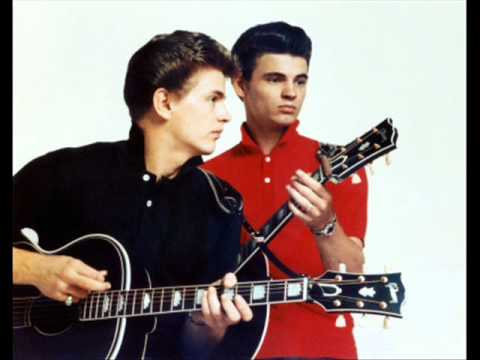
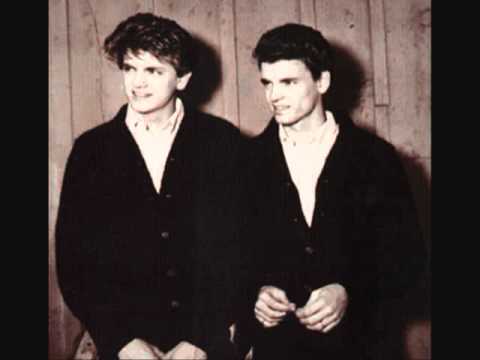
Phil and Don Everly, who had grown up in a family steeped in country music and who had performed together since childhood, brought a sibling vocal chemistry to their recordings that contemporary observers and subsequent music historians have consistently described as uniquely compelling. The blend of their voices, their ability to harmonize with a naturalness that suggested intuition rather than calculation, gave records like "Let It Be Me" an emotional directness that transcended the romantic clichés the song's lyric might otherwise have been vulnerable to. Their performance made the sentiments feel genuinely felt rather than merely performed.
The song's longevity as a standard has been extraordinary. Recorded by dozens of artists across multiple decades, it became one of the most covered romantic ballads of the twentieth century, with versions by artists including Nina Simone, Bob Dylan, and countless others. The Everly Brothers' recording remained the best-known version among many, however, and served as the template against which subsequent interpretations were frequently measured. This status as the definitive version of a much-recorded song gave the original recording a particular cultural durability that pure originals do not always achieve.
The transition from Cadence to Warner Bros. that followed this recording brought significant changes to the brothers' sound and commercial approach. Their Warner Bros. debut in 1960, "Cathy's Clown," reached number one and demonstrated that the transition had not cost them any commercial momentum. But "Let It Be Me" remains significant as the record that demonstrated their full artistic maturity within the Cadence framework, a reminder that the first phase of their career had produced work of lasting quality before the more extensively documented Warner Bros. era began.
02 Song Meaning
Let It Be Me: Total Devotion and the Romantic Absolute
"Let It Be Me" belongs to a specific tradition in romantic songwriting that reaches for the absolute rather than the particular, the song that describes love not as a specific relationship with a specific person but as a total commitment made without conditions or reservations. The lyric presents a narrator who asks only to be the one who receives the love being offered, without qualification about circumstances, without calculation about future benefit. The emotional stance is one of pure romantic generosity, an offer of complete devotion framed as a request rather than a demand.
The Everly Brothers' vocal performance gives this sentiment its most effective expression because the blended sibling harmonies create a sound that is itself an expression of the unity the lyric describes. Two voices that have been listening to and complementing each other since childhood, that have developed an almost unconscious ability to occupy different registers of the same melody simultaneously, embody in their sound the kind of deep mutual attunement that the lyric is attempting to describe. The medium and the message align with unusual completeness.
The song's origin as a French popular composition, "Je t'appartiens," gives its romantic philosophy a continental quality that distinguishes it from the more straightforward emotional declarations of typical American pop ballads of the period. The French tradition of the chanson placed a high premium on emotional directness and romantic commitment as the subject of serious artistic attention, and that tradition inflected the song's lyrical stance even in its English adaptation. The result was a romantic song that felt simultaneously sophisticated and genuinely heartfelt, a combination that the Everlys were uniquely positioned to deliver.
For the Everly Brothers' catalog specifically, "Let It Be Me" represents the clearest statement of the romantic sensibility that ran through their best work. While their uptempo records celebrated teenage energy and youthful mischief, their ballads consistently reached for something more enduring. The willingness to commit fully and permanently, to place another person's well-being and happiness at the center of one's own emotional life, was the romantic ideal their finest slow songs articulated, and this was among the finest of those songs.
The record's extraordinary afterlife as one of the most covered romantic standards of the mid-twentieth century reflects how precisely it captured a universal romantic aspiration. The lyric's core request, to be chosen, to be the one who is loved, is among the most fundamental desires in human emotional experience, and the song expresses that desire with a clarity and grace that has allowed interpreters across generations and genres to find it newly relevant. In that universality lies the real meaning of the song: it is not about a particular love but about the human need for love itself, expressed without embarrassment and without irony, which in any era requires a certain kind of artistic courage.
→ More from The Everly Brothers
View all The Everly Brothers hits →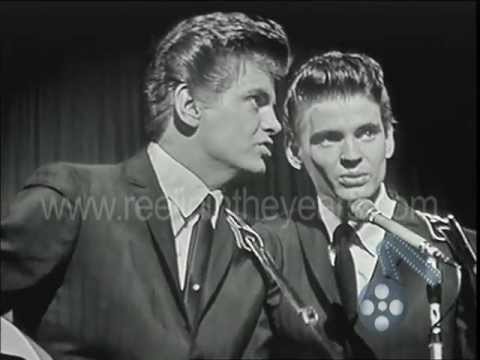
→ More from the 1960s File
View all 1960s hits →




Keep digging