The 1960s File Feature
Mr. Dieingly Sad
"Mr. Dieingly Sad" — The Critters Summer of 1966 and the Soft Folk-Pop Flood The summer of 1966 was one of the most creatively overstuffed seasons in America…
01 The Story
"Mr. Dieingly Sad" — The Critters
Summer of 1966 and the Soft Folk-Pop Flood
The summer of 1966 was one of the most creatively overstuffed seasons in American popular music. The Beach Boys were in the middle of recording Pet Sounds's aftermath, the British Invasion was still generating American chart hits, and folk-influenced pop was finding its most polished commercial form. In that crowded landscape, a New Jersey group called The Critters placed a sweetly melancholic single near the top of the Hot 100 with a song whose oddly misspelled title disguised a genuinely affecting piece of soft pop heartbreak.
The Critters were a New Jersey-based group who had developed their sound through the college circuit and the club scene of the mid-1960s, refining an approach that drew from folk's acoustic warmth and British Invasion pop's melodic directness. The group included Don Ciccone, who would later go on to join The Four Seasons, a connection that points toward the kind of polished vocal pop tradition the Critters were working within.
The Sound and the Session
Mr. Dieingly Sad was produced by Koppelman-Rubin Associates and recorded with an arrangement that placed vocal harmonies at the center of the track. The production style was characteristic of mid-1960s soft pop: clean, well-lit, with enough orchestration to give the record a sense of occasion without overwhelming the group's vocal work. The blend of acoustic guitar and strings gave the track a warmth that contrasted gently with its subject matter, the sadness embedded in the title finding expression in minor-key melodic passages beneath a surface that was smooth enough for mainstream radio.
The harmonic approach the group brought to the material reflected the influence of groups like The Mamas and The Papas and The Seekers, who had demonstrated that folk-influenced harmonies could reach mass audiences when combined with appropriate production values. The Critters applied that template with considerable skill on this recording.
A Climb to the Top Twenty
The single entered the Billboard Hot 100 on August 13, 1966, debuting at position 86. It climbed quickly through August, moving from 65 to 54 to 38 to 32 in successive weeks before continuing its ascent. The track peaked at number 17 during the week of October 8, 1966, spending eleven weeks on the chart in total. A top-twenty placement in the fall of 1966 was a meaningful commercial achievement, particularly for a group without major label backing at the level of their British competitors.
The record's performance on the chart reflected its ability to connect with a broad audience that was comfortable with folk-influenced pop but wanted something with more production polish than the folksinger-with-guitar format provided. That middle ground was commercially fertile in 1966, and The Critters had found exactly the right spot within it.
The Critters in the Pop Ecosystem of 1966
The chart context for the song's run tells a story about the diversity of mid-1960s American pop. The Hot 100 in the fall of 1966 was home to British Invasion holdouts, Motown singles, the first wave of psychedelia, and continued strong performances from California folk-pop. The Critters' ability to chart a top-twenty hit in this environment demonstrated that soft pop with strong harmonies and gentle melancholy had a defined commercial constituency that would sustain through the rest of the decade.
Groups working in this vein, including The Association, The Mamas and The Papas, and The Fifth Dimension in its early recordings, were all finding similar audiences at this moment. The Critters' brief commercial success placed them in that company, even if their subsequent career did not sustain the momentum of this single.
The Spelling and the Song's Identity
The deliberate or accidental misspelling in the title, "Dieingly" rather than "dyingly," is one of the track's notable curiosities. Whether it was an intentional stylistic choice or a typographical error that survived into release is not definitively documented, but it has become part of the song's identity for those who know it. The unusual orthography makes the title instantly memorable and slightly strange, a quality that actually serves the song's emotional oddness well. A conventionally spelled title might have felt too ordinary for a record that occupies such a specific emotional register.
The song remains an interesting artifact of its moment, a capturing of the precise sound that soft pop achieved before psychedelia and the singer-songwriter revolution changed the terms of the conversation. Press play and let the harmonies carry you back to that summer afternoon in 1966.
"Mr. Dieingly Sad" — The Critters' singular moment on the 1960s charts.
02 Song Meaning
"Mr. Dieingly Sad" — Heartbreak, Longing, and the Grammar of Loss
A Strange Word for a Familiar Feeling
The emotional content of Mr. Dieingly Sad is not, at heart, complicated. The song is about the particular intensity of romantic sadness: the kind of grief that feels outsized, overwhelming, almost theatrical in its proportions. The title word, with its unusual formation, captures something important about that emotional state. Sadness that feels as if it is killing you does not feel grammatically correct; it is excessive, it overflows ordinary language. The misspelled or invented adverb "dieingly" is emotionally accurate even if it is not conventionally proper.
The song belongs to a long tradition of pop recordings that take the extremity of romantic grief seriously, treating heartbreak as a genuine catastrophe rather than a passing inconvenience. This was entirely appropriate to the mid-1960s pop landscape, which had absorbed the Brill Building tradition of intensely melodramatic songs about teenage love and loss and was still comfortable with that kind of emotional pitch.
The Harmonies and the Feeling
One of the interesting things about the recording is the way the production and arrangement interact with the emotional content of the lyrics. The vocal harmonies are warm and somewhat polished, which creates a kind of softening effect on what are essentially expressions of acute misery. The beauty of the harmonies makes the sadness bearable, aesthetic, even pleasurable to inhabit, which is a characteristic trick of the best sad pop songs.
This is not manipulation but rather an accurate description of what sad songs do for listeners. They transform a painful emotion into a form that can be experienced with something approaching enjoyment, creating a safe container for feelings that might otherwise feel unmanageable. The Critters' arrangement performs that function very effectively.
The Mid-1960s Emotional Landscape
The song arrived during a period when pop music was beginning to expand its emotional vocabulary without having yet committed to the greater complexity that the late 1960s would bring. Folk music's influence had made it acceptable to address grief and loss with something other than the upbeat bounce of early rock and roll, but the psychedelic interior journeys of the following years had not yet arrived to complicate the picture further.
In that moment, a song that addressed sadness directly, named it with unusual precision in its title, and delivered that emotional content through the medium of beautiful harmonies was exactly the right object for a large number of listeners. The audience for this kind of record was real and substantial, and The Critters had understood that audience's needs precisely.
Legacy: The Gentle Persuasion of Sad Beauty
The track endures as an example of a specific kind of emotional intelligence in popular songwriting: the understanding that suffering can be made beautiful without being trivialized. The Critters' treatment of heartbreak on this record is gentle rather than raw, melodically rich rather than stark, and the effect is a piece of music that honors the feeling it describes while also making it possible to experience that feeling as something other than simply pain.
That quality, the transmutation of difficult emotion into something that can be encountered with something like pleasure, is one of the fundamental functions of art. That a mid-1960s soft pop group from New Jersey accomplished it in a single that spent eleven weeks on the Billboard Hot 100 is a small but genuine achievement worth remembering.
"Mr. Dieingly Sad" — The Critters' singular moment on the 1960s charts.
→ More from The Critters
View all The Critters hits →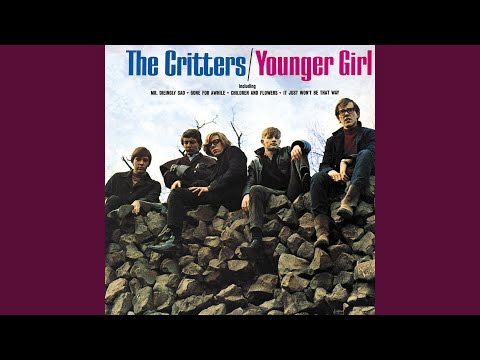

→ More from the 1960s File
View all 1960s hits →




Keep digging