The 1960s File Feature
Baby You're A Rich Man
"Baby You're A Rich Man" — The Beatles in the Summer of Love The Beatles at Their Peak, Playing Against Expectations The summer of 1967 was the Summer of Lov…
01 The Story
"Baby You're A Rich Man" — The Beatles in the Summer of Love
The Beatles at Their Peak, Playing Against Expectations
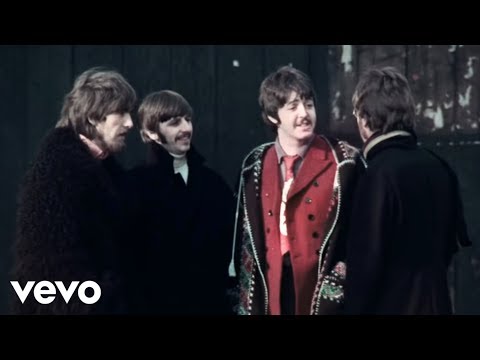
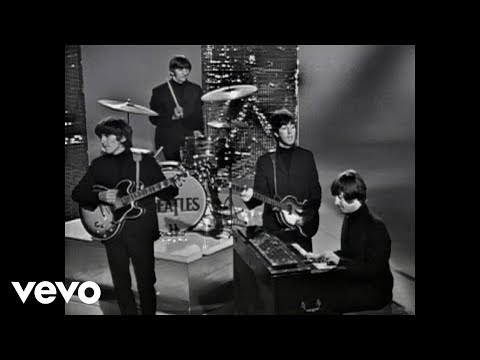
The summer of 1967 was the Summer of Love, and no band in the world carried more cultural weight that season than the Beatles. Sgt. Pepper's Lonely Hearts Club Band had been released in June to reviews that treated it as a watershed moment in the history of recorded music, and the group's standing as both commercial powerhouses and serious artists had never been higher. In this context, releasing a double A-side single that leaned into the psychedelic and philosophical currents of the moment made complete sense. "Baby You're A Rich Man" appeared as the B-side to "All You Need Is Love," which itself served as the British contribution to the Our World satellite broadcast in June 1967. Together, the two tracks captured the Beatles at their most consciously utopian, engaged with the era's possibilities in ways that felt genuine rather than calculated.
The Making of the Track
The recording of "Baby You're A Rich Man" took place at Olympic Sound Studios in London on May 11, 1967. The track was produced by George Martin, the Beatles' longtime collaborator whose contribution to the group's studio development had been central to their artistic evolution across their entire career. The recording featured a clavioline, an early keyboard instrument with a distinctive nasal, reedy timbre, played by John Lennon, which gave the track a slightly alien quality consistent with the psychedelic aesthetic the Beatles were exploring across their 1967 recordings. The track had an unusual collaborative construction, combining two separate song fragments into a single recording, a technique that the Beatles employed several times during this period.
The Chart Performance
The single entered the Billboard Hot 100 on July 29, 1967, debuting at number 64. It climbed to 41 the following week before reaching its peak position of number 34 on the chart dated August 12, 1967. The recording spent a total of 5 weeks on the Hot 100. The relatively modest performance by the Beatles' own extraordinary standards reflected the track's position as a B-side, the commercial priority for radio and buyers being the A-side "All You Need Is Love," which was simultaneously dominating charts worldwide. The Hot 100 entry nonetheless confirmed that even the B-side of a Beatles single in 1967 could find a significant audience on the American chart.
The Lennon-McCartney Dynamic
The songwriting credit on "Baby You're A Rich Man" is assigned to Lennon-McCartney, the partnership that produced much of the most celebrated popular music of the twentieth century. By 1967 the two were increasingly writing separately and combining their fragments rather than genuinely co-composing in the traditional sense, a shift that allowed for a wider range of material while preserving the shared credit that the partnership demanded. The track's internal structure reflects this process, with its two distinct sections corresponding to contributions from each writer that were brought together in the studio. The resulting combination had an energy that neither fragment alone might have achieved, the interplay between sections creating a dynamic that suited the song's philosophical subject matter.
The Summer of Love as Context
The song's themes, combining gentle mockery of countercultural aspirations with genuine engagement in the questions the counterculture was raising, placed it at the exact center of what the Summer of Love was about. The Beatles occupied a unique position in 1967 as artists who were simultaneously producing the cultural artifacts of the moment and standing slightly outside it, asking the questions that participants inside the movement often could not ask themselves. "Baby You're A Rich Man" was one expression of this perspective, generous toward the era's idealism while maintaining enough ironic distance to notice its complications. That combination of warmth and sharpness was one of the things that made the Beatles' 1967 recordings so enduringly interesting.
To hear "Baby You're A Rich Man" is to step into that specific summer, when everything felt simultaneously possible and slightly absurd, and the most important band in the world was asking exactly the right questions. Press play and let 1967 arrive.
"Baby You're A Rich Man" — The Beatles' singular moment on the 1960s charts.
02 Song Meaning
"Baby You're A Rich Man" — Meaning and the Beatles' Philosophical Wit
The Question of Spiritual Wealth
The song opens with a question directed at a person who appears to embody the countercultural ideal: a beautiful person who has journeyed far and discovered much. The question is whether this person, having achieved the spiritual and experiential richness that the counterculture celebrated, has found what was being sought. The answer the song arrives at is pleasingly ambiguous: "baby you're a rich man" could be heard as sincere affirmation, gentle mockery, or an acknowledgment that material and spiritual richness had become uncomfortably intertwined in the commercial culture of the late 1960s. The Beatles' gift for holding multiple meanings simultaneously gave the track a staying power that more straightforward endorsements of the era's values might not have achieved.
The Countercultural Elite Under the Microscope
The counterculture of the mid-1960s had its own hierarchies, as all social movements do, and the Beatles were well positioned to observe them. The beautiful people, the spiritual seekers, the children of privilege who had embraced anti-materialist values while retaining access to significant comfort: this class of person was a familiar feature of the London and San Francisco scenes in 1967, and the song addresses one of them with a mixture of admiration and pointed awareness. The question "what did you see when you were there?" points at the experience of seeking rather than the experience of finding, suggesting that the journey itself might be the point in ways that complicated the movement's more earnest pronouncements. The song was engaged with the era rather than merely reflecting it.
Spiritual Search and Material Reality
One of the core tensions running through 1967's counterculture was the relationship between spiritual aspiration and material circumstance. The Summer of Love was partly experienced by people with sufficient resources and freedom to opt out of conventional life temporarily, and the question of whether the spiritual insights gained through that experience were available to everyone, or primarily to those already affluent enough to pursue them, was not always asked directly. The Beatles' framing touched this tension by placing the word "rich" at the center of what should be a spiritual affirmation, making the ambiguity structural rather than incidental. The song could not be fully received without noticing that "rich" carries its ordinary, monetary meaning even in a context that is trying to transcend it.
The Sonic Landscape and Its Meanings
The clavioline's distinctive timbre on the recording created a sound that felt slightly foreign, slightly mechanical, and therefore slightly uncanny. This sonic choice contributed to the song's questioning mood rather than undercutting the warmth of its surface message. The production balance between the celebratory and the slightly strange was consistent with the Beatles' approach across their 1967 work, where production choices regularly added layers of meaning or complication to what might otherwise have been straightforward statements. The Beach Boys and the Beatles were in this period pushing each other toward more adventurous studio experimentation, and even a track that functioned as a B-side benefited from that creative atmosphere.
Enduring Relevance of the Central Questions
What makes "Baby You're A Rich Man" worth returning to more than five decades after its release is the quality of the questions it asks, gently but persistently, about the relationship between seeking and finding, between material comfort and spiritual experience, between individual aspiration and genuine transformation. These questions did not become less interesting when the Summer of Love ended; if anything, they became more pressing as the distance between the era's idealism and subsequent reality grew larger. The Beatles captured, in a three-minute B-side, something more durable than most full albums of the era managed: a portrait of a moment that was simultaneously sincere in its hopes and clear-eyed about its contradictions.
→ More from The Beatles
View all The Beatles hits →
→ More from the 1960s File
View all 1960s hits →




Keep digging