The 1960s File Feature
Little Honda
Little Honda — The Beach Boys: Car Culture, Capitol Records, and the Summer of 1964 By the summer of 1964, The Beach Boys had already codified what would bec…
01 The Story
Little Honda — The Beach Boys: Car Culture, Capitol Records, and the Summer of 1964
By the summer of 1964, The Beach Boys had already codified what would become the defining mythology of Southern California youth culture in song. They had made the beach, the surfboard, and the hot rod into subjects of lyrical attention as earnest and detailed as anything in American folk music. "Little Honda," released in that same productive summer, extended this project into new territory: the lightweight motorcycle, specifically the Honda 50 that was becoming a ubiquitous sight on California streets and campuses as the Japanese manufacturer aggressively expanded into the American market.
The song was written by Brian Wilson and Mike Love, the primary creative partnership behind The Beach Boys' early catalog. Wilson's compositional method during this period involved constructing melodic and harmonic frameworks with particular attention to how they would function in the group's characteristic layered-vocal arrangements. "Little Honda" was a simpler, more direct construction than some of the more harmonically ambitious recordings he was developing simultaneously, but its directness was a strength. It communicated its subject with the clarity of a good advertisement and the energy of genuine enthusiasm.
The Beach Boys released "Little Honda" on Capitol Records in August 1964, part of their album "All Summer Long." The single release came during a period when the group was navigating the newly competitive American chart landscape created by the British Invasion, with The Beatles having arrived in February of that year and reshaped commercial expectations. The Beach Boys responded by intensifying their focus on the specifically American character of their material, and a song celebrating a Japanese-manufactured motorcycle sold through American dealers as the ideal vehicle for Southern California mobility was, paradoxically, a very American document.
The single reached number 65 on the Billboard Hot 100 in the Beach Boys' own recording, a modest showing that reflected the competitive conditions of the market more than any lack of quality in the recording. The album track context served it better than the single format, where it competed against the full force of British Invasion material dominating radio. Nevertheless, the song's commercial impact was felt more dramatically through a cover version.
The Hondells, a studio group assembled by record producer Gary Usher specifically to record this song with a distinct, somewhat wilder vocal approach, released their version of "Little Honda" in the same period. The Hondells' recording climbed to number 9 on the Billboard Hot 100, making it a significantly larger commercial success than the original and demonstrating the song's inherent pop appeal. The situation was a notable early example of a cover version substantially outperforming an original, particularly when both versions were in the market simultaneously.
Gary Usher had a long working relationship with The Beach Boys, having co-written several early songs with Brian Wilson. His choice to record "Little Honda" with a studio group named after the motorcycle brand was a piece of shrewd commercial calculation. The novelty value of the name combined with a recording that pushed the song's tempo and energy slightly harder than the Beach Boys' version created a version that was particularly suited to the car-and-bike-obsessed youth radio of the period.
The Honda Motor Company's American expansion was itself a significant cultural phenomenon of the early 1960s. The company's advertising campaign, built around the slogan "You Meet the Nicest People on a Honda," had successfully repositioned motorcycles from their association with outlaw biker culture toward something clean, safe, and youthful. Honda's American sales grew dramatically through the early 1960s, and the timing of a song celebrating the Honda 50 in 1964 placed The Beach Boys at the intersection of a genuine cultural shift.
Brian Wilson's arrangement gave the track a characteristic Beach Boys quality even within its relatively simple framework. The vocal blend, with the group's trademark close harmonies stacked over a crisp rhythm track, carried the brand recognition that Capitol had spent several years building. Even a modest chart performance in their own recording reinforced the group's identity as chroniclers of California's particular relationship with motion, speed, and the freedom represented by personal transportation.
"Little Honda" stands as a document of a specific moment in American consumer culture, when the automobile and the motorcycle were not merely means of transport but symbols of a particular kind of freedom available to young people with modest incomes. The song understood its subject with the affectionate precision that characterized the best of The Beach Boys' car and vehicle catalog, placing it alongside "Fun, Fun, Fun" and "I Get Around" as a lyric of joyful, uncomplicated mobility.
02 Song Meaning
Little Honda — The Beach Boys: Meaning, Mobility, and the Poetry of the Open Road
"Little Honda" belongs to a tradition in American popular song that treats the vehicle not as mere transportation but as the material embodiment of freedom, independence, and the particular quality of possibility that comes with being young and mobile. Brian Wilson and Mike Love wrote in this tradition with genuine conviction, and the song's simplicity is not a limitation but a formal commitment to the directness of the emotion being described.
The "little" in the title is doing important work. The song is not about a large, imposing machine but about a small, accessible one, the kind of motorcycle that almost anyone could afford to own and operate. This democratization of the freedom-through-mobility narrative distinguished the Beach Boys' treatment of vehicles from the hot-rod fantasies of more expensive cars. The Honda 50 was a vehicle for ordinary young people, not for those with access to V8 engines and drag strips. The song's enthusiasms are calibrated accordingly: the pleasures it describes are real but modest, the speed it celebrates is exhilarating in human scale rather than mechanical excess.
The lyrical content describes a shared ride, a couple on a small motorcycle moving through the California landscape. This framing adds a social and romantic dimension to what might otherwise be purely a vehicle song. The motorcycle becomes the occasion for closeness, for the particular kind of intimacy that comes with two people sharing a small, fast machine. The open air, the speed, and the physical proximity combine into an image of youthful freedom that is simultaneously individual and relational.
The song participates in what cultural scholars have identified as the Southern California mythology that The Beach Boys helped create during this period: a vision of American youth culture in which sun, speed, music, and the coast combined into an aspirational image of the good life. This mythology was obviously partial and idealized, a product of a specific demographic and geographic reality, but its appeal was genuine and its influence on American popular culture was substantial. "Little Honda" contributed a small but precise piece to that larger mosaic.
The co-existence of The Beach Boys' version with The Hondells' more commercially successful cover raises interesting questions about authorial identity in pop music. The Hondells' recording of the same song reached the top 10 while the originators' version did not, but the song remained, and remains, identified primarily with The Beach Boys. This is partly a function of the group's larger cultural presence, but it also reflects the way strong songs accumulate meaning through their association with their creators' broader artistic identity regardless of which recording performs best commercially.
Within The Beach Boys' catalog, "Little Honda" occupies a place among the vehicle songs that defined their early identity. Together with "Fun, Fun, Fun," "I Get Around," and "409," it established the group as the poets of California automotive culture, writers who took seriously the emotional significance that cars and motorcycles held for the generation that grew up in the postwar American landscape of highways, parking lots, and drive-in everything.
The song also reflects the moment of Honda's cultural arrival in America, when the Japanese manufacturer's successful rebranding of motorcycle ownership as clean, wholesome, and accessible was genuinely shifting public perception. The Beach Boys were, in a sense, recording the cultural reception of a corporate repositioning strategy, and the fact that the result was an artless, joyful celebration rather than a critical examination tells you something important about how comprehensively Honda had succeeded in making their product aspirational for exactly the demographic that Brian Wilson and Mike Love were writing for.
→ More from The Beach Boys
View all The Beach Boys hits →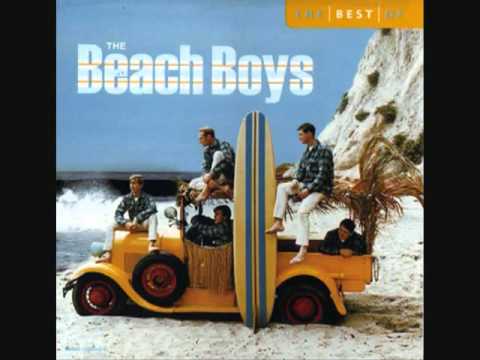


→ More from the 1960s File
View all 1960s hits →




Keep digging