The 1960s File Feature
Fun, Fun, Fun
"Fun, Fun, Fun" — The Beach Boys California in the Fast Lane Picture a California winter in early 1964, when the air still smelled of ocean salt and the AM d…
01 The Story
"Fun, Fun, Fun" — The Beach Boys
California in the Fast Lane
Picture a California winter in early 1964, when the air still smelled of ocean salt and the AM dial crackled with a new kind of sound. The British Invasion had not yet landed on American shores in full force. There was still space on the charts for sun-bleached harmonies and the particular teenage joy that came roaring out of Southern California. Into that moment drove The Beach Boys, with a song that captured the reckless, wheel-spinning freedom of youth better than almost anything before it.
"Fun, Fun, Fun" arrived in early 1964 as the group's ninth single on Capitol Records. It was written by Brian Wilson and Mike Love, two cousins whose collaboration defined the early Beach Boys sound. The song was reportedly inspired by a real episode involving a teenage girl who borrowed her father's Ford Thunderbird under the pretense of going to the library, then spent the day cruising the local drive-in strip instead. That comic domestic drama, filtered through Wilson and Love's melody, became an anthem for a generation testing the edges of parental authority.
The Sound of Open Road
What makes "Fun, Fun, Fun" so immediately electric is its opening guitar riff, which borrows the spirit of Chuck Berry's high-octane drive without copying it directly. The song barrels forward from the first note, propelled by a confident, ascending figure on guitar that signals you are about to go somewhere fast. Carl Wilson's guitar work on the track gave it teeth that many of the group's earlier surf songs lacked. The production is crisp and uncluttered, letting the harmonies ring with startling clarity across the stereo field.
The vocal arrangement, a hallmark of the group's identity, locks together with characteristic precision. Mike Love handles the lead vocal with a knowing grin in his voice, while the surrounding harmonies swell in the chorus with that dense, almost orchestral blend the group had been refining since their debut. The rhythm section is lean and purposeful. Nothing wastes time. The whole track feels like it is always about to round the next corner.
Racing Up the Billboard Hot 100
The single debuted on the Billboard Hot 100 on February 15, 1964, entering at number 69. Over the following weeks it climbed with genuine momentum: number 27 the next week, then 17, then 9, then 7. The song peaked at number 5 on March 21, 1964, spending a total of 11 weeks on the chart. That peak came just days after The Beatles appeared on The Ed Sullivan Show and sent the American record industry into a kind of controlled panic. The fact that a Beach Boys single held the top five at all during that seismic moment speaks directly to the group's commercial vitality.
Capitol Records had signed the group in 1962, and by early 1964 they had already produced a string of charting singles. "Fun, Fun, Fun" solidified their standing as one of the few American acts capable of competing directly with the wave of British artists flooding the market. The song's B-side was "Why Do Fools Fall in Love," a cover of the Frankie Lymon classic that showed the group's roots in doo-wop as well as their commercial savvy.
A Record That Captured a Moment
The song appeared on the album Shut Down Volume 2, released in March 1964, alongside other driving tracks that confirmed the group's identity as chroniclers of California youth culture. In the broader context of their catalog, "Fun, Fun, Fun" sits at a transitional point. The earlier surf songs had established the template; later work under Brian Wilson's increasingly ambitious vision would push the group into entirely new artistic territory. This track belongs to the pure, unself-conscious first chapter, before ambition complicated joy.
It received considerable radio airplay and became a standard part of the group's live set for decades. Cover versions appeared across multiple genres, and the song has been licensed to countless films, television series, and advertisements that needed a shorthand for American teen freedom in the early 1960s. The opening guitar riff is now essentially a cultural signifier, instantly recognizable to listeners who have never traced it back to its source.
A Legacy Built on Pure Energy
Decades on, "Fun, Fun, Fun" endures as one of the purest distillations of what The Beach Boys meant to early 1960s America. It captures a very specific kind of happiness, one tied to mobility, youth, and the particular optimism of a country that still believed the open road led somewhere good. Brian Wilson's gift for melody is on full display, but without the anxiety and grandiosity that would later make him a more complex figure. This is Wilson at his most direct, writing a song about a girl in a car and making it feel like freedom itself.
The record's commercial staying power across more than six decades, through compilation albums, streaming catalogs, and countless licensed placements, confirms that the energy captured on that Capitol Records session in late 1963 or early 1964 has never really dated. You can hear it today and still feel the acceleration.
"Fun, Fun, Fun" — The Beach Boys' singular moment on the 1960s charts.
02 Song Meaning
"Fun, Fun, Fun" — Meaning and Legacy
The Mythology of American Teen Freedom
At its core, "Fun, Fun, Fun" is a song about the gap between parental expectation and teenage reality. The central narrative involves a young woman who deceives her father in order to spend a day doing exactly what she wants. The song treats this not as a moral failing but as a triumph, a small revolution against the constraints of domestic life. The celebration of minor rebellion was not new in 1964, but Brian Wilson and Mike Love packaged it with enough energy and specificity to make it feel genuinely exciting rather than formulaic.
The cultural context matters enormously. Early 1960s America was a society in which the expectations placed on young people, particularly young women, were considerable and largely unquestioned in mainstream culture. A girl driving a Thunderbird on her own terms, ditching the library for the strip, was a small act of assertion. The song does not frame it in heavy political terms. The joy is the point, not the ideology. But the resonance with listeners who felt the same low-grade chafing against rules and roles gave the song a broader emotional reach than its surface lightness might suggest.
Cars as Freedom, California as Myth
The automobile was central to American self-conception in the postwar decades, and The Beach Boys understood this intuitively. In their early catalog, cars and the ocean served as twin symbols of mobility, escape, and pleasure. "Fun, Fun, Fun" places the Thunderbird at the center of the story not simply because it makes for a catchy lyric but because the car carried real cultural weight. To drive it was to be free. To have it taken away was to lose that freedom.
California itself functioned as a kind of mythological space in early 1960s American culture, a place where the constraints of the East Coast and the Midwest loosened, where youth could reinvent itself under perpetual sun. The Beach Boys built their brand on this geography, and "Fun, Fun, Fun" is one of the clearest expressions of that mythology. The song invites listeners from every landlocked state to imagine themselves on that strip, in that car, on that perfect afternoon.
Comic Spirit and Emotional Warmth
One of the elements that gives the song its lasting appeal is its humor. The situation is comic: the girl has outwitted her father, and the song celebrates this with cheerful solidarity. The final verse, where the father takes the car away, could have been a downer, but the song pivots to suggest that other forms of fun remain available. The emotional tone never darkens. This commitment to lightness was a conscious choice by Wilson and Love, and it reflects something genuine about the early Beach Boys sensibility: a belief that music should make people feel good without apology.
Influence on the American Pop Imagination
The song's influence extends well beyond its chart position. It helped establish a template for the American teen pop song that prioritized kinetic energy, group harmonics, and a specific kind of breezy joy. Subsequent generations of songwriters reaching for the feeling of summer, of youth, of the uncomplicated pleasure of being young and mobile, have all drawn (consciously or not) from the well that "Fun, Fun, Fun" helped fill. Its opening guitar riff alone has become a cultural shorthand, a sonic signal that translates immediately to a particular era and mood.
The Beach Boys' harmonies carried within them a kind of idealism about American life, and "Fun, Fun, Fun" is one of the purest expressions of that idealism before it became complicated by the later 1960s. The song asks nothing of the listener except a willingness to feel the acceleration. That simplicity is part of what makes it so durable across generations that have no lived connection to a 1964 Thunderbird or a California drive-in.
Listened to today, the song still moves. The harmonies still lift. The guitar still surges. Whatever else changes in the culture, that feeling remains available to anyone who presses play.
→ More from The Beach Boys
View all The Beach Boys hits →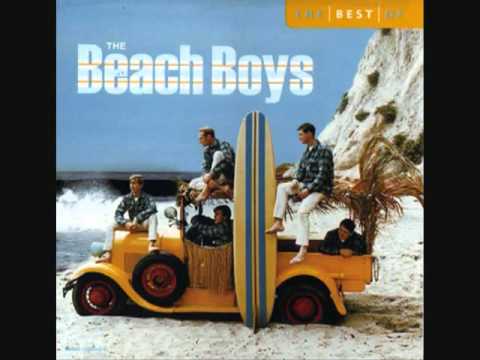


→ More from the 1960s File
View all 1960s hits →




Keep digging