The 1960s File Feature
Don't Worry Baby
Don't Worry Baby — The Beach Boys and the Sound of Perfect Pop Anxiety in 1964 California at Its Creative Peak The summer of 1964 was one of the most convuls…
01 The Story
Don't Worry Baby — The Beach Boys and the Sound of Perfect Pop Anxiety in 1964
California at Its Creative Peak
The summer of 1964 was one of the most convulsive moments in American pop history. The Beatles had arrived in February and were rearranging everything the music industry thought it knew about youth culture. For the Beach Boys, the British invasion represented both a competitive threat and an artistic provocation. Brian Wilson, the group's chief songwriter and arranger, responded not by chasing the British sound but by going deeper into what the Beach Boys already did brilliantly: layered vocal harmonies, car-and-surf imagery, and an emotionally complex take on adolescent life that went further than most of the genre acknowledged. "Don't Worry Baby" was his most sophisticated achievement in that vein.
The Story Behind the Song
Brian Wilson has spoken across the years about the circumstances that inspired "Don't Worry Baby." He heard the Ronettes' "Be My Baby," produced by Phil Spector, and was moved deeply enough by its sonic architecture and emotional directness that he wanted to write something that answered it, a song in the same emotional register. The result was a song about a drag racer whose girlfriend's reassurance carries him through the anxiety of competition. On the surface it is a car song in the California tradition. Underneath, it is a song about fear, about needing comfort, about vulnerability that teenage pop rarely named so plainly. Wilson wrote the song with Roger Christian, his frequent collaborator on car-themed material.
A B-Side That Became a Classic
The recording was placed on the B-side of "I Get Around," which became the Beach Boys' first number-one single. Many listeners flipped the record over and found something they preferred. "Don't Worry Baby" entered the Billboard Hot 100 on May 30, 1964, at position 93, and climbed through the summer weeks: 74, 53, 41, 29, ultimately reaching its peak of number 24 on July 4, 1964. The single spent ten weeks on the chart, a respectable run for a B-side during one of the most competitive years in pop history. The fact that it charted at all, given the dominance of "I Get Around" as the designated A-side, speaks to the strength of the song itself.
Wilson's Arranging Genius on Display
What separates "Don't Worry Baby" from similar beach-pop records of the period is the quality of its vocal arrangement. The harmony stack in the chorus is among the most carefully constructed in the group's catalog, with each voice placed to create a warmth that feels almost physical. Wilson was absorbing lessons from Spector's Wall of Sound technique while developing his own vocabulary of layered voices and instrumental color. The song demonstrates that synthesis in miniature: it is lush without being cluttered, emotional without being melodramatic, and structured with a precision that casual listeners absorbed without needing to analyze.
The Long Arc of a Great Song
Subsequent decades have cemented "Don't Worry Baby" as one of the Beach Boys' essential recordings, arguably more beloved now than when it was released. Music critics who rank the group's output routinely place it among the ten or fifteen songs that define what Wilson was capable of before his ambitions expanded toward Pet Sounds and Smile. It has been covered by artists across genres, sampled, and licensed repeatedly.
The B-Side That Refused to Stay Hidden
The fact that "Don't Worry Baby" found its audience despite being positioned as the secondary side of a double-sided single tells something important about the nature of great pop records. "I Get Around" was an undeniable number-one, and in the normal course of events the B-side would have served merely as additional content and been forgotten. Listeners in 1964 made a different decision. They engaged with both sides, found the quieter and more emotionally vulnerable track, and spread the word through the mechanisms available to them in that era: personal recommendations, radio requests, and the simple act of flipping the single and playing it again. The song's chart performance, reaching number 24 independently, showed that word had spread far enough to register in national tracking. In this sense, the song represents an early example of audience-driven discovery overriding the commercial logic of the release format, a dynamic that streaming platforms would later operationalize but that existed in the record-buying public long before the technology made it measurable. Put on those opening guitar chords and the reassuring vocal entry, and something specific about the anxious optimism of early-1960s America crystallizes into sound. Press play and let the harmonies take over.
"Don't Worry Baby" — The Beach Boys's singular moment on the 1960s charts.
02 Song Meaning
Don't Worry Baby — Vulnerability, Comfort, and the California Ideal
The Male Vulnerability at Its Center
Pop music in the early 1960s rarely gave male performers space to express fear or anxiety directly. The convention was confidence, even swagger. "Don't Worry Baby" broke that convention in a specific and striking way. The narrator of the song is scared. He has made a boast he might not be able to back up, and the emotional weight of the song comes from his dependence on another person's reassurance to face that fear. Brian Wilson was writing about a form of emotional need that the surf-and-car genre usually kept offscreen, and that choice gave the song a psychological depth that keeps it compelling decades later.
The Girlfriend as Anchor
The female figure in the song exists primarily as a source of comfort and stability. Her whispered assurance that everything will be fine is presented as genuinely sustaining, as something the narrator cannot face the world without. This is not a song about romantic conquest or California freedom; it is a song about needing someone. That emotional posture was unusual for the genre and the era, and it aligned closely with what Brian Wilson was processing privately during this period of intense creative pressure and personal anxiety. The song's emotional authenticity derives from that personal connection, even if listeners encountering it fresh have no access to that backstory.
The Sound as Part of the Meaning
A significant portion of what the song communicates arrives through its arrangement rather than its words. The warmth of the vocal harmonies in the chorus performs the comfort that the lyric describes: the sound itself is reassuring. Wilson understood that in pop music, emotional meaning is carried by timbre and texture as much as by language. The gentle pulse of the production, the soft entrance of the lead vocal, the way the harmonies swell behind the word "baby" — these are not decoration but argument. The music makes the claim that everything will indeed be all right, even when the words alone might not be sufficient to convince.
California Mythology and Its Limits
The car-racing context roots the song in a specific California youth mythology: summer streets, drag strips, the performance of masculine identity through mechanical speed. But the song works against that mythology by revealing the fear underneath it. The California dream, as Wilson was already beginning to understand it in 1964, was a beautiful and anxious construction. The vulnerability in "Don't Worry Baby" anticipates the more searching explorations of Pet Sounds, where the California surface would give way entirely to emotional introspection. As an early sign of where Wilson's songwriting was heading, it is an essential document.
"Don't Worry Baby" — The Beach Boys's singular moment on the 1960s charts.
→ More from The Beach Boys
View all The Beach Boys hits →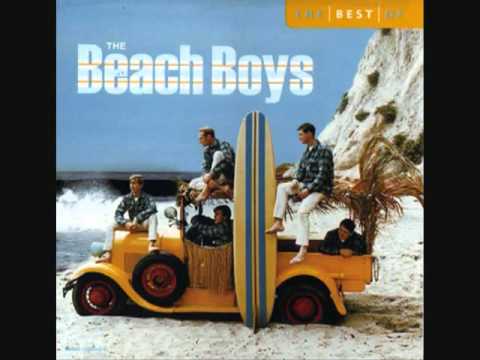


→ More from the 1960s File
View all 1960s hits →




Keep digging