The 1960s File Feature
Bang-Shang-A-Lang
"Bang-Shang-A-Lang" — The Archies and the Sound of Saturday Morning The Cartoon That Could Sing Imagine switching on the television on a Saturday morning in …
01 The Story
"Bang-Shang-A-Lang" — The Archies and the Sound of Saturday Morning
The Cartoon That Could Sing
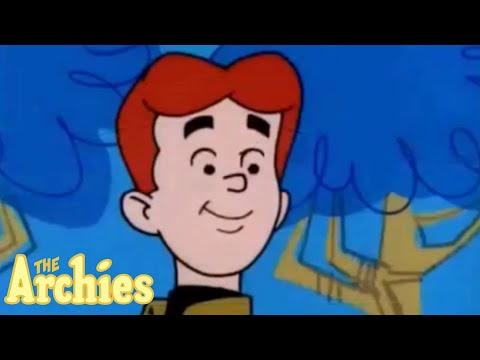
Imagine switching on the television on a Saturday morning in late 1968: the screen fills with bright colors, a gang of impossibly cheerful teenagers, and a sound so effervescently immediate that it seems to have been engineered in a laboratory dedicated exclusively to the distillation of adolescent joy. That is more or less exactly what happened when The Archie Show debuted on CBS and introduced America to the animated pop band whose name it bore. The Archies, drawn from the comic book characters that had entertained American kids since 1941, were not real musicians but their records were absolutely real, and Bang-Shang-A-Lang was the sound that launched the whole enterprise.
The Bubblegum Architects
Behind the cartoon front, the creative force driving the Archies' music was Don Kirshner, the legendary music producer and publisher who had already helped shape the Monkees' commercial sound earlier in the decade. Kirshner understood the architecture of a pop hit with surgical precision, and the Archies project gave him an unusually clean canvas: no real band personalities to navigate, no artistic egos to manage, just pure songwriting and production working to deliver maximum sonic impact in under three minutes.
The songwriting team behind Bang-Shang-A-Lang included Jeff Barry, a veteran of the Brill Building era who had co-written hits for an impressive roster of acts throughout the 1960s. Barry understood the conventions of pop songwriting deeply enough to both honor and playfully subvert them, and the Archies material he created operated on exactly that line between formula and genuine inspiration.
The Bubblegum Sound
Bubblegum pop as a genre has rarely received the critical respect its commercial success warranted. The essential features were carefully calibrated accessibility: tempos quick enough to energize, melodies simple enough to lodge instantly in memory, lyrics free of anything that might require adult experience to understand. The production on this record achieves all of those goals with considerable panache, layering hand claps, jangly guitar, and perfectly positioned background vocals into a confection that sounds effortless precisely because so much craft went into making it so.
The vocal performances, provided by studio musicians rather than fictional cartoon characters, have an energy that feels genuinely enthusiastic rather than mechanically bright. The apparent simplicity of the arrangement conceals a sophisticated understanding of how to make radio-friendly pop work, how to place the hook, when to let the rhythm carry things, how long to make the intro before committing to the chorus.
The Chart Run
The single debuted on September 28, 1968, entering the Hot 100 at number 71. It climbed through the autumn as the television show built its audience, each new episode functioning as an extended commercial for the music. The song peaked at number 22 on December 7, 1968, spending 13 weeks on the chart. The chart run demonstrated the synergy between television promotion and record sales that Kirshner had correctly predicted would drive the project's commercial success.
The track served as the launchpad for one of the most statistically unusual commercial performances in pop history: the follow-up single, Sugar Sugar, would become the best-selling single of 1969, outpacing even the major acts of that extraordinary year. The foundation for that achievement was built by the debut's solid chart performance.
A Phenomenon of Its Moment
The Archies phenomenon speaks to something enduring about the appeal of uncomplicated joy in popular music. The late 1960s were years of social upheaval, political assassination, and cultural disorientation, and the success of music this determinedly cheerful operated as something close to counter-programming. Whether audiences consciously chose it for that reason or simply responded to its immediate pleasures, the timing was not accidental. Give it a spin and feel the Saturday morning light come through.
"Bang-Shang-A-Lang" — The Archies' singular moment on the 1960s charts.
02 Song Meaning
The Meaning Behind "Bang-Shang-A-Lang" by The Archies
Pure Pop as Intention
There is a temptation, when discussing bubblegum pop, to search for subtext that is not there, to find layers beneath the bright surface that might justify critical attention. Bang-Shang-A-Lang invites no such excavation. Its meaning is entirely its surface: the immediate pleasure of a well-constructed melody, the physical response to an insistent rhythm, the uncomplicated happiness of a song designed with complete commitment to being enjoyable. That kind of single-minded dedication to pure effect is rarer than it sounds.
Youth Culture and the Market
The Archies project was a commercial product designed explicitly for a demographic that American media in 1968 was beginning to understand as a distinct market with distinct tastes. The pre-teen and early-teen audience had disposable income, access to record players, and a hunger for music that spoke to their experience rather than to the more complex emotional and political terrain that their slightly older siblings were navigating. Bubblegum pop served that audience with precision.
The animated format removed any element of celebrity persona or adult complication from the equation. The Archies had no age, no politics, no romantic history beyond the innocent triangle that the comic book had long established. This absence of real-world baggage was a feature rather than a limitation, allowing the music to communicate directly with its audience without the mediation of any celebrity context.
The Nonsense Syllable Tradition
The title itself belongs to a proud tradition in pop music of nonsense syllables used as hooks. From the doo-wop era through rock and roll's early years, strings of syllables that carry no semantic meaning but maximum phonetic pleasure have served as some of the most effective devices in popular songwriting. The mouth enjoys making these sounds; the ear enjoys receiving them. The title's rhythm and sound are partly responsible for the track's instant recognizability, arriving before the melody even begins to work its effects.
This technique connects the song to a lineage that predates rock and roll, running through gospel, field hollers, and the vocal traditions of African American music where sound and spirit often communicated through means that exceeded the literal content of words. Jeff Barry and his collaborators were working in a commercial context far removed from those origins, but the instinct driving their use of nonsense syllables drew from the same well.
Joy as a Valid Artistic Goal
The most useful thing to say about the meaning of Bang-Shang-A-Lang is that joy is a legitimate artistic ambition and that achieving it is harder than it looks. The record succeeds completely at what it set out to do, delivering two and a half minutes of unqualified pleasure with the efficiency and confidence of master craftsmen working in a form they understand completely. That the form is pop confectionery rather than high art is irrelevant to the quality of the execution. The 1968 listener who could not get this melody out of their head was experiencing something real, and so is anyone who encounters it today.
→ More from The Archies
View all The Archies hits →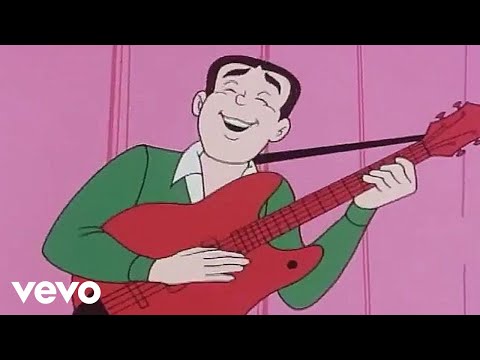

→ More from the 1960s File
View all 1960s hits →




Keep digging