The 1960s File Feature
Singing My Song
Tammy Wynette's "Singing My Song" and Its Place in Country Music's Crossover Moment By 1969, Tammy Wynette was one of the most commercially successful and ar…
01 The Story
Tammy Wynette's "Singing My Song" and Its Place in Country Music's Crossover Moment
By 1969, Tammy Wynette was one of the most commercially successful and artistically significant voices in country music, a position she had reached with remarkable speed after arriving in Nashville only a few years earlier. Her rise from a background of hardship in Mississippi and Alabama to become what the industry would eventually call the First Lady of Country Music was itself a story worthy of the genre's long tradition of narrative songs about perseverance and resilience. By the time "Singing My Song" was released in 1969, she had already achieved the defining success of her career with "Stand By Your Man," a recording that had become one of the best-selling country singles in history and had announced her as an artist of exceptional emotional power.
"Singing My Song" was released on Epic Records, the label with which Wynette had built her commercial profile under the production partnership of Billy Sherrill, who would prove to be one of the defining creative collaborators of her career. Sherrill's production approach, the application of orchestral arrangements and studio polish to country performance through a methodology sometimes called the Nashville Sound, gave Wynette's recordings a quality that allowed them to reach beyond the dedicated country audience and find listeners in the broader pop market. This crossover potential was a significant commercial asset, and it partly explains the Hot 100 placement that "Singing My Song" achieved.
The track reached number 75 on the Billboard Hot 100, spending five weeks on the chart. While the Hot 100 placement was modest by pop standards, it represented something meaningful for a country artist in 1969: evidence that the crossover strategy being pursued by Epic and Sherrill was functioning, that Wynette's voice and the material they were pairing it with could register on the national pop chart alongside artists whose music emerged from entirely different commercial traditions. Country music's relationship with the Hot 100 in 1969 was still mediated through the resistance of pop radio programmers who maintained significant skepticism about the format's commercial appeal to mainstream listeners.
Wynette's voice was her most powerful commercial and artistic instrument, and it was a voice of remarkable character, capable of conveying suffering and joy with equal conviction, able to move from a whisper to a sustained full-throat note in a way that communicated genuine feeling rather than technical display. The production that Billy Sherrill built around her voice on recordings like "Singing My Song" was designed to frame that voice rather than obscure it, using strings and background vocals as a setting for a jewel rather than a mask for a flaw.
The context of Wynette's life in 1969 added layers of meaning to anything she recorded about singing and music. Her own story — the cotton fields, the beauty school training, the early failed marriage, the arrival in Nashville with children to support and ambitions to pursue — made the theme of music as sustainer and healer something she could address with autobiographical authority. When Wynette sang about what singing meant to her, the authenticity of the claim was not in question.
The late 1960s were a period of considerable creative and commercial vitality in country music, with the genre's reach expanding as production values improved and radio programming became more receptive to the polished Nashville Sound recordings that Sherrill and his contemporaries were producing. Wynette was among the most visible beneficiaries of this expanding appetite for country music with broad demographic reach, and her chart activity in this period reflected both her exceptional talent and the favorable conditions her label had helped create.
Billy Sherrill's production on "Singing My Song" exemplified the careful balance that defined his best work with Wynette: enough orchestral sophistication to attract listeners who might otherwise dismiss country music as too parochial, but never so much production gloss that the fundamental country character of the performance was obscured. This balance was difficult to achieve and easy to mismanage, and Sherrill's success in maintaining it across a sustained body of work with Wynette represents one of the more significant production achievements in country music history.
For five weeks on the Hot 100 in 1969, "Singing My Song" extended Tammy Wynette's national commercial presence beyond the country chart where her dominance was already established and into the broader pop market where her voice was still making its initial impression on audiences unfamiliar with the First Lady of Country Music.
02 Song Meaning
What "Singing My Song" Reveals About Music as Personal Identity and Emotional Survival
The subject of "Singing My Song" is, on its surface, music itself — the act of singing as a practice that sustains, comforts, and defines the person who engages in it. But for Tammy Wynette, singing was not a casual or theoretical subject. It was the activity around which her entire life had reorganized at a moment of genuine personal difficulty, and the song therefore carries autobiographical weight that transforms it from a generic meditation on artistic purpose into something more specific and more honest.
The theme of music as emotional sustainer has deep roots in American popular song, particularly in country and gospel traditions where the act of singing has long been associated with the management of hardship, the expression of feeling that cannot otherwise find an outlet, and the connection to community and tradition that song provides. Wynette's engagement with this theme in 1969 drew on all of those associations simultaneously, giving the track a resonance that extended beyond its specific lyrical content.
When a singer sings about singing, there is an inherent reflexivity that the best recordings in this mode use to productive effect. Wynette's performance on "Singing My Song" is itself evidence of the claim the song makes — her voice, with its capacity for emotional expressiveness and its quality of lived conviction, demonstrates in real time what singing can do and what it means to someone for whom it has become the defining activity of her life. The medium and the message are not separate; they are the same thing.
The song also participates in a broader country music conversation about the relationship between personal experience and artistic expression. Country music has always valued authenticity — the sense that the performer singing the song has genuinely lived something adjacent to its subject matter. Wynette's biography gave her exceptional credibility on the subject of music as survival mechanism, and listeners in 1969 who knew even the broad outlines of her story could hear in the song something more than a professionally crafted statement of artistic purpose.
The meaning of "Singing My Song" is ultimately about the transformation of experience into art and the sustaining power of that transformation. It is a song about why people make music — not for fame or commercial success, but because the act of singing gives shape and meaning to experience that would otherwise be merely suffered. This is one of the most fundamental subjects in all of popular music, and Wynette's recording approaches it with the direct emotional honesty that defined her best work.
For listeners encountering the track as part of Wynette's output in the most productive period of her career, the song functioned as a statement of identity: this is who I am, this is what I do, and this is why I do it. That statement, delivered with the conviction of a voice that had earned the right to make it, gave "Singing My Song" a meaning that transcended its chart position and placed it within the larger story of one of country music's most significant artists.
→ More from Tammy Wynette
View all Tammy Wynette hits →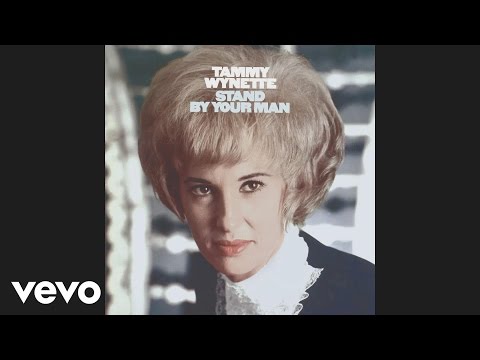


→ More from the 1960s File
View all 1960s hits →




Keep digging