The 1960s File Feature
Blowin In The Wind
"Blowin' In The Wind" — Stevie Wonder's Soul-Gospel Reinvention of Dylan's Anthem A Sixteen-Year-Old Takes On a Civil Rights Classic The summer of 1966 had n…
01 The Story
"Blowin' In The Wind" — Stevie Wonder's Soul-Gospel Reinvention of Dylan's Anthem
A Sixteen-Year-Old Takes On a Civil Rights Classic
The summer of 1966 had no shortage of bold musical moves. But when Tamla Records released a young Stevie Wonder's cover of Bob Dylan's "Blowin' In The Wind," something quietly remarkable happened: a sixteen-year-old blind musician from Detroit transformed a folk protest song into a piece of gospel-inflected soul that reached an entirely different audience, carrying the same questions to different ears in a completely different musical language.
Stevie Wonder in 1966 was three years into his professional recording career at Motown, having scored his first major hit with "Fingertips (Part 2)" in 1963 at the age of thirteen. By the mid-1960s he was a regular presence on the Motown roster, working within the label's production infrastructure and developing the musical breadth that would eventually make him one of the most versatile artists in pop history. Covering Dylan at this juncture was a significant artistic statement, signaling an ambition that reached beyond the standard Motown singles formula.
The Cover Version's Creative Logic
Dylan had written "Blowin' In The Wind" in 1962, and the song had become one of the most recognized anthems of the civil rights era, famously performed by Peter, Paul and Mary at the March on Washington in 1963. Wonder's version, recorded for his Down to Earth album and released as a single, brought a fundamentally different sonic approach to the material. Where Dylan's original operated in the folk and blues tradition, Wonder's cover drew on gospel harmonics, Motown's signature production infrastructure, and his own remarkable vocal expressiveness.
The arrangement gave the song a lushness and emotional warmth that the stripped-down folk original deliberately avoided. Wonder's voice treated the lyric as a spiritual text rather than a political manifesto, which did not change its meaning but deepened it, giving the questions at the song's center a different kind of urgency. For Black listeners in 1966, those questions about justice and equality were not rhetorical or distant; they were immediate and personal.
The Chart Run Through Summer and into Autumn
The single debuted on the Billboard Hot 100 on July 23, 1966, entering at number 68. The chart climb was steady through the summer months: 40, then 24, 18, 11. The trajectory told a story of consistent growth driven by radio play across multiple formats. The song peaked at number 9 on September 3, 1966, spending ten weeks total on the chart and placing Stevie Wonder in the pop top ten at a formative moment in his career.
A top-ten Hot 100 performance for a cover of a Dylan song, reaching that peak during the summer of 1966 when civil rights was still at the forefront of public conversation, was commercially and culturally significant. The record demonstrated that Wonder's audience extended well beyond the core Motown demographic, and that his vocal talent could carry material from outside the standard pop-soul repertoire without losing its essential character.
Motown's Cultural Positioning
The decision by Motown to have one of its signature young artists record Dylan material was part of a broader cultural positioning strategy. Berry Gordy's Motown operation was explicitly committed to creating music that crossed racial and format boundaries, building the integrated audience that its Detroit competitors could not consistently reach. A Stevie Wonder cover of a Dylan song fit this strategy perfectly: it spoke to the folk and college audience that had made Dylan a figure of enormous cultural authority while keeping Wonder's gospel soul approach central to the arrangement.
The record confirmed Motown's remarkable cultural instincts during this period, and it confirmed Wonder's ability to absorb and transform musical material from outside his primary tradition.
The Significance for Wonder's Career
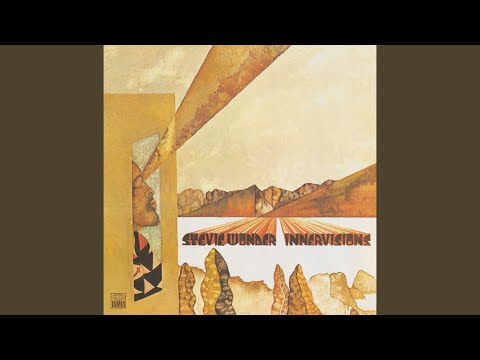
Looking at Stevie Wonder's full catalogue, "Blowin' In The Wind" appears as an early signal of the artistic ambition that would fully flower in the early 1970s with recordings like Music of My Mind, Talking Book, and Innervisions. The instinct to reach outside the standard pop repertoire, to take on material with genuine social and spiritual weight, was already present in this 1966 recording.
The cover stands today as a beautiful artifact of a specific cultural moment, and as proof that Wonder was never simply a hitmaker, even when the hits were coming steadily.
"Blowin' In The Wind" — Stevie Wonder's singular moment on the 1960s charts.
02 Song Meaning
Questions That Still Need Answering: The Meaning of Stevie Wonder's "Blowin' In The Wind"
The Original's Power and What a Cover Can Add
Bob Dylan wrote "Blowin' In The Wind" as a series of rhetorical questions about justice, war, and human dignity, questions structured to make the absence of adequate answers feel morally intolerable rather than philosophically comfortable. The song's power in its original form derived partly from Dylan's refusal to provide the answers the questions seem to demand. The wind that carries the responses away is indifferent to whether anyone is listening.
Stevie Wonder's cover version brought a different interpretive frame to these same questions. Where Dylan's vocal delivery treated the questions with a kind of battered realism, Wonder's gospel-inflected approach invested them with something closer to anguish and aspiration simultaneously. The questions remained unanswered, but the emotional register of the asking had shifted toward the tradition of the Black church, where asking the hardest questions out loud is itself an act of faith.
Civil Rights and the Context of Listening
By the summer of 1966, the Civil Rights Movement was in the midst of its most difficult phase. The legislative victories of 1964 and 1965 had been won, but their implementation was slow and contested; urban unrest was intensifying; and the simple clarity of the early movement's moral argument was being complicated by harder political and economic questions. For Black listeners in this context, Dylan's questions about justice and equality were not abstractions. They described the daily reality of navigating a society in which the promise of equality was still largely unfulfilled.
Wonder's version addressed this audience directly through its musical language. Gospel and soul were the musical traditions of the Black church and the civil rights movement itself; singing Dylan's questions in that tradition placed them back into the context where they were most urgently needed. The pop chart success of the record meant those questions were reaching white listeners as well, carried in a musical form that made them feel rather than merely think.
The Adolescent Voice and Its Authority
One of the more striking aspects of Wonder's recording is the authority his sixteen-year-old voice brings to material of such gravity. Adolescence is generally associated with questions rather than answers, with uncertainty rather than conviction, which in this case turns out to be an asset. A young voice asking the song's questions carries a particular kind of moral force: it speaks from the position of someone who will have to live in the world these questions are asking about, who has the most at stake in whether they receive meaningful answers.
Wonder's vocal maturity was already remarkable at this age, and it allowed him to inhabit the material with a conviction that might have seemed presumptuous from a technically accomplished but emotionally thin performer. His voice communicated genuine engagement with the lyric, not merely proficient execution of it.
The Ongoing Resonance of Unanswered Questions
What has kept "Blowin' In The Wind" relevant across six decades, through Dylan's original, Wonder's cover, and dozens of other interpretations, is the specific quality of its questions. Dylan wrote questions that have not yet found sufficient answers, which means each generation of listeners encounters the lyric as a description of their own present rather than a historical curiosity.
Wonder's version adds the dimension of the gospel tradition's relationship to deferred justice, the long history of Black American spiritual practice in which faith is maintained in the face of evidence that could equally support despair. This dimension does not change Dylan's questions but deepens them, adding the weight of a specific historical experience to their already considerable moral burden.
The song remains as necessary as it was when Wonder recorded it, which is both a tribute to the work and a commentary on how much remains unresolved.
→ More from Stevie Wonder
View all Stevie Wonder hits →


→ More from the 1960s File
View all 1960s hits →




Keep digging