The 1960s File Feature
The Beat Goes On
"The Beat Goes On" — Sonny & Cher Two Voices in a Turbulent Year Early 1967 felt like the world was holding its breath. The psychedelic summer was not quite …
01 The Story
"The Beat Goes On" — Sonny & Cher
Two Voices in a Turbulent Year
Early 1967 felt like the world was holding its breath. The psychedelic summer was not quite here yet, but its pressure was already building. San Francisco was charging up for something enormous, London was spinning with Carnaby Street fashions and Hendrix's arrival, and American radio was navigating the awkward space between the old-school pop establishment and an increasingly restless youth culture. Sonny & Cher had already claimed their territory by this point: they were the counterculture-adjacent couple who nonetheless made records that suburban parents could tolerate, and "The Beat Goes On" would prove to be one of their most enduring statements.
Sonny Bono wrote the song, and it stands as one of his more ambitious compositional moments. The couple had burst onto the American charts with "I Got You Babe" in 1965, topping the Hot 100 and making their shaggy hair, flared trousers, and fur vests into a kind of counterculture brand that nonetheless sold to mainstream audiences. By 1967, they were established stars with a clear identity, and "The Beat Goes On" represented a deliberate expansion of their artistic reach.
A Sweeping Chart Climb
The single entered the Billboard Hot 100 on January 14, 1967, debuting at number 72. Its ascent was consistent and confident, moving steadily upward through the winter weeks: 58, then 34, then 16, then 10. By the week of February 25, 1967, it had reached its peak of number 6, placing Sonny & Cher firmly in the upper reaches of the American pop chart at a genuinely competitive moment in the music calendar. The record spent eleven weeks on the Hot 100, a run that testified to the sustained affection listeners felt for the song.
Reaching number 6 was no small feat in the early months of 1967, when the chart was populated with strong competition from a wide range of artists working across pop, soul, and rock. The fact that a song with such an explicitly philosophical and cultural observation at its core could perform at that level speaks to Sonny Bono's instinct for packaging ideas in commercially accessible forms.
The Song's Ambition and Sound
What made "The Beat Goes On" genuinely unusual in the Sonny & Cher catalog was its scope. Where many of their records focused on the intimacy of their romantic partnership, this song zoomed out to encompass the sweep of history itself. Bono's lyrical construction used the refrain as a kind of through-line connecting different eras and generations, suggesting that despite the surface changes of fashion, technology, and politics, some fundamental rhythm of human experience continued uninterrupted.
The production reflected this expansive ambition. The arrangement moved between sections with an almost cinematic quality, incorporating the bongo-driven groove that would later become one of the track's most sampled elements. Cher's voice, still finding the full resonance that would make her one of popular music's great instruments in the decades to come, anchored the song with an authority that matched its conceptual reach. Sonny's contributions, by contrast, carried a looser, more conversational energy that created a productive dynamic between the two.
The Legacy of the Groove
The percussion track embedded in "The Beat Goes On" would prove to have a remarkable afterlife. The bongo pattern and the overall rhythmic feel of the arrangement made the record a popular source material for later producers, and its influence can be traced through subsequent decades of popular music. Madonna sampled the track prominently for her 1987 recording "Causing a Commotion," bringing the original back into public awareness for a new generation of listeners and confirming the durability of what Sonny and his collaborators had constructed in 1967.
That kind of second life through sampling is a genuine form of musical immortality. When a record from 1967 remains sonically useful enough to anchor a major pop hit twenty years later, it says something real about the quality of the original production.
Sonny & Cher's Moment Captured
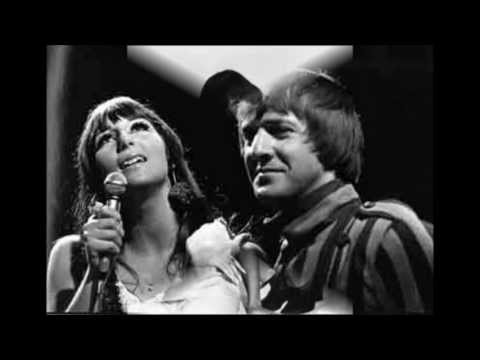
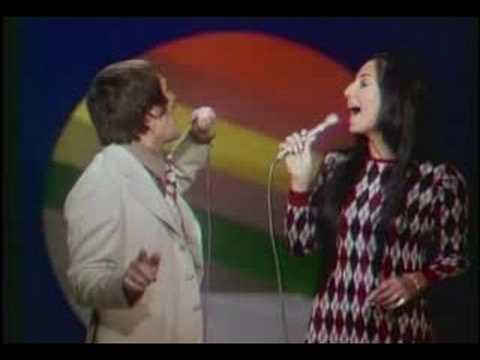
By the time "The Beat Goes On" finished its chart run in the spring of 1967, Sonny & Cher had confirmed their position as one of the most distinctive acts in American pop. They were not psychedelic experimenters, not Motown soul artists, not traditional pop crooners. They were something stranger and more durable: a couple who made the personal public and the philosophical accessible, who wore their strangeness openly and still sold millions of records. This song, climbing to six on the Hot 100 in the first winter of 1967, is one of the clearest snapshots of what they were capable of. Press play and let the beat, appropriately, go on.
"The Beat Goes On" — Sonny & Cher's singular moment on the 1960s charts.
02 Song Meaning
"The Beat Goes On" — History, Rhythm, and the Persistence of Change
A Philosophy Set to Music
Very few pop records of the 1960s attempted anything as overtly conceptual as what Sonny Bono accomplished with "The Beat Goes On." The song's central idea is both simple and genuinely profound: that through all the surface changes of history, fashion, technology, and cultural upheaval, some fundamental pulse of human life continues without interruption. The refrain functions as a kind of mantra rather than a conventional chorus, returning again and again to assert continuity in the face of constant change. The beat, in this framework, is history itself, a rhythm that no individual era can silence or redirect.
This was a surprisingly ambitious thing to say in a pop song, and the fact that it reached number 6 on the Billboard Hot 100 in early 1967 suggests that audiences in that turbulent moment were receptive to exactly that kind of reassurance. The world was changing rapidly and often uncomfortably, and a record that placed contemporary disruption within a longer historical continuum offered something more than entertainment.
Social Observation as Pop Lyric
Bono's lyrical approach runs through a series of observed cultural moments and attitudes, sketching scenes from across American life to make its argument about continuity. The imagery is drawn from the everyday, from television to fashion to street life, and the effect is of a sweeping but affectionate social panorama. Rather than celebrating or mourning any particular era, the song treats all periods with equal, slightly detached affection. The past becomes a gallery of moments that were once urgent and are now simply part of the continuing story.
This even-handedness was itself a kind of political and philosophical stance in 1967. The counterculture was asserting a sharp break with what had come before, insisting on generational rupture as a framework for understanding the present. Bono's song pushed back gently, suggesting that what seemed like revolution was, in the larger view, just the next beat in a very long song. Listeners could find comfort or provocation in that idea depending on where they stood.
Cher's Voice and the Track's Emotional Register
A significant portion of what gives "The Beat Goes On" its lasting power is the voice carrying the bulk of its message. Cher in 1967 was still in the early stages of a vocal career that would prove to be among the most durable in pop music history, but even then the essential qualities were present: the distinctive lower register, the emotional directness, the capacity to make a lyric sound like personal statement rather than performed emotion. Her delivery on the refrain gives the philosophical observation a human warmth that prevents it from becoming merely abstract.
The contrast with Sonny's more conversational, less conventionally polished vocal contributions created a dynamic that suited the material. His sections feel like someone thinking aloud; hers feel like someone arriving at certainty. Together they model the kind of dialogue the song is implicitly having with its audience.
Resonance Across Decades
The song's thematic staying power is inseparable from the universality of its central observation. Every generation has its own version of the anxiety that "The Beat Goes On" addresses: the sense that the present is unprecedented, that the old certainties have dissolved, that the future is both exciting and threatening. And every generation, if it is honest, can recognize in that refrain the same reassurance that 1967 audiences found in it. The beat does go on, in the sense that human life continues to organize itself around the same fundamental needs, desires, conflicts, and connections that it always has.
That is not a cynical observation but a genuinely comforting one, and a pop song that can deliver comfort this durably is doing something worth paying attention to. The record endures because its thesis endures.
→ More from Sonny & Cher
View all Sonny & Cher hits →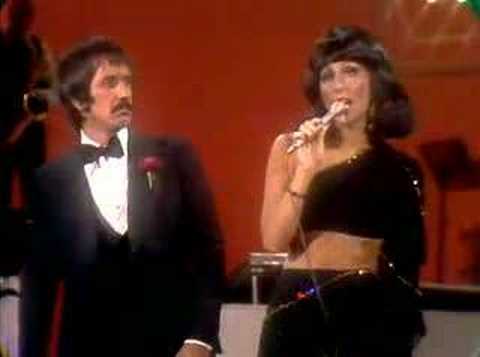

→ More from the 1960s File
View all 1960s hits →




Keep digging