The 1960s File Feature
My Last Date (With You)
The Story Behind My Last Date (With You) by Skeeter Davis As 1960 wound toward its close, Nashville's Music Row was quietly reinventing what country music co…
01 The Story
The Story Behind "My Last Date (With You)" by Skeeter Davis
As 1960 wound toward its close, Nashville's Music Row was quietly reinventing what country music could sound like, softening the genre's rougher edges into something polished enough for pop radio while keeping its emotional core intact. Skeeter Davis stood near the center of that shift, and "My Last Date (With You)" became one of the clearest early signals of the crossover success she would soon achieve on an even larger scale, just two years before her signature hit.
A Melody Borrowed From an Instrumental Hit
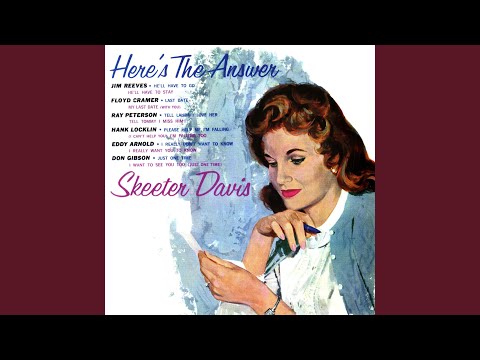
The song set new lyrics, written by Davis alongside Boudleaux Bryant, to the melody of Floyd Cramer's instrumental smash "Last Date," itself a major hit earlier the same year and one of the defining piano instrumentals of the era. Turning an instrumental hit into a fully lyricized vocal song was a savvy piece of songcraft, borrowing an already-familiar melodic hook and giving it new emotional specificity through Davis's aching, plainspoken delivery, a technique Nashville producers used often to hedge commercial risk.
The Nashville Sound in Miniature
Davis's reading leans into the emerging Nashville Sound aesthetic: smooth strings and background vocals easing the arrangement toward pop radio, while her voice retains the direct, unadorned honesty of straight country singing. That tension between polish and rawness is exactly what made the Nashville Sound commercially potent, and Davis, along with contemporaries like Patsy Cline, became one of its defining vocal interpreters. Cramer's melody, familiar to anyone who had heard the instrumental version earlier that year, gives listeners an immediate hook even before Davis's lyric fully lands.
A Steady Climb Into the Top Thirty
"My Last Date (With You)" entered the Billboard Hot 100 on December 12, 1960, beginning far down the chart before climbing steadily week over week. It reached its peak position of number 26 during the chart week of January 23, 1961, and remained on the chart for a total of eight weeks, a strong pop crossover showing for a song rooted so directly in Nashville's country establishment.
A Stepping Stone to Bigger Success
The success of "My Last Date (With You)" helped establish Davis as an artist capable of moving comfortably between the country and pop charts, a foundation that paid off fully two years later with her signature hit, "The End of the World." Heard today, the song plays as a quiet dry run for that later breakthrough, proof that Davis and the Nashville Sound production team around her had already found the formula that would carry her to national stardom. RCA Victor, the label backing Davis at the time, had been steadily building a roster of vocalists suited to exactly this crossover strategy, betting that a woman's voice paired with Cramer's already-beloved melody could travel further into pop territory than either element could manage alone, and the bet paid off handsomely across the following two years. Give it a spin and listen for the ache underneath the polish.
"My Last Date (With You)" — Skeeter Davis's singular moment on the 1960s charts.
02 Song Meaning
The Meaning Behind "My Last Date (With You)"
"My Last Date (With You)" is a farewell song, sung from the perspective of someone marking the end of a relationship with quiet, resigned sorrow rather than anger or bitterness. The title itself frames the entire song as an ending observed in real time, a goodbye delivered with dignity intact rather than desperation.
Grief Without Melodrama
What distinguishes the song's emotional approach is its restraint. Rather than dramatizing the breakup with accusation or desperation, Davis's narrator accepts the situation with a kind of composed heartbreak, mourning what is ending while still speaking gently to the person leaving. That restraint was characteristic of the Nashville Sound's approach to heartbreak material generally, favoring dignified sorrow over raw catharsis.
A Melody That Carries Its Own Memory
Because the tune originated as Floyd Cramer's instrumental "Last Date," listeners in 1960 and 1961 would have brought their own associations to the melody before Davis's lyrics ever arrived, and that layered familiarity deepens the song's sense of finality. Setting words to an already-known, already-loved melody is its own kind of meaning-making, turning a wordless piece of music into a specific, personal farewell rather than an abstract one.
Domestic Life and Romantic Endings at the Dawn of the Sixties
Popular music at the turn of the decade was still working through fairly conventional ideas about romance and heartbreak, and Davis's song fits that mold closely: a woman processing loss within the boundaries of politeness and composure expected of the era's female vocalists. Even within those constraints, though, the performance carries real feeling, evidence of how much emotional nuance could be communicated through tone and phrasing alone, without a single raised note.
Why the Song Still Lands
The universal experience at the song's center, that particular ache of knowing an ending is happening even as it happens, is timeless enough that the song's meaning translates easily across generations. Its quiet, dignified sadness, delivered over a melody many listeners already knew and loved, gave it a resonance that outlasted its eight-week chart run and helped set the stage for Davis's biggest hits still to come.
→ More from Skeeter Davis
View all Skeeter Davis hits →
→ More from the 1960s File
View all 1960s hits →




Keep digging