The 1960s File Feature
The Dangling Conversation
The Dangling Conversation: Simon and Garfunkel's Literary Pop Experiment By 1966, Simon and Garfunkel had established themselves as one of the most commercia…
01 The Story
The Dangling Conversation: Simon and Garfunkel's Literary Pop Experiment
By 1966, Simon and Garfunkel had established themselves as one of the most commercially and artistically significant acts in American popular music, with "The Sound of Silence" having generated a number one hit and established a template for folk-inflected pop that was simultaneously intellectually serious and commercially accessible. The question facing Paul Simon as a songwriter was how to build on that foundation without merely replicating it, how to continue developing as a writer while maintaining the connection with audiences that commercial success had established. "The Dangling Conversation," released in 1966 on Columbia Records, represented one answer to that question, and it was an ambitious, even audacious one.
The song drew on literary references more explicitly than almost any comparable mainstream pop single of the period. Its imagery invoked specific poetic figures associated with the American literary tradition, placing them within the context of a failing or empty romantic relationship. This was songwriting that assumed its audience would recognize literary allusions and find them emotionally meaningful rather than pretentious or alienating. The bet was not entirely wrong, but it was not entirely right either, as the song's chart performance would demonstrate.
The production was in the hands of Bob Johnston, who was also producing Bob Dylan at Columbia during this period and who understood how to give folk-influenced material a sonic texture that served its lyrical content without overwhelming it. The arrangement for "The Dangling Conversation" was characteristically restrained, placing Simon's acoustic guitar work and the vocal harmonies at the center of the listening experience and using orchestration with considerable care and economy.
Released on Columbia Records in the fall of 1966, "The Dangling Conversation" entered the Billboard Hot 100 but performed less impressively than the duo's preceding major singles. It peaked at number 25 on the Hot 100, a respectable but not spectacular performance that reflected the song's more demanding lyrical content and its relative distance from the melodic warmth and emotional accessibility that had powered "The Sound of Silence" and "I Am a Rock" to higher chart positions.
The creative context of the record was significant. Simon was writing at a time when popular music was in the midst of a dramatic expansion of its lyrical and conceptual ambitions, with Bob Dylan having already demonstrated that popular songs could accommodate complex poetic language and literary reference. Simon was working in a somewhat different mode from Dylan, more concerned with emotional precision and formal elegance than with Dylan's more surrealist imagery, but he was operating in the same general space of ambition, a belief that pop song could be literature as well as entertainment.
Art Garfunkel's vocal contribution to "The Dangling Conversation" was among his most thoughtful performances from this period. His clear, precise tenor was precisely suited to material that required articulation over raw emotional power, and the specific intellectual quality of his voice, the sense of a conscious intelligence behind the sound, matched the song's cerebral subject matter in ways that a more emotionally impulsive vocal approach might not have. The blend of his voice with Simon's was, as always, the sonic signature that made their recordings distinctive, and on this song that blend served the material with particular appropriateness.
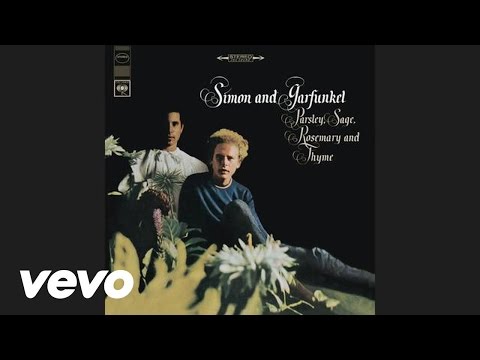
The song appeared on the "Parsley, Sage, Rosemary and Thyme" album, released in October 1966, which was among the most critically regarded albums of the year and which helped establish Simon and Garfunkel's credentials as serious album artists rather than merely singles-oriented pop acts. The album context gave individual songs like "The Dangling Conversation" additional weight and significance, situating them within a coherent artistic statement rather than as isolated commercial products.
The critical reception of "The Dangling Conversation" was generally respectful if sometimes divided on the question of whether the literary ambition was successfully realized or whether it had produced a song that was too self-conscious for its own emotional good. This debate has continued among critics and enthusiasts, and it reflects a genuine tension in the song between its intellectual construction and its emotional subject matter. The tension was not resolved differently by different listeners so much as it was experienced differently, some finding it a source of richness and others finding it a source of distance.
The song's modest chart performance relative to the duo's highest peaks did not damage their commercial trajectory, and they would subsequently produce recordings that achieved number one positions while continuing to develop their literary and artistic ambitions. "The Dangling Conversation" is best understood as an experiment at the outer edge of what commercial pop could accommodate in 1966, an experiment that partially succeeded and that demonstrated both the possibilities and the limits of the literary pop form that Simon was developing.
02 Song Meaning
Emotional Vacancy and Literary Reference: The Meaning of "The Dangling Conversation"
"The Dangling Conversation" is organized around a particular kind of failure: the failure of two intelligent people who share cultural reference points to actually connect with each other. The irony at the heart of the song is that the couple described in it has access to all the resources of literary and intellectual culture, to poetry and theater and the accumulated wisdom of artistic tradition, and yet cannot find their way to genuine emotional intimacy. The literary references in the song are not ornamental; they are the point. They represent the inadequacy of cultural sophistication as a substitute for authentic human connection.
The "dangling conversation" of the title describes a specific kind of social interaction recognizable to anyone who has experienced the discomfort of talking with someone and feeling, despite the exchange of words, that no genuine communication is occurring. The conversation dangles because it has no grounding, no genuine emotional engagement beneath its surface activity. The couple speaks, but what they say does not connect to what they feel, and what they feel is not expressed. This gap between surface activity and interior reality was one of the central preoccupations of literary modernism, and Paul Simon was drawing on that tradition consciously.
The literary references that run through the song function as a kind of shared cultural vocabulary that the couple uses as a substitute for genuine intimacy. Discussing poetry, attending the theater, referencing the intellectual touchstones of an educated cultural life: these are activities that signal sophistication and shared values, but the song presents them as activities that can be pursued in parallel without producing actual closeness. The couple is performing intellectual partnership without achieving emotional partnership, and the song's critique is directed at the substitution of cultural activity for genuine feeling.
This is a mature and somewhat melancholy artistic vision, and it represents a significant development in Simon's songwriting from the more straightforwardly anguished expressions of isolation that had characterized "The Sound of Silence" and "I Am a Rock." Where those earlier songs dealt with isolation as a condition of withdrawal, "The Dangling Conversation" dealt with isolation as a condition that persists even within a relationship, even between two people who share the same physical and intellectual space. This more subtle and, in some ways, more troubling form of loneliness was harder to express in popular song and harder for audiences to locate themselves within.
Art Garfunkel's vocal interpretation contributed significantly to the song's meaning. His voice carried a quality of detachment that suited the material, a sense of observing the scene described rather than experiencing it in the throes of raw emotion. This quality matched the song's own observational stance, its tendency to examine the emotional situation it described from a slight critical distance rather than immersing the listener in it. The blend of Garfunkel's clear tenor with Simon's voice created a sonic texture that felt, appropriately, like two separate intelligences operating in close proximity without fully merging.
The song's meaning for Simon and Garfunkel's artistic identity was that it staked out a position at the far edge of what commercial pop could accommodate intellectually. It declared an ambition to make pop music that could bear the weight of literary seriousness, that could engage with the same kinds of emotional and intellectual concerns that serious literature engaged with, without abandoning the melodic and harmonic resources that made popular music effective as an emotional medium. Whether that ambition was fully realized in this specific song is debatable, but the ambition itself was significant, and it defined the direction that Simon's songwriting would continue to develop.
Heard today, "The Dangling Conversation" resonates as a precise portrait of a recognizable human situation, the experience of being with someone and feeling fundamentally alone, and as a statement about the limits of cultural sophistication as a solution to the problem of human connection. Its relative obscurity within the Simon and Garfunkel catalogue is perhaps a function of its emotional severity; it does not offer the consolations of shared feeling that their most beloved songs provide. But it is a more honest and, in some ways, more courageous artistic achievement than comfort would have permitted.
→ More from Simon & Garfunkel
View all Simon & Garfunkel hits →

→ More from the 1960s File
View all 1960s hits →




Keep digging