The 1960s File Feature
Fakin' It
Fakin' It: Simon Garfunkel's Forgotten Single of Summer 1967 By the summer of 1967, Simon Garfunkel occupied a peculiar position in American popular music. T…
01 The Story
Fakin' It: Simon & Garfunkel's Forgotten Single of Summer 1967
By the summer of 1967, Simon & Garfunkel occupied a peculiar position in American popular music. They had already delivered "The Sound of Silence" and "Homeward Bound," two folk-rock landmarks that established Paul Simon as one of the era's most literate songwriters, and their album Parsley, Sage, Rosemary and Thyme had sold respectably. Yet the duo remained one step removed from the full commercial and cultural explosion that would arrive with The Graduate soundtrack and Bookends the following year. "Fakin' It," released as a Columbia single in July 1967, stands at that transitional threshold, a record that gestures toward the baroque ambitions of the Bookends era while remaining distinctly rooted in the confessional folk-pop of their earlier work.
Paul Simon wrote the song during a productive stretch that also yielded the ambitious suite pieces that would anchor Bookends. The recording took place at Columbia's studios in New York, with production credited to Bob Johnston, who had guided the duo's sessions on Parsley, Sage, Rosemary and Thyme as well. Johnston's approach was typically sympathetic to the organic interplay of Simon's acoustic guitar work and Art Garfunkel's clarion tenor, and the arrangement for "Fakin' It" reflects that sensibility while introducing a slightly more layered, psychedelic texture consonant with the broader musical experiments happening across the industry in the wake of Sgt. Pepper's Lonely Hearts Club Band.
The track features a notable structural curiosity: a spoken-word interlude partway through in which a female voice addresses a tailor, a moment that has fascinated listeners and critics for decades. Simon later confirmed that this vignette was rooted in a past-life intuition he had about having been a tailor in a previous existence, a detail that sits somewhere between whimsy and genuine folk mysticism. The interlude breaks the song's melodic flow in a way that anticipated the more experimental sequencing of the Bookends album proper, where sound collages and spoken passages would become integral to the larger design.
Commercially, "Fakin' It" performed solidly without becoming the duo's defining hit of the period. The single reached number 23 on the Billboard Hot 100, a respectable showing that reflected the consistent audience the duo had built, even if it fell short of the top-ten success they had achieved with earlier releases. In the United Kingdom, where Simon & Garfunkel also enjoyed a devoted following, the single similarly charted without making the upper reaches of the charts. The B-side, "You Don't Know Where Your Interest Lies," gave fans an additional piece of Simon's songwriting but attracted less critical attention.
The song's release came during one of the most competitive summers in pop music history. The so-called Summer of Love had filled the airwaves with psychedelic experiments from the Beatles, the Jefferson Airplane, the Doors, and dozens of others, and even a duo as accomplished as Simon & Garfunkel found the landscape crowded. In that context, the relative modesty of "Fakin' It"'s chart position says more about the marketplace than about the song's quality. Contemporary critics who reviewed it noted the song's unusual structure and praised Simon's lyrical introspection, recognizing in it the ambition that would be fully realized on the subsequent album.
Columbia Records later included "Fakin' It" on the Bookends album, released in April 1968, giving the song a more prominent and lasting home than its single release might have suggested. The inclusion was entirely logical: thematically and sonically, the song belonged to the same meditation on identity, performance, and self-deception that ran through Bookends as a whole. By being absorbed into one of the definitive albums of the late 1960s, "Fakin' It" gained a canonical status it might not have achieved as a standalone single.
The song's legacy is one of quiet esteem. It appears frequently on critical reassessments of the duo's catalog as an underappreciated gem, the kind of track that rewards repeated listening with its layered meanings and its unexpectedly adventurous construction. Art Garfunkel's vocal on the track is among his most controlled and expressive of the period, threading emotional ambivalence through a melody that could easily have been played for simple feeling. Simon's guitar work and the understated orchestration around it give the recording a texture that has aged particularly well, feeling neither dated in the manner of some 1967 psychedelia nor stripped of its historical moment.
In retrospect, "Fakin' It" represents a bridge in the Simon & Garfunkel narrative, the point at which the duo's folk-pop instincts began to absorb the stranger possibilities of studio-era rock without abandoning the confessional intimacy that had made them distinctive. It is a small but genuine achievement in a catalog of larger ones, and its eventual home on Bookends ensured that it would be heard by far more listeners than its initial chart run alone would have guaranteed.
02 Song Meaning
Identity, Performance, and the Tailor's Past: Reading "Fakin' It"
"Fakin' It" occupies a distinctive place in Paul Simon's songwriting because it takes a universal psychological experience, the feeling of pretending competence or authenticity one does not actually possess, and renders it with both personal specificity and a strange, metaphysical breadth. The song's central conceit is deceptively simple: a narrator reflects on the gap between who he presents himself as and who he actually is. But Simon refuses to leave the theme at the level of ordinary self-reproach, instead folding into it a sense of fatalism about human nature and a wry awareness that performance and authenticity may be more entangled than most people admit.
The emotional register of the song is one of rueful self-examination rather than melodrama. The narrator does not wallow in guilt or self-pity; instead, he surveys the distance between his projected self and his felt reality with a kind of tired honesty. This tone is characteristic of Simon's finest early writing, where vulnerability is expressed through observation and understatement rather than confession in the conventional sense. The song anticipates the existential preoccupations of the Bookends album, on which it was eventually included, where questions of identity, aging, and social performance run throughout.
The spoken-word interlude in the middle of the track introduces a past-life dimension that has generated considerable interpretive discussion. In this passage, a female voice addresses what appears to be a tailor in a historical setting. Simon has spoken publicly about a personal conviction that he may have been a tailor in a previous existence, and this interlude brings that intuition directly into the song's fabric. The effect is to suggest that "fakin' it" is not merely a contemporary affliction but something embedded in the narrator's identity across time, a condition that predates and will postdate his present circumstances. This is one of the more boldly unusual gestures in the Simon & Garfunkel catalog, and it elevates the song from clever self-reflection to something approaching a meditation on the layers of self that any individual carries.
Art Garfunkel's vocal interpretation reinforces the song's emotional ambivalence. His delivery is measured and slightly detached, qualities that suit the material because the song's narrator is aware of his own performance even as he performs it. There is no cathartic release in the singing, no moment where the mask drops entirely, which is precisely the point. The character in the song understands that dropping the mask is itself a kind of performance, and Garfunkel's voice holds that paradox with remarkable poise.
Within the broader Simon & Garfunkel catalog, "Fakin' It" belongs to a strand of songs concerned with the social mechanics of belonging and authenticity. It is less overtly political than some of their work and less purely romantic than others, sitting instead in a middle space where personal psychology and social observation intersect. The song's structural experiments, particularly the spoken-word interlude and the abrupt tonal shifts within the arrangement, all point toward the more ambitious compositions that would define Bookends and the duo's work on The Graduate soundtrack. "Fakin' It" is therefore an important transitional document in understanding how Simon's songwriting evolved through 1967, moving from folk-pop directness toward the baroque, conceptually layered approach that would make Bookends one of the defining albums of the era. For listeners who know the duo primarily through their most famous recordings, it rewards attention as evidence of the stranger, more exploratory directions their art was quietly moving toward even in that pivotal summer.
→ More from Simon & Garfunkel
View all Simon & Garfunkel hits →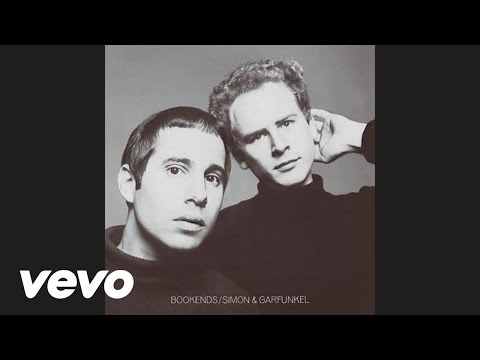

→ More from the 1960s File
View all 1960s hits →




Keep digging