The 1960s File Feature
At The Zoo
"At the Zoo" — Simon and Garfunkel Folk-Rock's Playful Side By early 1967, Simon and Garfunkel had established themselves as one of the most thoughtful and c…
01 The Story
"At the Zoo" — Simon and Garfunkel
Folk-Rock's Playful Side
By early 1967, Simon and Garfunkel had established themselves as one of the most thoughtful and carefully crafted folk-rock acts in American music. The success of The Sound of Silence and then Scarborough Fair had positioned them as artists of a certain gravity, voices for the interior anxieties and social uncertainties of their generation. Against that reputation, the release of At the Zoo in March 1967 arrived with a quality of playful wit that caught many listeners pleasantly off guard. The song was whimsical without being frivolous, clever without the over-earnestness that could sometimes creep into the folk tradition. It showed a side of Paul Simon's songwriting that his more celebrated serious work had not fully foregrounded.
Simon wrote the song as a kind of light-touch social observation, using animals at the Central Park Zoo as stand-ins for human types and behavioral patterns. The conceit was simple enough to work immediately and deep enough to reward a second or third listen, which was more or less the template for the cleverest pop writing of the period. The song debuted on the Billboard Hot 100 on March 18, 1967, entering at number 89 and beginning a nine-week chart run that would carry it to a peak of number 16.
The Recording and Its Sound
The production of At the Zoo reflected the more experimental directions Simon and Garfunkel were exploring in 1967, a year that would produce Bookends and continue the artistic development that had been accelerating since Sounds of Silence. Producer Bob Johnston, who worked with the duo on recordings from this period, helped create a sound that balanced the warm acoustic center of their earlier work with slightly more complex arrangements. The track has a lightness of touch that suits its lyrical subject matter, moving quickly without feeling rushed.
Art Garfunkel's voice was a remarkable instrument for this kind of material: pure enough in tone to make even the most playful lyrics sound beautiful, and Simon's guitar work and harmonic instincts gave the pair a distinctive sonic identity that was immediately recognizable on radio. In a crowded pop landscape that in early 1967 included everything from classic soul to emerging psychedelia, a Simon and Garfunkel record occupied its own distinct sonic space.
Climbing the Hot 100
The single's ascent on the Billboard Hot 100 was consistent and encouraging. From its debut at 89, it moved to 58 in the second week, then to 34, then 27, then 17, reaching its peak of number 16 on April 22, 1967. Nine weeks on the chart represented solid radio staying power for a track that was considerably more understated in its ambitions than the epic folk-rock ballads that had made the duo famous. The performance confirmed that the duo's audience was willing to follow them into lighter territory and that the mainstream pop audience responded to wit as well as solemnity.
The commercial context of early 1967 was demanding. The Beatles were about to release Sgt. Pepper's Lonely Hearts Club Band, and the sense of acceleration in rock and pop was palpable. For At the Zoo to crack the top twenty in that environment was a genuine achievement that said something about the strength of Simon and Garfunkel's audience connection and the quality of the songwriting itself.
Simon the Satirist
The song represents an important facet of Paul Simon's artistic personality that sometimes gets overshadowed by the more celebrated introspective work. Simon has always been a keen observer of human social behavior, and the sardonic humor visible in At the Zoo runs through significant portions of his catalog. The ability to write something genuinely funny that is also genuinely musical is rarer than it might appear, and Simon deployed it with precision here. The humor serves the melody rather than overwhelming it, and the melody serves the humor, so neither undermines the other.
The satirical dimension of the song also gave it a quality of social observation that connected it to the broader cultural conversations of 1967 even while it wore its wit lightly. The counterculture was asking serious questions about conformity and the human animal's relationship to social structures; At the Zoo asked similar questions with a raised eyebrow rather than a clenched fist, and there was an audience for that particular angle.
A Footnote That Deserves More Attention
In the Simon and Garfunkel discography, At the Zoo occupies a position as a minor but genuinely charming entry, often overshadowed by the epochal recordings that surrounded it. The song's craftsmanship is impeccable at every level: the writing, the performance, the production. It does not aspire to the grandeur of the duo's most celebrated work, but it succeeds completely on its own terms. Returning to it now, the listener finds something that feels fresher than much of what surrounded it in 1967, precisely because its ambitions were human-scale and its execution was precise. Listen and let its small, perfect jokes land exactly as they were designed to.
"At the Zoo" — Simon and Garfunkel's singular moment on the 1960s charts.
02 Song Meaning
"At the Zoo" — Satire, Social Animals, and the Human Comedy
Using Animals to Talk About People
The oldest satirical tradition in Western literature reaches back at least as far as Aesop: put animals in the story, let them behave like humans, and the audience sees human behavior clearly by seeing it displaced into another species. Paul Simon drew on this tradition when writing At the Zoo, using the Central Park Zoo as a setting in which various animals serve as types or stand-ins for recognizable human personalities and social tendencies. The conceit gives the song a lightness that allows pointed social observation to land without the weight of direct accusation, and it gives the listener the pleasure of decoding the comparisons.
The song doesn't press any single metaphor too hard. It moves through its roster of creatures with a comic timing that suggests Simon understood the difference between wit and pedantry. The joke is constructed to land and then give way to the next line rather than sitting on itself until the audience has been reminded three times that they should find it clever. This comic discipline is harder to maintain than it looks.
The Observer at Play
Simon and Garfunkel's catalog in 1967 was heavily weighted toward introspective and mournful material, songs about alienation, social disconnection, and the difficulty of genuine communication in modern life. At the Zoo approached similar themes from the comic angle, treating the human animal's various forms of social performance and self-presentation as subjects for gentle ridicule rather than elegy. Both approaches shared the underlying observation that human beings are peculiar creatures whose social behavior does not always reflect well on the species.
The playfulness of the song was not a departure from the duo's core artistic concerns but rather a different register for addressing them. A songwriter who can be funny about the same things he treats seriously elsewhere is demonstrating versatility and emotional range, and Simon's ability to modulate between registers over the course of a single album was one of the things that made him one of the more complete pop songwriters of his generation.
City Life and the Zoo as Metaphor
The Central Park Zoo setting places the song squarely in the urban environment that Simon inhabited and wrote about throughout his career. New York City, with its extraordinary density of human types living in close proximity and elaborate social hierarchies compressed into a small geographical footprint, provided Simon with an inexhaustible subject. The zoo becomes a microcosm of the city itself, a place where different species occupy defined territories, observe each other across barriers, and conduct their lives according to behavioral patterns that appear fixed to the observer but feel natural to the participant.
The parallel to urban social dynamics is obvious enough to be funny and subtle enough not to feel labored. Simon trusts the listener to make the connection without having it made explicit, which is the correct decision. Satire that explains its own jokes ceases to be satire.
Craft and Legacy of a Minor Work
In the broader context of Simon and Garfunkel's output, At the Zoo is a minor work in terms of cultural weight and lasting influence. The duo's great recordings are generally the serious ones. But minor works by major artists are often more revealing than they receive credit for being. The range of a creative personality shows itself in what it does when it is not trying to make a masterpiece, and At the Zoo shows a Paul Simon who is relaxed, playful, in command of his craft, and capable of producing something charming and intelligent without apparent effort.
That apparent effortlessness is itself a kind of skill. The song's nine-week chart run and top-twenty peak reflected an audience that was glad to have it without necessarily treating it as one for the ages. Decades later, it endures as a pleasurable example of what happens when serious artists give themselves permission to be light.
"At the Zoo" — Simon and Garfunkel's singular moment on the 1960s charts.
→ More from Simon & Garfunkel
View all Simon & Garfunkel hits →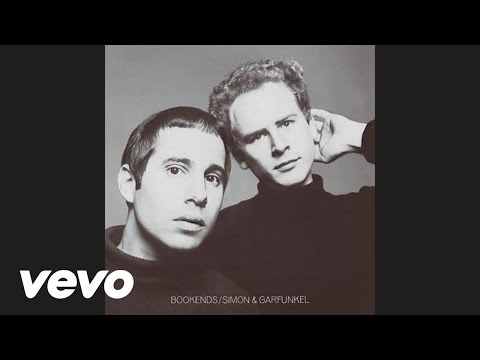

→ More from the 1960s File
View all 1960s hits →




Keep digging