The 1960s File Feature
Mas Que Nada
Mas Que Nada: How Sergio Mendes and Brasil '66 Brought Bossa Nova to the American Charts "Mas Que Nada" is one of the most recognizable Brazilian melodies in…
01 The Story
Mas Que Nada: How Sergio Mendes and Brasil '66 Brought Bossa Nova to the American Charts
"Mas Que Nada" is one of the most recognizable Brazilian melodies in the world, a song whose journey from Rio de Janeiro to the American pop mainstream in 1966 represents one of the more remarkable crossover stories of the decade. The original composition belongs to Jorge Ben Jor, the Rio-born singer and songwriter who recorded it in 1963 on his debut album "Samba Esquema Novo." Ben's original was a swinging, rhythmically buoyant celebration of joy and exuberance, built around a scat-like exclamatory phrase that opens the song and returns throughout. It was already well-known in Brazil when Sergio Mendes chose it as the centerpiece of his American recording project.
Sergio Mendes had been operating at the intersection of jazz and Brazilian popular music for several years before his American breakthrough. Born in Niteroi, Brazil in 1941, he had studied classical piano and become deeply immersed in the bossa nova movement that transformed Brazilian popular music in the late 1950s and early 1960s. Bossa nova, pioneered by figures including Joao Gilberto, Antonio Carlos Jobim, and Vinicius de Moraes, blended samba rhythms with cool jazz harmonics and an intimate vocal delivery that was unlike anything else in popular music at the time. Mendes absorbed these influences and then began developing his own synthesis, one that would eventually prove even more commercially accessible than traditional bossa nova.
He formed Brasil '66 specifically as a vehicle for the American market, assembling a group that included two American female vocalists, Lani Hall and Karen Philipp, whose voices brought an English-inflected quality to material that was partly or entirely in Portuguese. The group signed with A&M Records, the Los Angeles independent label founded by Herb Alpert and Jerry Moss, whose instinct for accessible international pop had already made Alpert's Tijuana Brass one of the best-selling acts in America. A&M provided exactly the promotional infrastructure and aesthetic sensibility that Mendes needed.
The debut album, also titled "Herb Alpert Presents Sergio Mendes and Brasil '66," was released in 1966 on A&M Records and included "Mas Que Nada" as its opening track. The arrangement that Mendes created for the recording was a masterpiece of cross-cultural translation. The song retained its Brazilian rhythmic identity and its Portuguese lyrics, including the opening scat phrase, but was shaped and polished for American ears in ways that made it immediately accessible without stripping away the elements that made it distinctive. The piano work was elegant, the vocal harmonies were lush and appealing, and the overall production had a warmth and clarity that suited the A&M aesthetic.
"Mas Que Nada" became one of the most played records of 1966, receiving substantial radio exposure and introducing American audiences to Brazilian pop music on a scale that the earlier bossa nova wave of the early 1960s, centered on artists like Stan Getz and Joao Gilberto, had not quite achieved. The original bossa nova moment in America had been somewhat confined to jazz audiences and sophisticated urban listeners. The Mendes version reached a much broader demographic, including teenagers and young adults who had no particular connection to jazz or world music.
The album performed strongly on the Billboard charts and established Mendes and Brasil '66 as a commercially viable act with genuine mainstream appeal. Subsequent albums continued the formula, and Mendes produced a consistent string of successes throughout the late 1960s, including a memorable recording of "The Look of Love" in 1968 and a version of "Fool on the Hill" that demonstrated his ability to bring Beatles material into his Brazilian-inflected framework.
"Mas Que Nada" became Sergio Mendes's signature recording, the track most closely associated with his name and the one most likely to appear in any survey of his career. It was the record that defined the Brasil '66 sound for international audiences and that established the commercial viability of a specific kind of Brazilian-American pop fusion. The song was revived in 2006 in a collaboration between Mendes and the Black Eyed Peas, reaching a new generation of listeners through a production that updated the sonic framework while retaining the song's fundamental melodic identity, and that version became a significant international hit in its own right.
Jorge Ben Jor's original composition proved itself, through the Mendes interpretation and the decades of covers and adaptations that followed, to be one of the most durable melodies in twentieth-century popular music, a song whose core identity was resilient enough to survive translation across languages, decades, and stylistic contexts without losing its essential character.
02 Song Meaning
Joy, Movement, and Cultural Crossing: The Meaning of "Mas Que Nada"
The title "Mas Que Nada" translates roughly from Portuguese as "more than nothing" or, in idiomatic use, as a general exclamation of dismissal or amazement, functioning somewhat like "no way" or "you've got to be kidding" in English vernacular. The song's lyrical content is built around a narrator who responds to music and the desire to dance with an irresistible, overwhelming pull, using the exclamatory phrase as a way of expressing that some things, the beat, the joy, the call to movement, are simply too powerful to be denied or reasoned with. Jorge Ben Jor's original conception was rooted in samba culture, where music and dance are not entertainment options but expressions of cultural identity and communal life.
Sergio Mendes's interpretation preserved the emotional core of that conception while framing it for an audience that had no direct connection to samba's social meaning. For American listeners in 1966, the song communicated joy and physical energy even without full comprehension of the Portuguese lyrics, which is a testament to how effectively music can transmit emotional meaning across linguistic and cultural boundaries. The opening scat phrase, which is not a conventional word in Portuguese but rather a vocalization that precedes the formal lyrics, functions as pure musical expression, communicating excitement and pleasure in a way that required no translation.
The song's deeper meaning in the context of the Brasil '66 project concerns cultural exchange and its possibilities. Mendes was not simply selling Brazilian music to American consumers; he was proposing a synthesis in which Brazilian rhythmic and harmonic sensibilities enriched American popular music and created something that belonged fully to neither tradition but was genuinely new. The female vocalists Lani Hall and Karen Philipp embodied this synthesis in their performances, bringing an American smoothness to material that retained its Brazilian rhythmic foundation, and the combination had a particular appeal precisely because of the tension between those elements.
The song also carries meaning related to the specific historical moment of bossa nova as a cultural movement. Bossa nova had emerged in Brazil in the late 1950s as a conscious modernization of samba, one that incorporated influences from American jazz while remaining distinctly Brazilian in its rhythmic orientation and cultural reference points. It was the product of a sophisticated urban culture that was engaging with American and European influences without being overwhelmed by them, and that cultural confidence is audible in the music. When Mendes brought that tradition to the American mainstream through "Mas Que Nada," he was in a sense returning to American listeners a music that had already absorbed and transformed American influences.
The song became Mendes's signature partly because it captured this cross-cultural dynamic so perfectly in a single three-minute recording. Everything that made the Brasil '66 project compelling, the rhythmic vitality, the melodic beauty, the combination of sophistication and accessibility, is present in "Mas Que Nada" in concentrated form. It is a song that explains itself through its own performance, making the case for the value of cultural exchange simply by demonstrating how good the results can be when that exchange is conducted with genuine respect and musical intelligence.
For subsequent generations, the song has accumulated additional meaning as a kind of standard, a melody so deeply embedded in global popular music that it functions as a shared reference point across many different listening communities. The 2006 Black Eyed Peas collaboration demonstrated that the song's essential identity was strong enough to survive radical sonic updating, which is the mark of a composition with genuine melodic depth. The meaning that "Mas Que Nada" carries today includes all of its historical layers: Jorge Ben Jor's original samba-inflected celebration, the Brasil '66 crossover moment, and the subsequent decades of adaptation and revival that have confirmed its place among the most durable melodies of the twentieth century.
→ More from Sergio Mendes & Brasil '66
View all Sergio Mendes & Brasil '66 hits →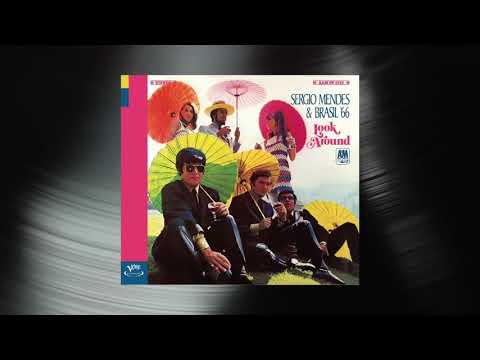

→ More from the 1960s File
View all 1960s hits →




Keep digging