The 1960s File Feature
Jingo
Jingo — Santana's Percussion-Driven Debut Statement San Francisco, 1969, and a New Kind of Band The late summer of 1969 was already a mythological moment in …
01 The Story
Jingo — Santana's Percussion-Driven Debut Statement
San Francisco, 1969, and a New Kind of Band
The late summer of 1969 was already a mythological moment in rock history before Santana took the stage at Woodstock and performed for a half-million people with an intensity that no one who witnessed it would forget. The band had been developing their approach in the San Francisco Bay Area for several years, playing a circuit of venues and dances in a city that had become the center of musical experimentation in America. What Santana brought to the psychedelic rock scene was something it did not yet have: the full integration of Afro-Cuban percussion, Chicago blues guitar, and rock energy into a coherent and emotionally coherent whole. Carlos Santana's guitar tone, sustaining into long, crying notes over a rhythm section anchored by congas and timbales, was immediately recognizable and immediately compelling.
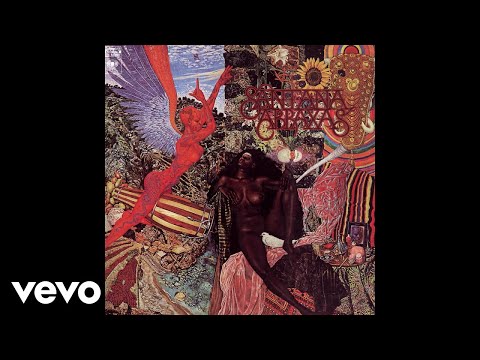
"Jingo" was among the first recordings the band made for Columbia Records, appearing on their 1969 debut album, simply titled Santana. The track was adapted from a recording by Nigerian musician Babatunde Olatunji, whose 1959 album Drums of Passion had been a significant influence on the broader percussion-conscious musical culture of the 1960s. Santana's version brought a rock sensibility and electric guitar intensity to material that Olatunji had rendered in a more purely percussive traditional context.
The Music and Its Energy
To understand "Jingo" fully, it helps to understand what was new about Santana's approach in 1969. Rock bands used drummers, but they did not typically use congas and timbales as equal partners in the rhythmic architecture of their music. The percussion section in Santana, featuring Michael Carabello and Jose "Chepito" Areas, brought a polyrhythmic complexity to the band's sound that created a different kind of groove from anything else on rock radio at the time. This groove was simultaneously more hypnotic and more physically compelling, drawing from traditions that had been developing for centuries in Africa and the Caribbean.
Carlos Santana's guitar sat above this percussive foundation with blues-derived phrasing and a tone that bent notes into extended expressions of feeling. The combination produced something that was neither pure rock, nor pure Latin music, nor pure blues, but something entirely new that drew from all three. "Jingo" was an early and concentrated demonstration of this synthesis.
The Chart Performance
"Jingo" entered the Billboard Hot 100 on October 25, 1969, debuting at position 97. Its climb was gradual, reflecting the song's particular nature as an instrumental-adjacent track with limited vocal content, which gave it different radio programming dynamics than a conventional pop single. By December 6, 1969, the track had reached its peak position of number 56 on the Hot 100. It spent eight weeks on the chart in total, a respectable run for a track that was fundamentally a percussion showcase.
The chart performance of "Jingo" needs to be understood alongside the broader success of the Santana debut album, which was performing strongly on the album charts during the same period. The track functioned partly as an introduction to the band's sound, drawing listeners to the album who might then discover the full range of what Santana was doing. In this sense, its chart performance undersells its cultural function.
Woodstock and the Band's Breakthrough
The Woodstock performance in August 1969 preceded the single's chart run and likely contributed to the album's commercial success. Santana was not yet a widely known band when they took the Woodstock stage, but their performance there introduced them to an enormous audience. The energy of "Jingo" in a live context was even more powerful than on record, as the percussion section's physical impact was felt in the body in ways that a studio recording could only approximate. Witnesses to that Woodstock performance described an experience that felt more like a ritual than a concert.
The album that followed in 1969 sold over a million copies in the United States, an extraordinary achievement for a debut from a band that had been virtually unknown at the start of the summer. "Jingo" was a key element of that debut's identity, establishing the band's rhythmic priorities and their willingness to prioritize groove over conventional pop structure.
Legacy and Influence
The influence of the Santana sound on subsequent music is difficult to overstate. Their fusion of Latin percussion with rock guitar opened a pathway that subsequent artists would follow in various directions, from the Latin rock tradition to the world music fusions of the 1970s and 1980s. "Jingo" as an early statement of that approach carries historical significance beyond its chart position or sales figures.
The track also documents a moment of genuine musical innovation in real time. Innovation of the kind Santana achieved with this debut is relatively rare in popular music, and to hear "Jingo" is to hear what musical revolution sounds like at its moment of public emergence.
Press play, let the congas enter, and hear what a half-million people felt at Woodstock on an August afternoon.
"Jingo" — Santana's singular moment on the 1960s charts.
02 Song Meaning
Jingo — Percussion, Cultural Synthesis, and the Body in Music
When the Body Leads the Mind
There is music that you analyze and music that you feel before you understand. "Jingo" belongs emphatically to the second category. The track leads with percussion, anchoring the listener's nervous system in a rhythmic pattern before the guitar enters, before any conventional melody establishes itself, before the cognitive frameworks of pop music fully engage. This prioritization of the body's response over the mind's is itself a statement about what music can and should do, one inherited from the West African and Afro-Cuban traditions that shaped the track's percussive foundation.
Babatunde Olatunji's original recording made a similar argument in 1959, and its influence on the broader musical culture of the 1960s was substantial. Santana's version translated that argument into the electric rock context of 1969, reaching an audience that might not have encountered Olatunji's work but was receptive to the feeling it generated when filtered through guitar and rock production.
The Meaning of Cultural Synthesis
Santana's achievement with "Jingo" and their debut album more broadly was to create a genuine synthesis rather than a superficial borrowing. The difference between synthesis and appropriation is partly one of depth and engagement, and the band's engagement with Afro-Cuban percussion went far beyond surface addition. Their rhythm section players brought authentic expertise to the tradition they were drawing from, and the result was a musical conversation between traditions rather than one tradition colonizing another.
This synthesis carried cultural meaning in 1969 that went beyond music. The band's membership reflected multiple ethnic backgrounds within the Latino diaspora, and their music offered a model of cultural exchange that was generous and generative rather than extractive. In a year when American society was navigating deep divisions about race, identity, and belonging, Santana's music offered something different: the sound of multiple traditions enriching each other.
Ritual and Community in the Groove
The percussion tradition from which "Jingo" draws its foundations is not merely aesthetic. In the cultural contexts where polyrhythmic percussion was developed and practiced, it served communal and ritual functions: it organized collective experience, created shared states of attention and feeling, and marked the boundaries between ordinary time and sacred time. When Santana brought this tradition into rock music, some of that ritual quality came along. Audiences at their live performances often described something beyond ordinary concert experience: a collective physical engagement with the music that felt communal in a way that most rock shows did not.
This quality helps explain why Santana's Woodstock performance was so memorable. The crowd of hundreds of thousands became, briefly, a single organism responding to a shared rhythmic pulse. "Jingo" was central to generating that experience.
Why It Resonated in 1969
The late 1960s was a period when many listeners were actively seeking music that offered something beyond entertainment, that connected to deeper traditions and wider human experiences. The psychedelic movement in music had created an audience receptive to extended musical journeys and to sounds from outside the Anglo-American pop tradition. Santana arrived at precisely the moment when this receptiveness was at its maximum, offering material that felt simultaneously ancient and urgently new.
The chart performance of "Jingo," reaching number 56 over eight weeks, reflected genuine listener engagement with something that was difficult to categorize using existing pop frameworks. Radio programmers who played it were taking a small creative risk, and the payoff was sustained listener interest that confirmed the track was reaching people in meaningful ways. The track's significance was always larger than its chart position, and the decades of influence that followed confirmed that something important had been introduced to American popular music through these recordings.
→ More from Santana
View all Santana hits →

→ More from the 1960s File
View all 1960s hits →




Keep digging