The 1960s File Feature
Lil' Red Riding Hood
Lil' Red Riding Hood: Sam the Sham and the Pharaohs Take a Fairy Tale to the Top of the Charts Few records from the summer of 1966 managed to be simultaneous…
01 The Story
Lil' Red Riding Hood: Sam the Sham and the Pharaohs Take a Fairy Tale to the Top of the Charts
Few records from the summer of 1966 managed to be simultaneously menacing, playful, and thoroughly irresistible, but "Lil' Red Riding Hood" by Sam the Sham and the Pharaohs accomplished exactly that. The single was released on MGM Records in the summer of 1966, arriving at a moment when the group was already one of the more distinctive acts in American pop music. Their 1965 hit "Wooly Bully" had established them as masters of a particular kind of good-natured, slightly absurdist rock and roll, and "Lil' Red Riding Hood" extended that sensibility into new and considerably more provocative territory.
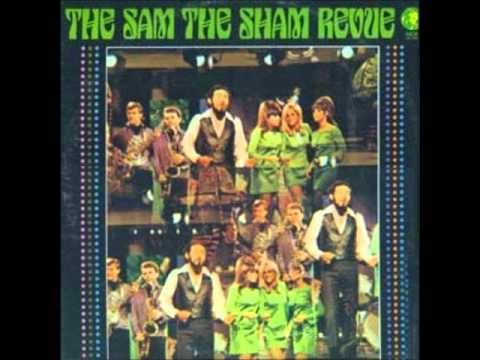
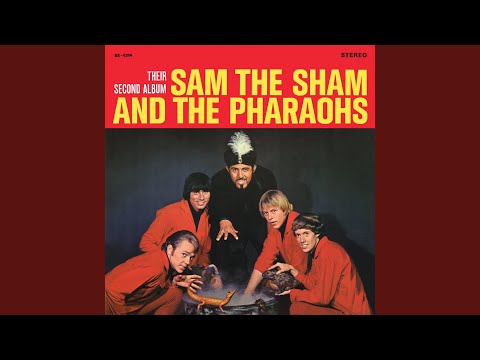
Sam the Sham, born Domingo Samudio in Dallas, Texas, led a group that had assembled itself around a love of rhythm and blues, rock and roll, and theatrical presentation. The band performed in elaborate costumes that combined elements of the pharaonic and the carnivalesque, creating a visual identity as unusual as their music. Samudio's voice was a remarkable instrument: nasal, flexible, and capable of switching between menace and comedy with a speed that left listeners uncertain which register was dominant at any given moment. This ambiguity was not accidental. It was the central expressive tool of their best recordings.
"Lil' Red Riding Hood" was written by Ronald Blackwell, a songwriter who understood how to weaponize nursery rhyme structure for pop purposes. The song takes the basic narrative framework of the Brothers Grimm fairy tale and resituates it as a kind of predatory courtship, with the narrator casting himself explicitly in the role of the wolf pursuing the girl through the woods. The single entered the Billboard Hot 100 in the summer of 1966 and climbed to number two, held from the top position but spending weeks in the upper reaches of the chart. The performance confirmed that Sam the Sham and the Pharaohs could follow up their earlier success with material that was even more character-driven and narratively specific.
The production was lean and effective, built around a guitar riff that had something of the quality of a chase, circular and slightly urgent. The arrangement left plenty of space for Samudio's vocal performance, which was the real engine of the record. He moved through the lyric with a theatrical relish that made it impossible to determine whether the wolf narrator was genuinely threatening or performing a kind of elaborate self-aware pantomime of threat. This interpretive ambiguity was what gave the song its legs: it could be heard as a genuine expression of predatory attraction or as a comic deconstruction of that attraction, and neither reading canceled the other.
MGM Records was not primarily known as a rhythm and blues or rock and roll label in 1966, but it had been investing in pop and rock acts as the market expanded. Sam the Sham and the Pharaohs were among the label's most commercially successful acts during this period, with "Wooly Bully" having set a high bar for novelty pop that their subsequent recordings were measured against. "Lil' Red Riding Hood" demonstrated that the group was not simply a one-hit novelty act but a band with a genuine creative identity capable of generating multiple distinct approaches to the same basic sonic and theatrical sensibility. The record received extensive airplay across Top 40 stations throughout the summer of 1966, benefiting from a sound that was direct and immediately engaging at any volume and on any speaker.
The song's chart success placed it alongside some of the most significant recordings of the summer of 1966, a period that included the Beach Boys' "Good Vibrations" sessions, the emergence of psychedelic rock, and the continuing dominance of British Invasion groups. Against this backdrop, "Lil' Red Riding Hood" stood out for its resolutely American roots, its debt to rhythm and blues and rockabilly, and its refusal of any kind of sonic sophistication that might have softened its impact. It was rough-edged, high-spirited, and completely assured.
The cultural context of the fairy tale itself gave the song an unusual depth of resonance. The story of Little Red Riding Hood had been a part of Western culture for centuries, and its psychological subtext, the young girl, the dangerous woods, the predatory stranger disguised as something familiar, had been analyzed and debated by folklorists and psychologists well before the pop era. By invoking it so directly, Sam the Sham and the Pharaohs were drawing on a reservoir of cultural meaning that amplified the song's own narrative without requiring the listener to be conscious of the connection. The wolf's courtship felt both specific and archetypal simultaneously.
The recording spent multiple weeks in the top five of the Billboard Hot 100 and received extensive radio airplay throughout the summer of 1966. It was included on the group's MGM album and became one of the tracks most frequently cited when their catalog is discussed. The production has aged well: the arrangement is simple enough that it does not feel dated in the way that more ornate productions of the period sometimes do, and Samudio's vocal performance retains its peculiar electricity. For a record built on a fairy tale premise, it has proven remarkably durable, revisited regularly whenever the more adventurous corners of mid-1960s American pop are surveyed.
02 Song Meaning
The Wolf at the Microphone: Reading "Lil' Red Riding Hood"
"Lil' Red Riding Hood" operates on the tension between its source material's darkness and its performer's irresistible charm. The fairy tale that gives the song its narrative scaffold has been understood by generations of readers as a story about predatory desire and female vulnerability in dangerous environments. Ronald Blackwell's lyric does not soften this subtext but instead places it front and center, giving the narrator the wolf's explicit perspective and allowing him to articulate his interest in the girl with theatrical frankness. What saves the song from genuine menace is Sam the Sham's delivery, which is so self-aware and so broadly theatrical that it transforms the wolf's predatory confession into something closer to performance art.
The narrator's position in the song is unusual in pop music of the period. Rather than presenting a romantic protagonist pursuing a love interest within conventional norms, the lyric inhabits a figure who has explicitly identified himself as dangerous and who is pursuing the object of his attention through a space coded as threatening. The wolf knows he is a wolf and seems to take pleasure in the role. This self-awareness is the key to the song's tone, because it invites the listener to appreciate the performance of threat rather than experience the threat itself.
Samudio's vocal characterization gave the wolf a personality that was comic as well as seductive, using the voice to signal that the narrator was in on the joke even as he committed to the part. The result was a song that could be simultaneously enjoyed as genre exercise, fairy tale parody, and genuinely playful courtship narrative. The listener could choose their interpretation based on their own relationship to the material, and the song accommodated all of these readings without demanding that any particular one was correct.
The fairy tale frame also allowed the song to deal with attraction and pursuit in ways that more straightforwardly realistic lyrics could not. The conventions of the fable created a kind of theatrical permission: because both the narrator and the listener know they are operating within a story, the extremity of the narrator's self-identification as predator reads as storytelling rather than threat. This use of folk narrative as a frame for pop content was relatively unusual in 1966, when most pop writing drew on contemporary social contexts rather than traditional story structures.
The song also reflects something genuine about Samudio's creative sensibility and that of the group around him. Their work consistently found humor in exaggeration and theatrical self-presentation, treating pop performance as a kind of elaborate game in which the performer and the audience shared a knowing wink. "Lil' Red Riding Hood" extended this approach into narrative territory, creating a character rather than simply delivering a lyric. The wolf is as much a performance as a person, and in that performance Sam the Sham found his most memorable creative statement.
For the broader catalog of Sam the Sham and the Pharaohs, the song represents the fullest development of their theatricality. Where "Wooly Bully" had been primarily rhythmic and energetic, built more on a collective sound than on individual characterization, "Lil' Red Riding Hood" was essentially a dramatic monologue, a song that lived or died on the quality of the performer's inhabitation of a specific persona. The record proved that Samudio was as gifted a character performer as he was a vocalist, capable of finding the comedic and psychological dimensions of a lyric and making them audible. The song remains one of the defining novelty records of the mid-1960s precisely because it transcends the novelty category through the quality of its performance and the genuine complexity of its tone.
→ More from Sam The Sham and the Pharaohs
View all Sam The Sham and the Pharaohs hits →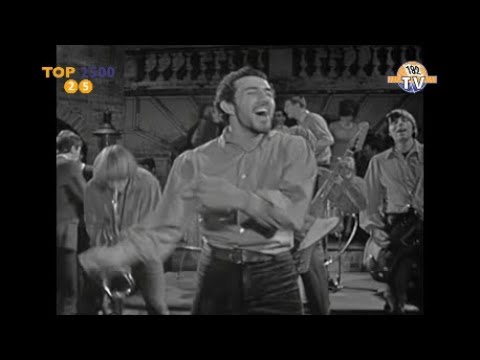
→ More from the 1960s File
View all 1960s hits →




Keep digging